
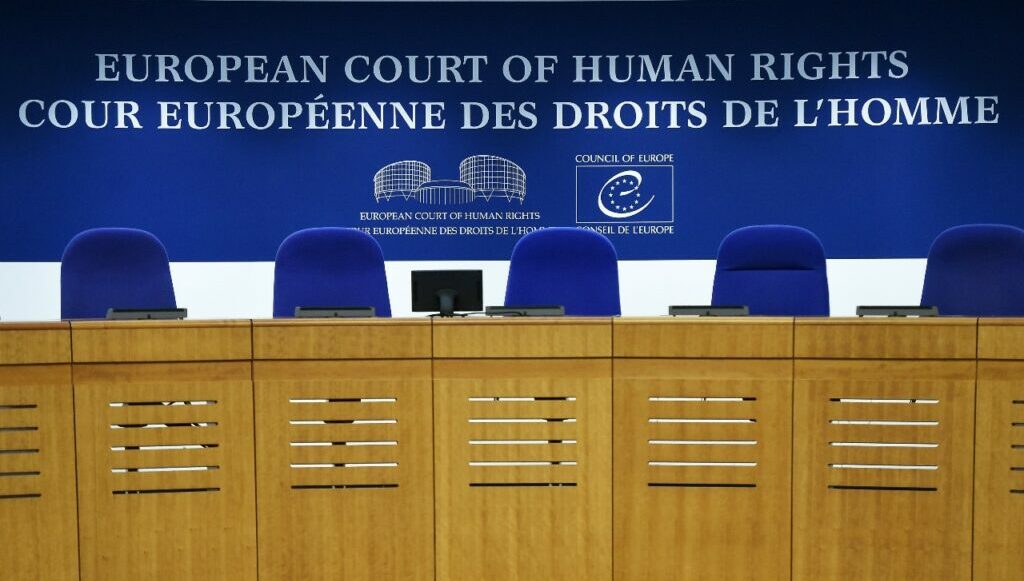
 said on Friday it will impose special administrative rules starting January 1, 2026, to handle what it expects could become a massive wave of similar cases from Turkey linked to dismissals from public service after a failed 2016 coup.)
The European Court of Human Rights (ECtHR) said on Friday it will impose special administrative rules starting January 1, 2026, to handle what it expects could become a massive wave of similar cases from Turkey linked to dismissals from public service after a failed 2016 coup.
Special measures for processing large influx of applications against Türkiye concerning dismissal of civil servantshttps://t.co/OCyOmjTPA3#ECHR #CEDH #ECHRpress pic.twitter.com/wCaC7h1eeh
— ECHR CEDH (@ECHR_CEDH) December 19, 2025
In a press release issued by its registrar, the Strasbourg-based court said it has received a “substantial number” of applications since mid-October 2025 from civil servants, judges, military personnel and other public officials dismissed after the coup attempt in 2016.
The court said the recent influx follows the outcome of domestic proceedings in Turkey, including leading rulings by the Constitutional Court dated May 29, 2025, and July 16, 2025.
Under the new measures, applicants in this category must submit a separate cover page for each applicant, complete the official ECtHR application form electronically, print both documents and file them together. The cover page will carry a unique QR code for administrative processing.
The court said applicants must provide an email address so the registry can communicate through its Electronic Communications Service, except when applicants explain justified constraints in the application form. It said applicants who fail to submit the cover page should expect delays.
Turkey launched sweeping purges after the July 15, 2016, coup attempt, which it blamed on the Gülen movement, a faith-based group inspired by Muslim scholar Fethullah Gülen, who passed away in the US in October 2024.
The Gülen movement, renowned worldwide for its contributions to education, social welfare and interfaith dialogue, denies any involvement in the coup.
Turkish President Recep Tayyip Erdoğan has been targeting followers of the Gülen movement since the corruption investigations of December 17-25, 2013, which implicated then-prime minister Erdoğan, his family members and his inner circle.
Dismissing the investigations as a Gülenist coup and conspiracy against his government, Erdoğan began to target the group.
Erdoğan’s government labeled the group as a “terrorist organization” in May 2016, before the failed coup took place, a designation not recognized by other governments and major international bodies, including the United States and the European Union.
The movement’s followers, also known as Hizmet (Service) supporters, say they have been unfairly targeted in a campaign of political persecution aimed at silencing dissent and consolidating power. The post-coup purge has seen hundreds of thousands investigated and tens of thousands imprisoned on terrorism-related charges widely viewed as politically motivated.
Citing national security concerns, the government declared a state of emergency and removed more than 130,000 civil servants, including 4,156 judges and prosecutors, from their jobs by decrees after the coup, as well as 24,000 members of the armed forces. The decisions were made without judicial review and often relied on criteria such as using a messaging app, having an account at a Gülen-linked bank or membership in certain trade unions. The state of emergency lasted until July 2018 after seven extensions.
Human rights groups and legal experts have long criticized the domestic review track the court has required in many purge-related cases, arguing it delays access to Strasbourg without offering an effective remedy.
After the coup attempt, Turkey created a State of Emergency Inquiry Commission to review many dismissal cases carried out under emergency decrees.
In a 2017 decision, the European court rejected an early dismissal case for failure to exhaust domestic remedies, saying the new commission process had to be used first.
Amnesty International said the State of Emergency Inquiry Commission was not designed to deliver timely or fair redress.
A Human Rights Joint Platform analysis published in 2017 said the commission’s core function was to buy the government time and make the Strasbourg route longer, warning that the commission process and court appeals could stretch close to a decade.
The ECtHR, however, has treated the commission as a domestic remedy that applicants must use first, a stance that critics say helped postpone Strasbourg scrutiny while tens of thousands of cases accumulated.
The European court said Friday’s step is about administrative processing and does not decide the merits of any individual case.