

The United States on Friday sanctioned an İstanbul-based financial technology company and its Iranian chairperson, alleging that the firm supplied payment services to a cryptocurrency exchange in a network used to evade sanctions on Iran.
The US Treasury Department’s Office of Foreign Assets Control (OFAC) added Zedpay Financial Systems and Services Inc. (Zedpay) and chairperson Mehdi Rezazadeh to the Specially Designated Nationals and Blocked Persons List as part of an action covering four people and nine companies.
The Treasury alleged that Zedpay, which provides digital wallets and global transfer services, was integrated into Zedxion Exchange Limited (Zedxion), a UK-registered cryptocurrency exchange linked to Iranian financier Babak Zanjani. The connection allowed users to employ Zedpay wallets while trading on Zedxion and gave the exchange access to conventional currency settlement and cross-border payments it otherwise lacked.
OFAC designated Zedpay under Executive Order 13902 for being owned or controlled by Zedxion, or for acting on its behalf. Rezazadeh was sanctioned for acting on behalf of Zedpay.
Official US records list Zedpay at Tekstilkent Plaza in İstanbul’s Esenler district and say it was established on May 24, 2022, as a computer programming business.
Zedxion and a second UK-registered exchange, Zedcex Exchange Limited (Zedcex), were sanctioned in January along with Zanjani. Addresses attributed to the exchanges processed funds for wallets linked to Iran’s Islamic Revolutionary Guard Corps (IRGC), and Zedcex had handled more than $94 billion in transactions since its 2022 registration, the Treasury Department said.
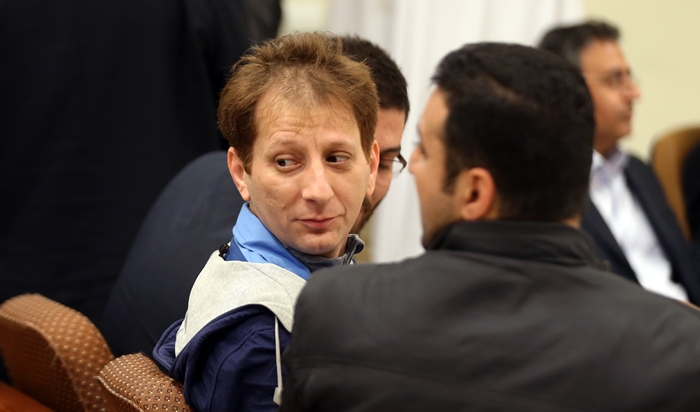
Zanjani was sentenced to death in Iran in 2016 for embezzling billions of dollars in oil revenue. His sentence was commuted in 2024, and he re-emerged in 2025 as a financial backer of projects connected to the Iranian government. The Treasury accuses his companies of using financial services, cryptocurrency, gold, transportation and infrastructure projects to conceal ownership, launder funds and move money for Iran.
The sanctions freeze any property and interests in property held by Zedpay and Rezazadeh in the United States or under the control of US persons. They also bar US persons and transactions passing through the United States from dealing with the designated parties unless authorized by OFAC. Financial institutions outside the United States can face sanctions exposure for certain dealings with them.
Zanjani’s role in the Reza Zarrab case
Turkish investigators sought to detain Zanjani during an expected meeting with Iranian gold trader Reza Zarrab in Antalya as part of the December 17, 2013, graft operation, but the meeting was canceled after the two men realized they were under surveillance, an account Zanjani rejected at the time while also denying that he was Zarrab’s patron or business partner.
The operation detained Zarrab, Halkbank chief executive Süleyman Aslan and the sons of interior minister Muammer Güler, economy minister Zafer Çağlayan and environment minister Erdoğan Bayraktar and alleged that Zarrab’s network bribed officials to transfer Iranian oil and gas proceeds through gold trades and fabricated food transactions. Zanjani later acknowledged buying 1.5 metric tons of Ghanaian gold routed through İstanbul, according to Reuters’ review of the authenticated 299-page police file.
President Recep Tayyip Erdoğan, then prime minister, called the graft inquiry a plot, and his government removed or reassigned the prosecutors and senior police officers directing it. Turkish prosecutors dropped the corruption charges in December 2014, and parliament voted in January 2015 not to send four former ministers to trial.
The Federal Bureau of Investigation (FBI) arrested Zarrab in Miami in March 2016, and he pleaded guilty in October 2017 to sanctions evasion, bank fraud and money laundering before testifying that he bribed Halkbank chief executive Aslan and former economy minister Çağlayan and that Erdoğan personally authorized state lenders Ziraat Bank and VakıfBank to join the scheme. Both banks denied involvement, and Erdoğan said US courts could not put Turkey on trial.
Zarrab’s cooperation helped US prosecutors convict former Halkbank deputy general manager Mehmet Hakan Atilla in 2018 and indict Halkbank in 2019 over an alleged $20 billion operation. The charges were dismissed in June under a March deferred prosecution agreement requiring independent sanctions compliance monitoring but no fine, and a federal judge sentenced Zarrab to time served in July after he had spent 22 months in custody.