
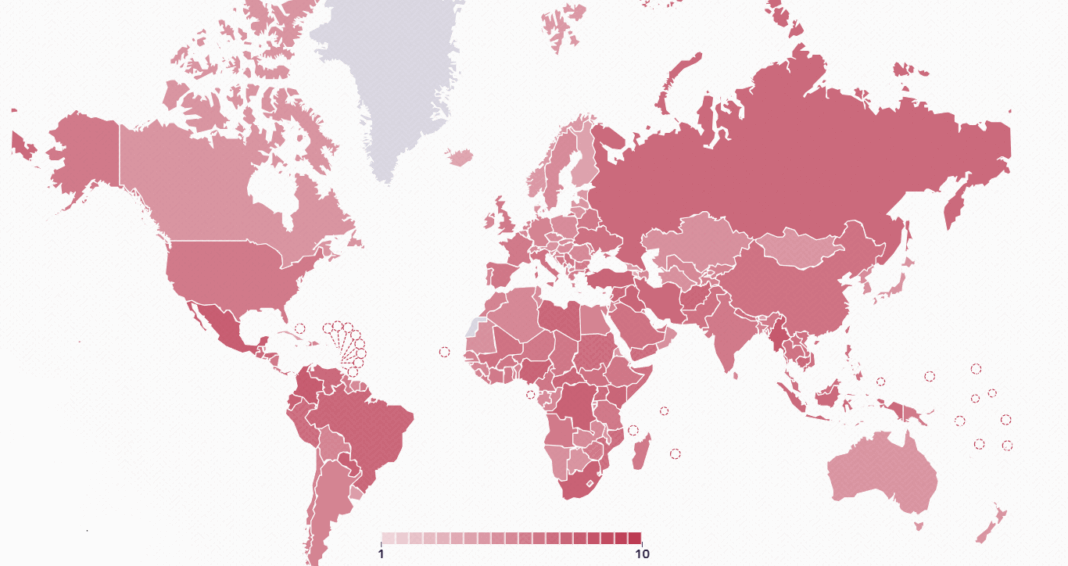

The Turkish presidency’s Center for Combating Disinformation said on Wednesday that the 2025 Global Organized Crime Index was part of an effort to “target Turkey” and alleged that the organization behind it, located in Geneva, is linked to the faith-based Gülen movement, after the index again ranked the country 10th worldwide for organized crime.
The Global Initiative Against Transnational Organized Crime (GI-TOC) publishes the index every two years and ranks 193 countries by criminal markets, criminal actors and state resilience. Turkey was placed 10th worldwide in the 2025 edition. The report also showed that Turkey’s resilience level remained below global averages, consistent with the previous two editions.
The disinformation office claimed the index was an attempt to manipulate international opinion and said the organization’s founders included “members of FETÖ,” a derogatory label Ankara uses to brand the Gülen movement, inspired by the late Muslim cleric Fethullah Gülen, as terrorists.
The Gülen movement is renowned worldwide for its contributions to education, social welfare and interfaith dialogue.
The Turkish government, however, labeled the group as a “terrorist organization” in May 2016, a designation not recognized by the United States, the European Union or major international bodies.
GI-TOC operates as a registered civil society group in Switzerland. It is funded by European governments and international organizations, employs researchers with backgrounds in law enforcement, academia and development policy, and works with UN agencies on issues such as trafficking, illicit economies and governance. The group publicly lists its board, donors and methodology.
The statement also argued that the index lacked “official” status because it relies on expert assessments and publicly available research rather than data supplied directly by governments. GI-TOC publishes its methodology and says cross-country comparisons require independent sources because national crime figures vary by definition, reporting practice and political control.
The center said Turkey is one of the most active countries in cooperation with the United Nations, INTERPOL and EUROPOL and described the index as “methodologically unsound.”
The index does not measure cooperation activity. It measures the scale of criminal markets and the strength of institutions that respond to them.
The 2025 edition placed Myanmar first for criminality, followed by Colombia, Mexico, Ecuador and Paraguay. Several small island states ranked lowest. Turkey’s score of 7.2 placed it among the countries with extensive illicit markets and entrenched criminal networks.
GI TOC said criminal organizations profit from instability and weak governance and noted that many states show limited progress in resilience. The group said financial crime and cybercrime are growing across regions and that foreign criminal groups operate with greater mobility.