
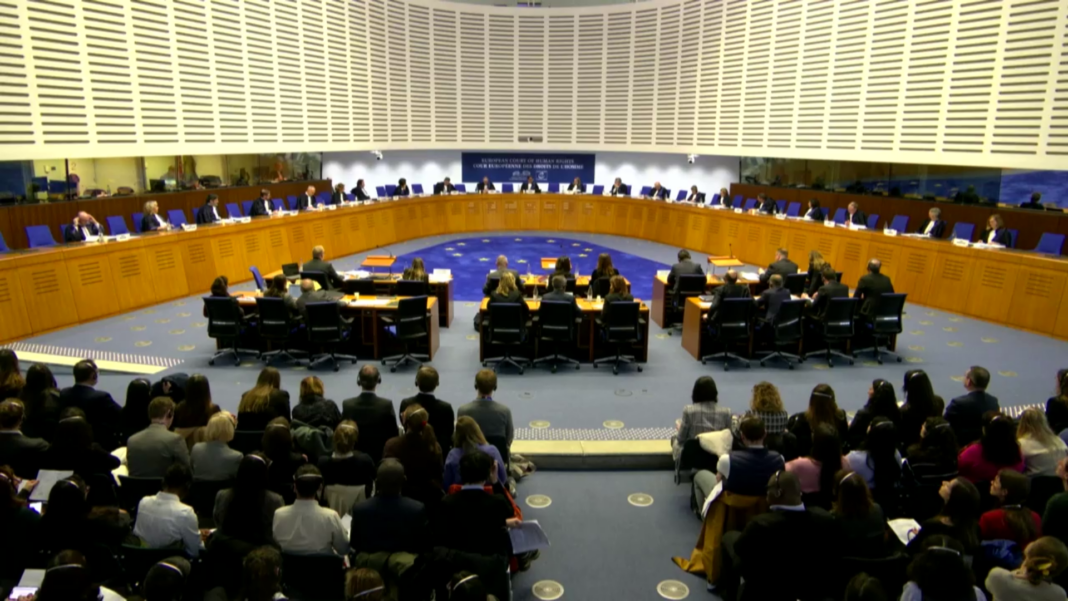
 has communicated questions to the Turkish government regarding alleged rights violations in the lengthy pretrial detention of 154 people accused of links to the faith-based Gülen movement following a coup attempt in 2016.)
The European Court of Human Rights (ECtHR) has communicated questions to the Turkish government regarding alleged rights violations in the lengthy pretrial detention of 154 people accused of links to the faith-based Gülen movement following a coup attempt in 2016.
The court asked whether the applicants’ arrest was based on reasonable suspicion; whether their pretrial detention had been ordered on sufficient grounds and whether they had an effective means to challenge the lawfulness of their detention. The questions were communicated to the Turkish government on May 13, with the documents made public last week.
The court also asked whether compensation mechanisms under Article 141 of the Turkish Code of Criminal Procedure constituted an effective remedy for the complaints raised by the applicants.
The applications were filed by 154 individuals who allege violations of Article 5 of the European Convention on Human Rights, which guarantees the right to liberty and security.
The applicants argued that their detention was not based on reasonable suspicion and that its duration was excessive. They also cited a range of alleged procedural violations, including limited access to case files, monitoring of lawyer-client communications, delays in notification of decisions, slow review of appeals and lengthy proceedings before Turkey’s Constitutional Court.
Among the applicants is retired general Akın Öztürk, the former commander of the Turkish Air Force, who was sentenced to life imprisonment for his alleged role in the coup attempt.
The United Nations Working Group on Arbitrary Detention previously found that Öztürk had been arbitrarily detained and denied a fair trial, subjected to mistreatment and convicted on the basis of flawed proceedings.
Turkey experienced a controversial military coup attempt on the night of July 15, 2016. President Recep Tayyip Erdoğan immediately accused the Gülen movement, inspired by the late US-based cleric Fethullah Gülen, of orchestrating the plot and significantly expanded a crackdown already underway on the movement’s supporters. The movement strongly denies involvement in the coup attempt or any terrorist activity.
The abortive putsch left 251 people dead and more than a thousand injured. The next morning the Turkish government immediately started a wide-ranging purge of military officers, judges, police officers and other government officials. According to official figures, 150 of the Turkish Armed Forces’ 326 generals and admirals and more than 24,000 officers as well as 4,156 judges and prosecutors were summarily removed from their jobs by emergency decree-laws for alleged ties to “terrorist organizations.”
This article is republished from the Stockholm Center for Freedom.