
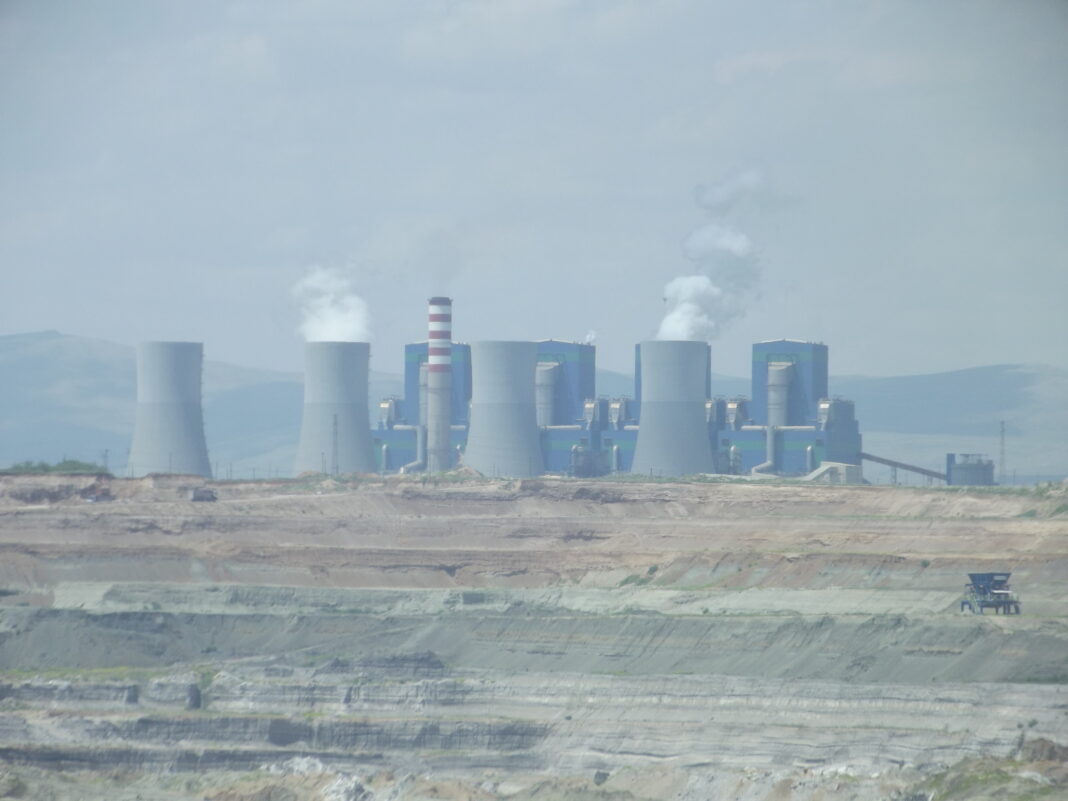

A Turkish court has annulled an environmental approval for two new units at one of the country’s largest coal power sites, finding that officials failed to assess risks to public health, farmland, water resources and the surrounding ecosystem.
The Kahramanmaraş 4th Administrative Court canceled the Environment, Urbanization and Climate Change Ministry’s December 27, 2024, positive Environmental Impact Assessment decision for the planned fifth and sixth units at the Afşin-Elbistan A Thermal Power Plant in the southern province of Kahramanmaraş, Greenpeace Turkey announced Wednesday.
The ruling blocks, at least for now, a 688 megawatt expansion of the plant, which burns lignite and is operated by Çelikler Holding. The project would have raised the plant’s installed capacity from 1,355 megawatts to 2,043 megawatts.
The court found that the final assessment report was neither procedurally nor technically sufficient and that it failed to prove that the project’s possible harm could be brought down to acceptable levels under law and science.
The decision can be appealed to the Council of State within 15 days of notification.
Environmental groups framed the ruling as a win for residents of Afşin and Elbistan, two districts that have lived for decades with the health and environmental costs of lignite mining and coal power.
The planned units would have deepened the coal footprint in Afşin-Elbistan, where the A and B plants are among Turkey’s largest lignite plants. The nearby Kışlaköy lignite field was opened to supply Afşin-Elbistan A, and the state power company EÜAŞ lists the mine’s annual coal production capacity at 20 million tons.
What the court found
The court found that the assessment did not account for the full burden of the project, including the extra coal production that would be needed to feed the new units. That omission weakened the cumulative impact review and dust emission calculations.
The ruling also found gaps involving groundwater, wastewater treatment, mining license and reserve data, geotechnical work and farmland protection.
Experts who reported to the court warned that mine dewatering before and during lignite production could lower groundwater levels, dry wells and springs, cause subsidence and alter vegetation. Some of those effects could be permanent, they found.
The court also found that the assessment did not provide a separate health impact analysis for children, older people and people with chronic illnesses. It cited inconsistent findings on a health protection buffer around the project, including a provincial health office recommendation of 500 meters that differed from much shorter distances in the assessment.
The ruling followed expert reports submitted in September 2025 and February 2026. The experts found the project unsuitable on environmental engineering, agriculture, mining, geology, hydrogeology, public health and sociology grounds, Greenpeace said.
They also questioned public interest in the project, citing a cost of more than 37.5 billion Turkish lira ($800 million) in 2024 prices and the low use of existing capacity at Afşin-Elbistan B.
Health concerns
The case drew attention because of Afşin-Elbistan’s record of air pollution.
Human Rights Watch, which filed an amicus brief in the case, argued that the assessment lacked a proper baseline air quality review, ignored health effects and failed to assess the cumulative burden of existing and planned industrial activity.
The rights group noted that its analysis of air pollution in Elbistan from January 2021 to June 2024 found PM2.5, fine particles that can enter the lungs and bloodstream, at more than five times the World Health Organization’s annual guideline and nearly three times the European Union’s proposed 2030 standard.
It also found that satellite data showed sulfur dioxide concentrations were higher over villages near the plant than over the official monitoring station in Elbistan, 22 kilometers away.
Residents and campaigners have long argued that the project should be treated as a public health issue rather than only an environmental dispute.
“We have been fighting for years for clean air, fertile soil and our children’s future,” Mehmet Dalkanat of the Afşin Elbistan Platform for the Protection of Life and Nature said in Greenpeace’s statement.
Dalkanat said residents had stopped coal plant projects for a fourth time and called for a fair transition that would close existing coal plants while protecting people and nature.
Broader climate test
The ruling comes as Turkey prepares to host the COP31 UN climate summit in Antalya from November 9 to 20, 2026. Climate campaigners have argued that new coal capacity would undermine Ankara’s attempt to present itself as a climate leader.
Greenpeace Turkey climate and energy campaigner Emel Türker Alpay described the ruling as a win for residents and for those who supported the campaign against new coal capacity in Kahramanmaraş.
Greenpeace urged the government to drop new coal plants, halt expansion projects at existing plants and publish a clear plan for a fair phaseout of coal.