

Turkey has joined seven NATO member states and Ukraine in backing a plan to create a bank based in Canada that would raise up to $134 billion in financing for defense and security projects at a lower cost.
The Defence, Security and Resilience Bank (DSRB) was announced during the NATO summit in Ankara. The signatories are Canada, Albania, Belgium, Greece, Latvia, Luxembourg, Romania, Turkey and Ukraine, according to a declaration released by the Canadian prime minister’s office.
Ukraine is not a NATO member, meaning the initiative is a group effort by participating states rather than a formal NATO bank.
The proposed institution is meant to work like a multilateral development bank for defense. It would use the credit strength of member governments to borrow on markets, then channel money into defense production, cybersecurity, critical infrastructure and supply chains.
The bank could give loan guarantees to commercial banks that finance defense companies and could fund projects of strategic security importance. The partner countries have been invited to ratify the plans at home, with the goal of beginning operations in 2027.
The DSRB also seeks a triple A credit rating, which would allow it to provide loans at lower interest rates, but the absence of larger G7 economies other than Canada could limit its financial firepower, Reuters reported.
The plan comes as NATO countries face pressure to expand arms production after Russia’s invasion of Ukraine exposed shortages in ammunition, air defense and industrial capacity.
NATO leaders agreed at the 2025 summit in The Hague to invest 5 percent of gross domestic product each year in defense and security by 2035. The commitment includes 3.5 percent for core defense requirements and 1.5 percent for defense-related spending such as critical infrastructure, civil preparedness, industry and innovation.
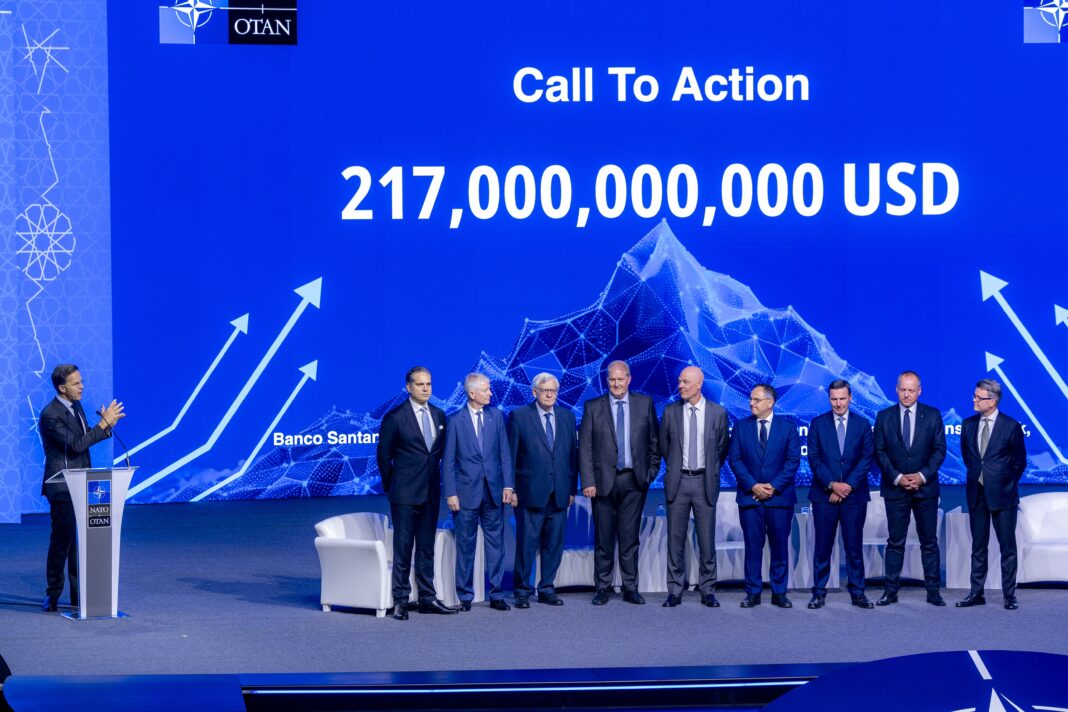
At the Ankara summit this week, NATO also urged financial institutions to increase lending and equity investment in the defense, security and resilience sectors. Banks and funds that welcomed the call had already mobilized $217 billion for defense and security.