

Adem Yavuz Arslan*
In Turkey, this week’s NATO summit in Ankara is being portrayed as a diplomatic triumph for President Recep Tayyip Erdoğan and a showcase of Turkey’s role as host.
From Washington, however, the picture looks very different.
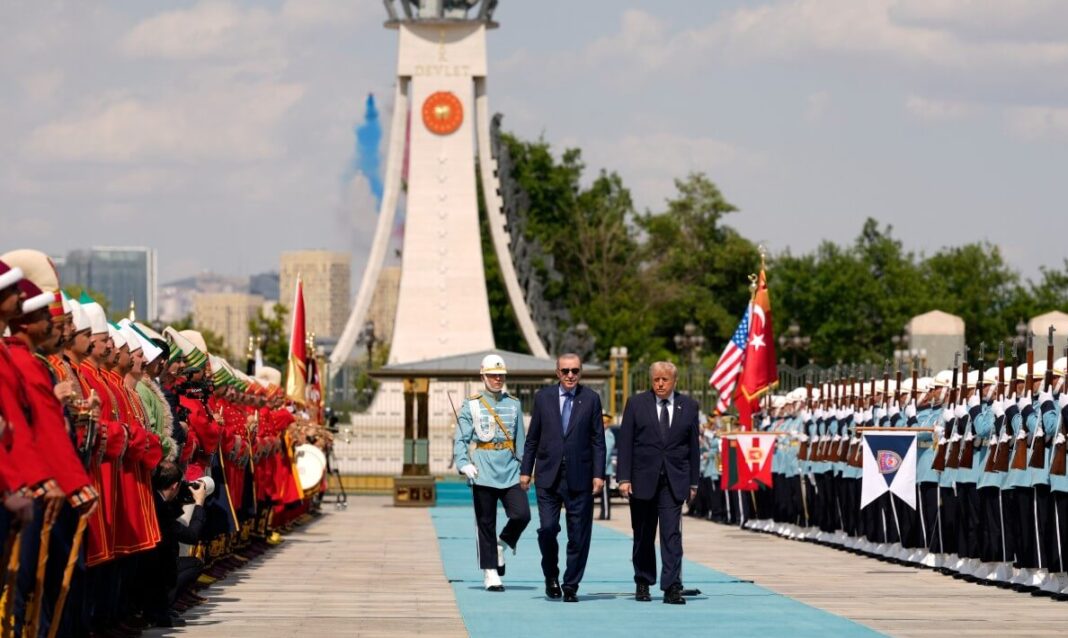
Erdoğan’s warm treatment of US President Donald Trump, the lavish welcome, ceremonial pageantry and repeated praise, drew attention on American social media. But for the US mainstream press and the foreign policy establishment, Turkey is not the central story of this summit.
In fact, even NATO itself is not.
The larger question in Washington is how Trump is reshaping the Western alliance in his second presidency.
Over the past several days, analyses in major American newspapers, on television networks and at think tanks have pointed to the same conclusion: The Ankara summit is being viewed less as a test of NATO’s future than as a test of Trump’s control over the alliance.
The summit showed how much NATO has adjusted to Trump’s priorities since his return to the White House.
It was more than a matter of tone. Over the past six months, the alliance has moved closer to Washington’s demands on defense spending, burden-sharing and a more transactional approach to security.
During his first term, Trump repeatedly dismissed NATO as “obsolete.” Today, he is setting its agenda. Even more striking is Europe’s response. Rather than resisting Trump’s demands, most European governments have chosen to adapt to them.
The recent commitments by several NATO members to increase defense spending are therefore seen in Washington not only as a response to Russia but also as a response to Trump’s political pressure.
Iran has reshaped NATO’s agenda
Only weeks ago, Ukraine was expected to dominate the Ankara summit.
That changed after the US military operation against Iran and the regional developments that followed.
Today, many in Washington’s security community see Iran as increasingly central to NATO’s strategic calculations, along with Ukraine.
Energy security, freedom of navigation through the Strait of Hormuz, Israel’s security, Iran’s missile capabilities and the protection of US military installations across the Middle East are now viewed as connected parts of the alliance’s wider security agenda.
In other words, NATO is again trying to position itself not only as Europe’s security organization but also as a central actor in global security.
Turkey is regaining strategic relevance
This changing security landscape has important implications for Turkey.
Until recently, discussions about Turkey in Washington were dominated by the Russian S-400 missile system, CAATSA sanctions, Sweden’s NATO membership and concerns over democratic backsliding.
Today, the conversation is changing.
The Black Sea. Syria. Iran. Russia. Energy corridors. Migration.
Turkey sits at the intersection of all these issues.
Many in Washington argue that Turkey’s geopolitical importance never truly disappeared. It was simply overshadowed by years of political disputes.
As a result, Ankara is once again being viewed as a strategically indispensable ally.
That does not mean confidence in Erdoğan’s government has significantly improved.
The distinction in Washington remains clear: Turkey’s strategic value has increased, while institutional skepticism toward Erdoğan’s government remains largely intact.
Trump and Congress are not on the same page
The most closely watched part of the summit was Trump’s message to Erdoğan.
Trump’s remarks about lifting CAATSA sanctions on Turkey and reconsidering the sale of F-35 fighter jets generated excitement in Ankara.
Washington heard those remarks differently.
In the American political system, presidential statements do not automatically become government policy. Turkey has been one of the most contentious issues dividing the White House and Congress over the past decade.
CAATSA sanctions remain in force. The legal and political reasons that led to Turkey’s removal from the F-35 program have not disappeared. Bipartisan skepticism toward Ankara remains strong on Capitol Hill.
For that reason, there is still a significant gap between Trump’s warm rhetoric in Ankara and the political and legal realities he will face in Washington.
Early congressional efforts to prepare legislation blocking any potential F-35 sale to Turkey show how difficult that path could become.
Europe’s silence should not be misunderstood
From Ankara, Europe’s restrained approach toward Trump may appear to reflect consensus.
Washington sees something different.
European leaders are trying to avoid another confrontation with Trump because they recognize that the strategic reality has changed.
The possibility that the United States could significantly reduce its military presence in Europe is no longer viewed merely as campaign rhetoric. It is increasingly treated as a serious policy option under discussion in Washington.
As a result, Europe’s immediate objective is not to launch ambitious new initiatives but to get through this period without triggering another transatlantic crisis.
Diplomatic success or geopolitical necessity?
This brings us to perhaps the most important question for Turkey.
Is Ankara’s renewed prominence the product of Erdoğan’s diplomacy?
Or is it the inevitable result of shifting geopolitical realities that have once again made Turkey indispensable?
Most in Washington lean toward the second explanation.
Turkey’s value today comes primarily from its geography, not from the policies of its government.
That geography undoubtedly strengthens Ankara’s leverage. But it also raises Washington’s expectations.
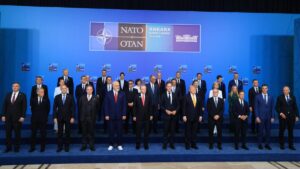
For that reason, however positive the summit’s family photo may look, it would be premature to conclude that the fundamental disagreements defining US-Turkey relations have been resolved.
The real battle begins after the summit
Viewed from Washington, the significance of the Ankara summit goes well beyond another gathering of NATO leaders.
It is the first major demonstration of how much influence Trump now exercises over the Western alliance.
The security environment created by the Iran crisis has once again elevated Turkey’s strategic importance. But geopolitical necessity alone will not resolve the longstanding disputes between Ankara and Washington.
The personal rapport between Trump and Erdoğan will continue to collide with institutional resistance in Congress and across the American national security establishment.
Now that the summit has ended, what matters most is not the carefully staged photographs from Ankara.
The real political struggle will unfold in Washington — in Congress, within the administration and across America’s foreign policy institutions.
For Turkey, that is where the next chapter of this story is likely to be written.
*Adem Yavuz Arslan is a journalist with over two decades of experience in political reporting, investigative journalism and international conflict coverage. His work has focused on Turkey’s political landscape, including detailed reporting on the 2016 coup attempt and its aftermath, as well as broader issues related to media freedom and human rights. He has reported from conflict zones such as Bosnia, Kosovo and Iraq, and has conducted in-depth research on high-profile cases, including the assassination of Turkish-Armenian journalist Hrant Dink. Arslan is the author of four books and has received journalism awards for his investigative work. Currently living in exile in Washington, D.C., he continues his journalism through digital media platforms, including his YouTube channel, Turkish Minute, TR724 and X.
Disclaimer: The views expressed in this opinion piece are those of the author and do not necessarily reflect the editorial stance of Turkish Minute.