
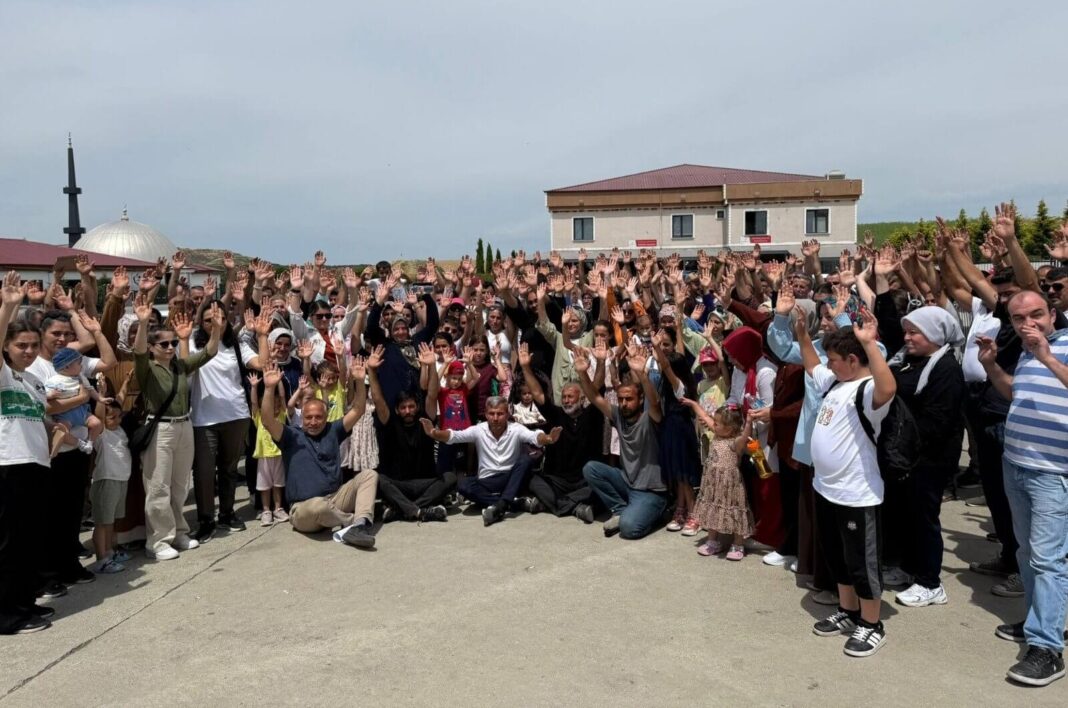

Miners in northwestern Turkey ended a 27-day underground protest and hunger strike after reaching a deal with Özşen Madencilik over unpaid wages, overtime, severance claims and dismissals, their union said has said.
The miners, members of the Independent Mine Workers’ Union (Bağımsız Maden-İş), emerged from the coal mine in Uzunköprü, a district of Edirne province, after talks mediated by the Edirne Governor’s Office ended with a protocol signed by the parties.
A group of 24 miners had remained about 1,200 meters underground as part of the protest, which began over money they said the company owed them for work already performed.
The dispute at Özşen Madencilik, which is affiliated with Kiremitçiler Grup, concerned irregular wage payments, unpaid overtime, severance claims and dismissals.
The miners said they were not seeking a raise but rather payment of their legal entitlements.
Bağımsız Maden-İş said in a statement on X late Monday that the protest had ended in victory.
“Our struggle ended in victory on the 27th day of the Özşen mine resistance,” the union said. “We safely brought out our miner friends who were on a hunger strike underground. This victory belongs to the miners who defended their bread, dignity and future.”
ZAFER DİRENEN MADENCİNİN OLDU!
Özşen Maden direnişimizin 27. gününde mücadelemiz zaferle sonuçlandı.
Yeraltında açlık grevinde olan madenci arkadaşlarımızı sağ salim aldık. Bu zafer, ekmeğine, onuruna ve geleceğine sahip çıkan madencilerin zaferidir.
Yarın maden işçisi… pic.twitter.com/9aK6WneuKU
— Bağımsız Maden İş (@bagimsizmadenis) June 15, 2026
Under the protocol, a committee made up of worker representatives, officials from Turkey’s employment agency İŞKUR, a deputy governor and union representatives will oversee the process.
The committee will prioritize miners’ unpaid wages, compensation and overtime claims and monitor all payments made by Özşen Madencilik, according to the agreement.
The protocol also restricts company spending to wages, fuel, occupational safety equipment and reinforcement materials until the workers’ claims are addressed.
The agreement provides for workplace representative elections and gives the union a representative office at the mine.
Production is expected to resume after the payment irregularities are addressed. Revenue from renewed production will be used to pay workers’ outstanding claims.
Once the debts are cleared, miners will receive one additional wage as a bonus.
The agreement also covers the 27 days miners spent in protest, saying the period will count as insured working time and that the workers will be paid for those days.
The protest had attracted concern from miners’ families and union representatives, who kept watch outside the mine while the workers remained underground.
The union said Monday that communication with the miners had been disrupted, increasing fears about conditions below ground.
The deal comes amid growing labor unrest among miners in Turkey over unpaid wages, severance pay and job security.
Last week 1,361 miners at the Işıklar coal mine in Soma, a district in the western province of Manisa, were told their contracts would be terminated on July 9 after the state-owned mine was transferred to a private company.
In February workers at Yeni Anadolu Madencilik in Soma protested delayed payments and unpaid inflation adjustments.
In April more than 100 miners from Doruk Mining marched roughly 200 kilometers from Eskişehir to Ankara, where they staged a hunger strike outside the Energy Ministry. Police detained 110 of the miners during the protest, which ended later that month after a wage deal was reached.
The Soma district was the scene of Turkey’s deadliest mining disaster on May 13, 2014, when 301 miners were killed and 162 others were injured in a fire inside the Eynez coal mine. The deaths were caused by carbon monoxide that spread through the mine after the fire broke out.
In March an appeals court ruled that cases against public officials over the disaster must be dropped due to the statute of limitations, effectively ending a significant part of the long-running legal process.
The ruling concerned officials accused of abuse of public duty over insufficient oversight of occupational health and safety measures, rather than direct responsibility for the deaths.