
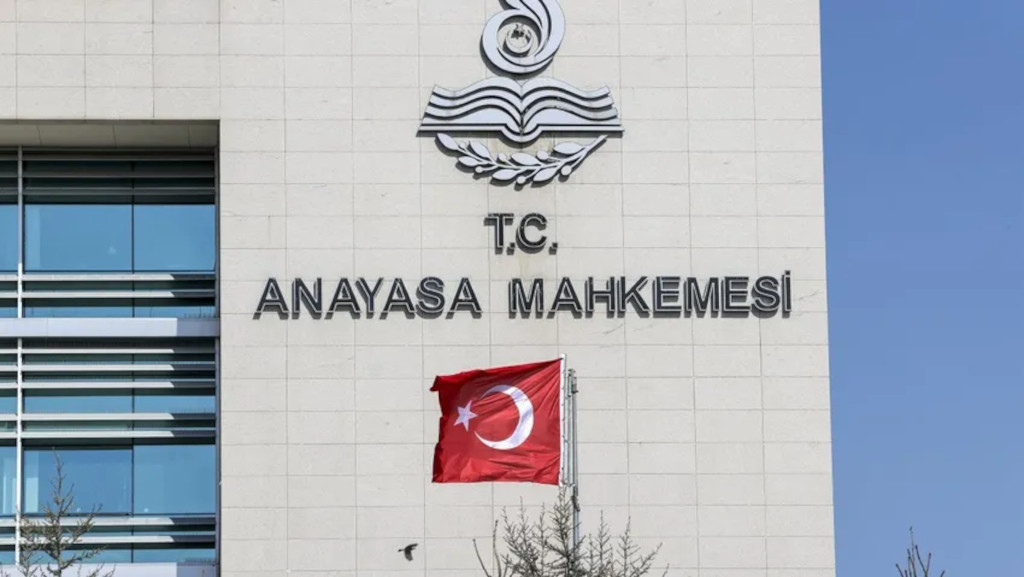

Turkey’s Constitutional Court has struck down a legal provision allowing courts to grant alimony to a divorced spouse for an indefinite period of time, giving parliament nine months to enact a new regulation, the Demirören news agency reported on Thursday.
The court’s General Assembly reviewed an application filed by the Antalya 12th Family Court seeking the annulment of Article 175 of the Turkish Civil Code, which regulates “poverty alimony.”
The court ruled by a majority vote to annul the provision and gave the Turkish Parliament nine months to pass new legislation. The court’s reasoned decision will be published at a later date.
Article 175 of the Civil Code, titled “Poverty Alimony,” states that a spouse who would fall into poverty because of divorce may request alimony from the other spouse in proportion to their financial capacity, provided that the claimant is not more at fault in the divorce. The article also says the fault of the spouse required to pay alimony is not taken into account.
The annulment does not abolish alimony altogether but removes the legal basis for granting poverty alimony “indefinitely,” leaving parliament to determine how the issue will be regulated.
The Constitutional Court had previously rejected a similar request in 2012, ruling at the time that alimony without a fixed time limit was intended to protect a spouse who would fall into poverty after divorce and was a requirement of the social state principle.
Justice Minister Akın Gürlek welcomed the ruling, saying on X that the issue was already among the main topics of a judicial reform package being prepared in line with “intense demands from citizens” and practices in the field.
Gürlek said the government would submit a new regulation to parliament that would protect the rights of both sides after divorce while preventing one party from being put under what he described as an “unfair, lifelong obligation.”
Boşanma sonrası süreçlerde hem tarafların haklarını koruyacak hem de toplumsal huzuru ve aile kurumunun saygınlığını zedelemeyecek, dengeli ve adil bir modelin inşası öncelikli gündem maddelerimizden biriydi.
Vatandaşlarımızdan gelen yoğun talepler ve sahadaki uygulamalar…
— Akın Gürlek (@abakingurlek) June 4, 2026
The decision sparked criticism from the Women’s Platform for Equality (EŞİK), which said the ruling was unacceptable at a time when women in Turkey still face unequal employment conditions, unpaid care work and deepening poverty.
“The solution is not to restrict women’s existing rights but to eliminate inequalities,” EŞİK said in a written statement on Instagram.
The duration of alimony has long been a subject of political and legal debate in Turkey. Government officials have for years argued that indefinite alimony can create unfair burdens for divorced spouses ordered to pay it, while women’s rights groups and lawyers have warned that restrictions could deepen poverty among divorced women, particularly in a country where women’s labor force participation remains limited and many women lack economic independence after marriage.
Previous proposals to limit the duration of alimony had drawn strong criticism from women’s rights advocates, who said such restrictions could discourage women from seeking divorce and force some women to remain in abusive marriages.
Critics of restrictions have also argued that any reform should take into account broader social conditions, including women’s employment, childcare responsibilities, unpaid domestic labor and access to social support mechanisms.
The issue has been part of a larger debate over women’s rights and family law in Turkey, where rights groups have repeatedly accused the government of prioritizing policies aimed at preserving the family over measures protecting women’s economic and legal rights after divorce.