
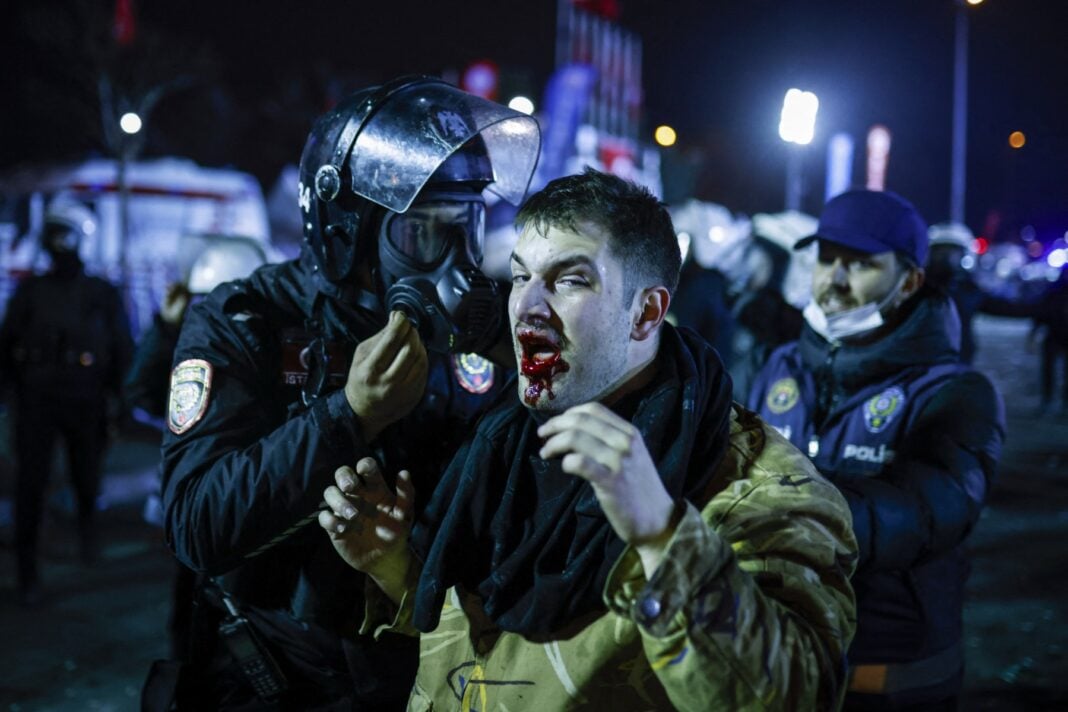

A coalition of Turkish and European rights groups has warned that impunity for human rights violations remains deeply entrenched in Turkey, while civil society organizations face growing obstacles in their efforts to seek accountability.
The findings were published on May 20 in a report by EuroMed Rights, the Human Rights Association (İHD) and the Capacity Development Association (KAGED/İHOP), which examines the environment in which organizations working on accountability, impunity and detention issues operate in Turkey.
The report argues that restrictions on the freedoms of association, expression and peaceful assembly, combined with longstanding concerns over judicial independence, have weakened the mechanisms needed to investigate abuses and hold perpetrators accountable.
As an example the authors point to Turkey’s failure to fully implement rulings of the European Court of Human Rights (ECtHR), including in the cases of businessman and philanthropist Osman Kavala and former pro-Kurdish politicians Selahattin Demirtaş and Figen Yüksekdağ. The report says the cases illustrate what rights groups describe as a widening gap between Turkey’s international human rights obligations and domestic practice.
Turkey continued to be the Council of Europe member state with the highest number of applications before the Strasbourg-based court in 2025, with more than 18,000 applications filed, according to the report.
The report also cites the aftermath of earthquakes in February 2023 that killed more than 53,000 people as an example of limited accountability. It says Turkish law requires administrative authorization before many public officials can be prosecuted and that by late 2025 authorities had authorized cases against only 84 officials across the disaster zone despite criticism of regulatory failures that contributed to building collapses.
According to the authors, pressure on civil society groups has intensified in recent years through administrative inspections, legal proceedings and financial restrictions. The report highlights the December 2025 court-ordered closure of Genç LGBTİ+, an LGBTQ+ rights association based in Izmir, on grounds of “obscenity,” a decision rights advocates described as part of a broader crackdown on LGBTQ+ organizations.
The report also points to legal proceedings against Istanbul Bar Association President İbrahim Kaboğlu and 10 members of the association’s executive board over a statement concerning the killing of journalists in Syria, describing the case as an example of pressure on legal professionals and human rights advocates.
Press freedom groups cited in the report raised concerns over criminal investigations targeting journalists, including Furkan Karabay, Alican Ulusoy and İsmail Arı, whose reporting focused on alleged corruption in state institutions.
According to official figures cited in the report, Turkey had 102,508 registered associations as of May 2026, but only 1,534 were classified as operating in the field of rights and advocacy.
The report also highlights conditions in Turkey’s prison system. It says the country’s prison population has reached 414,401 inmates despite a total capacity of 304,956, while 891 children aged six and under were living with incarcerated mothers.
As an example of conditions in detention facilities, the report cites an incident in November 2025 in which 131 prisoners at Ferizli Prison in northwestern Turkey were hospitalized with food poisoning, raising concerns about nutrition, hygiene and oversight.
Turkish authorities have repeatedly denied accusations that courts operate under political influence and maintain that the judiciary functions independently and in accordance with the law.
The report concludes that civil society organizations remain central to documenting violations and pursuing accountability in Turkey but warns that increasing pressure on those groups risks further weakening oversight of public institutions and access to justice for victims.
This article is republished from the Stockholm Center for Freedom.