
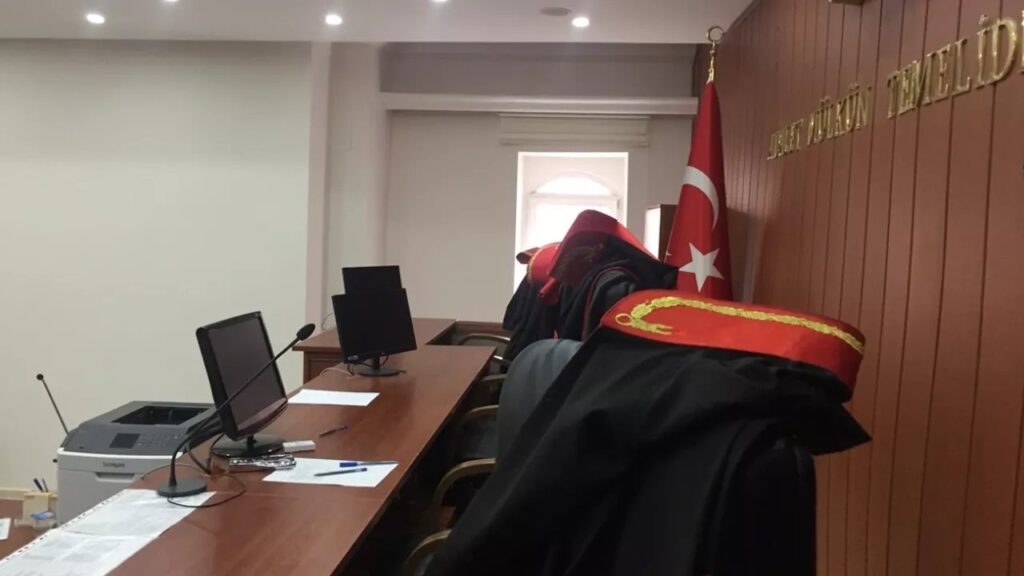

Turkey’s judiciary faced a heavy workload in 2025, with prosecutors handling an average of 1,373 cases each and judges 767 cases, according to a Justice Ministry performance report that shows mounting pressure on the country’s court system.
The report said criminal cases took an average of 248 days to conclude, while civil cases lasted 243 days and administrative cases 172 days, reflecting the strain on courts across the country.
According to ministry data, 18,267 judges and 8,514 prosecutors were serving nationwide at the end of 2025, equivalent to 21.3 judges and 9.9 prosecutors per 100,000 people. The ministry also said 2,428 judges and prosecutors were appointed during the year.
The report further pointed to the growing use of alternative dispute resolution mechanisms aimed at easing the burden on courts. More than 1.9 million disputes were referred to mediation in 2025, while the probation system handled 855,028 cases, the data showed.
Political cases and long-running investigations
The figures come as Turkish courts continue to handle a large number of politically sensitive investigations and trials.
Since the main opposition Republican People’s Party (CHP) won a sweeping victory in the March 2024 local elections, defeating President Recep Tayyip Erdoğan’s ruling Justice and Development Party (AKP) in major cities including İstanbul and Ankara, the party has faced a broad legal crackdown.
İstanbul Mayor Ekrem İmamoğlu, widely seen as Erdoğan’s strongest political rival, was arrested in March 2025 on corruption charges that critics say are politically motivated and aimed at sidelining him ahead of the 2028 general election.
His detention marked a turning point in the pressure on the CHP, with a growing number of investigations targeting opposition-run municipalities. According to opposition figures, 15 CHP mayors are currently behind bars, while numerous municipal officials have faced probes, arrests or prison sentences.
At the same time, Turkish courts continue to process cases stemming from the government’s long-running crackdown on the Gülen movement, a faith-based group inspired by the late Turkish Islamic scholar Fethullah Gülen.
President Erdoğan has been targeting followers of the movement since corruption investigations in December 2013 that implicated him as well as some members of his family and inner circle.
Dismissing the investigations as a Gülenist coup and a conspiracy against his government, Erdoğan began to target the movement’s members. He designated the movement as a terrorist organization in May 2016 and intensified the crackdown on it following an abortive putsch in July of the same year that he accused Gülen of masterminding. The movement strongly denies involvement in the coup attempt or any terrorist activity.
According to the latest figures from the Justice Ministry, more than 126,000 people have been convicted for alleged links to the movement since 2016, with 11,085 still in prison. Legal proceedings are ongoing for over 24,000 individuals, while another 58,000 remain under active investigation nearly a decade later.