
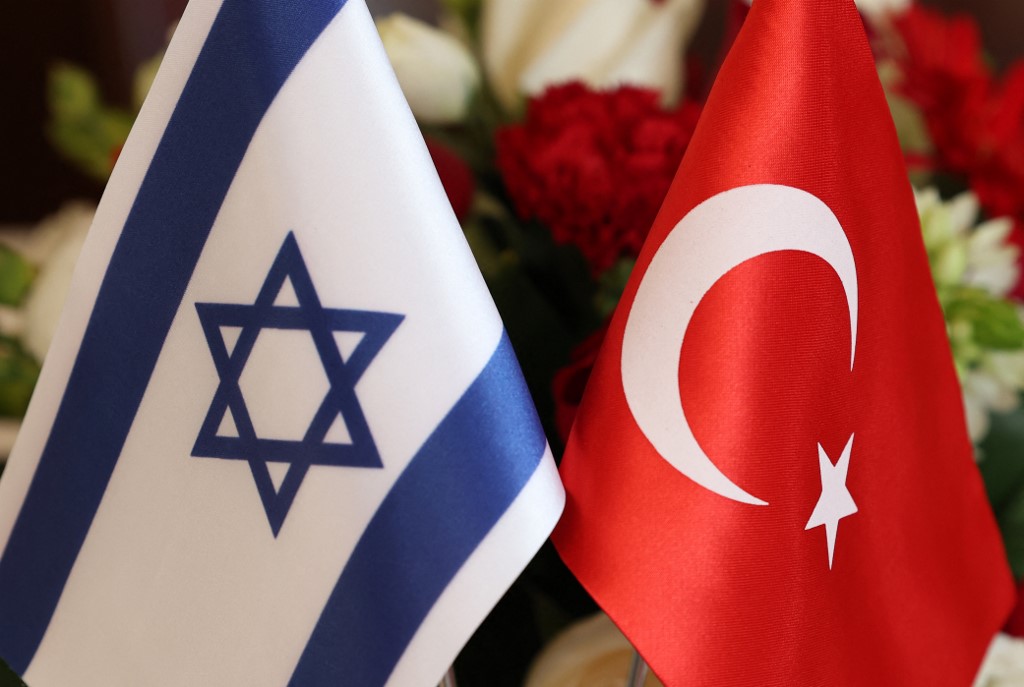

Turkish military and foreign policy experts told the Cumhuriyet daily that claims Israel could turn on Turkey after US and Israeli strikes on Iran do not line up with military and political realities.
A PanoramaTR survey of 2,109 respondents published in February found that Turks now view Israel as the country’s biggest external threat.
🇮🇱🇹🇷 “A new Turkish threat is emerging”
— Former Israeli pm Naftali Bennett pic.twitter.com/lqwp2ymT5j— Lord Bebo (@MyLordBebo) March 1, 2026
Anxiety grew after former Israeli prime minister Naftali Bennett said on February 17 that “a new Turkish threat is emerging,” arguing that Turkey is replacing Iran as a main danger to Israel. Bennett described President Recep Tayyip Erdoğan as “a sophisticated and dangerous adversary” who wants to encircle Israel.
Retired Brig. Gen. Ali Er told Cumhuriyet he sees no political rationale for an Israeli attack on Turkey and argued that the debate appears aimed at shaping domestic public opinion. He said Israel could damage Turkey in a conflict but would face heavier consequences.
Er said geography and alliances also limit the scenario. Turkey and Israel do not share a land border, meaning Israel would be limited to air operations. He said striking Turkey would mean attacking a NATO member state, which he described as implausible.
He cited Turkey’s November 2015 downing of a Russian warplane near the Syrian border, which triggered a crisis with Moscow, as an example of NATO’s deterrent effect.
Dr. Remzi Çetin, an academic who studies Israeli politics and foreign policy, told Cumhuriyet that Turkey has no incentive to seek a fight with Israel and that any confrontation would also mean facing the United States because of Washington’s backing for Israel.
Çetin pointed to the regional landscape after the collapse of Bashar al-Assad’s government in Syria in early December 2024 and said Turkey has built leverage in Syria since then. He noted that then US President-elect Donald Trump said in December 2024 that Turkey would “hold the key” to what happens in Syria.
Çetin said sharp rhetoric from Israeli politicians should be read in the context of domestic politics, arguing that it is tied to electoral messaging ahead of Israel’s election, which is scheduled for October 2026. He said a Turkey-Israel conflict would be a regional disaster and not like Israel’s past wars.