

A large majority of the public in Turkey views the country’s economic situation negatively, with 82 percent saying the economy is on the wrong track, while only 17 percent describe it as improving, according to a nationwide survey conducted in late December.
The poll, conducted December 20-26 by Gündemar Research, surveyed 2,365 participants across 60 provinces to assess public evaluations of 2025 and expectations for 2026.
When asked how they viewed 2025 overall, over three-quarters of respondents said it had been a bad year. Assessments varied sharply along political lines. Half of ruling Justice and Development Party (AKP) voters described the year as “good,” compared with 38 percent among supporters of its far-right ally, the Nationalist Movement Party (MHP).
The figure fell to just 6 percent among voters of the main opposition Republican People’s Party (CHP) and the nationalist opposition İYİ (Good) Party. Among pro-Kurdish Peoples’ Equality and Democracy Party (DEM Party) supporters, only 16 percent described the year positively.
By contrast, participants who said 2025 was a bad year accounted for 49 percent of AKP voters, 59 percent of MHP voters, 93 percent of CHP voters, 91 percent of İYİ Party voters and 78 percent of DEM Party voters.
Public pessimism was even more pronounced on economic issues. Asked to evaluate Turkey’s economic performance in 2025, 82 percent of respondents said it was bad. Among AKP voters, 47 percent described the economy as good, compared with 23 percent among MHP supporters.
It was 3 percent among CHP and İYİ Party voters and 10 percent among DEM Party supporters. People describing the economy as bad accounted for 52 percent of AKP voters, 74 percent of MHP supporters and more than 90 percent among opposition voters.
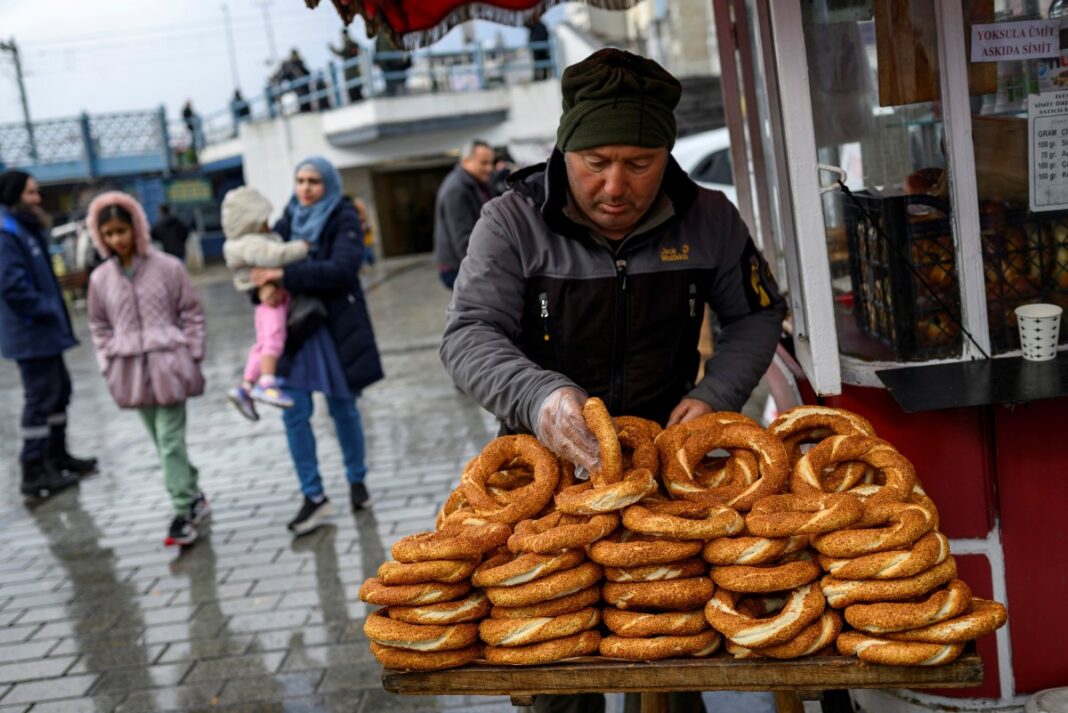
Rising food prices emerged as the most pressing economic problem across the political spectrum. Majorities in all voter groups said market and basic food prices were the single most burdensome issue for households in 2025.
Housing and rent ranked second, followed by electricity, natural gas and water bills. Income insufficiency was cited more frequently among opposition voters than among supporters of the ruling bloc.
The survey also found deep mistrust in institutions beyond the economy. Seventy-seven percent of respondents said the justice and legal system functioned poorly in 2025, while similarly high levels of dissatisfaction were recorded over freedom of expression. Large majorities of opposition voters said freedom of expression was in a poor state, compared to lower but still notable shares among AKP (26 percent) and MHP voters (46 percent).
Asked to describe their emotional state when thinking about 2025, respondents most frequently chose “anxious” (38 percent), followed by “unhappy” (24 percent), with anxiety particularly pronounced among DEM Party and CHP voters.
Looking ahead, pessimism continues into 2026, according to Gündemar figures. A majority of respondents said they expect their personal economic situation to worsen this year, with particularly high pessimism among opposition supporters. Only 40 percent of AKP voters said they expect their economic situation to improve, while that figure dropped to single digits among CHP and İYİ Party supporters.
Turkey has been grappling with a deepening cost-of-living crisis marked by high inflation and a depreciating currency. The country’s poorest households have been hit hardest by an economic deterioration that saw official annual inflation reach a decades high of 85 percent in October 2022, according to official data.
While inflation has since declined, it remains a major concern. Official figures from the Turkish Statistical Institute (TurkStat) show annual inflation stood at 30.9 percent in December, marking a fourth consecutive monthly decline. The 12-month annual average for 2025 was 34.9 percent, down from 58.5 percent in 2024.
Consumer prices rose sharply over the past year, particularly in education (66 percent), housing (49.5 percent), food (28.3 percent) and healthcare (30.1 percent), according to TurkStat.
Independent economists from the Inflation Research Group (ENAG), however, dispute the official figures, estimating year-on-year inflation at 56.14 percent in December, nearly double the official rate.
Despite the downward trend in official data, elevated prices continue to squeeze households, especially in essential goods, forcing many to cut back on basic needs. The Turkish lira has lost more than 130 percent of its value against the dollar since mid-2022, sliding from around 17.5 to over 40 lira per dollar in just three years.