
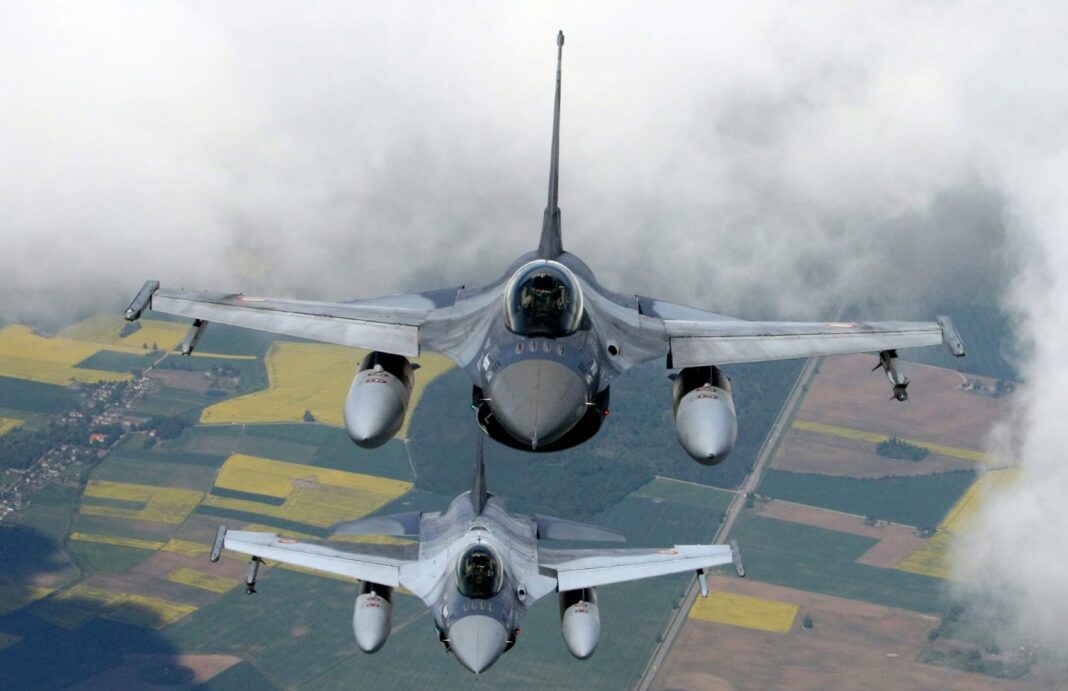

NATO has asked Turkey to deploy F-16 fighter jets for the alliance’s Baltic Air Policing mission in 2026, several months earlier than originally planned, Bloomberg reported, citing officials familiar with the request.
The proposed deployment would involve a four-month rotation in Estonia from August through December as NATO strengthens air defenses following repeated Russian airspace violations, the officials said. Turkey had previously been scheduled to send warplanes to Romania for the same mission from December 2026 to March 2027.
Turkish authorities have not yet decided whether to approve the request. Turkey last took part in Baltic Air Policing patrols in early 2025, the officials said, speaking on condition of anonymity due to the sensitivity of the discussions.
Turkey’s Defense Ministry declined to comment. NATO did not immediately respond to a request from Bloomberg for comment.
The request comes ahead of a NATO summit Turkey is set to host in July.
NATO says it takes responsibility for the integrity, safety and security of its airspace seriously and maintains agreements to ensure a uniform level of protection across Europe. For member states that lack sufficient air capabilities, allied countries provide support under NATO’s collective air policing arrangements.
Lithuania, Latvia and Estonia do not have fighter aircraft to patrol their own airspace. As a result, NATO allies have provided air policing for the three Baltic states since they joined the alliance in 2004. The mission was initially based at Šiauliai Air Base in Lithuania.
After Russia’s annexation of Crimea in 2014, NATO expanded the mission by establishing a second air policing presence at Ämari Air Base in Estonia as part of its assurance measures for eastern allies.
Fighter jets assigned to NATO’s Baltic Air Policing mission are frequently scrambled to visually identify Russian military aircraft. NATO says much of this activity is linked to the Russian exclave of Kaliningrad, where Russian aircraft regularly fly between the enclave and mainland Russia.
According to NATO, Russian aircraft often approach or fly close to alliance airspace without using transponders, communicating with air traffic control or filing flight plans, prompting allied jets to intercept and identify them.
Security concerns in the region have increased in recent months. In December a Turkish F-16 shot down an unmanned aerial vehicle over the Black Sea as it approached Turkish airspace.
Days later, a drone believed to be Russian-made was found crashed in northwestern Turkey amid broader concerns over security incidents in the Black Sea, including attacks on ships linked to Russia.