
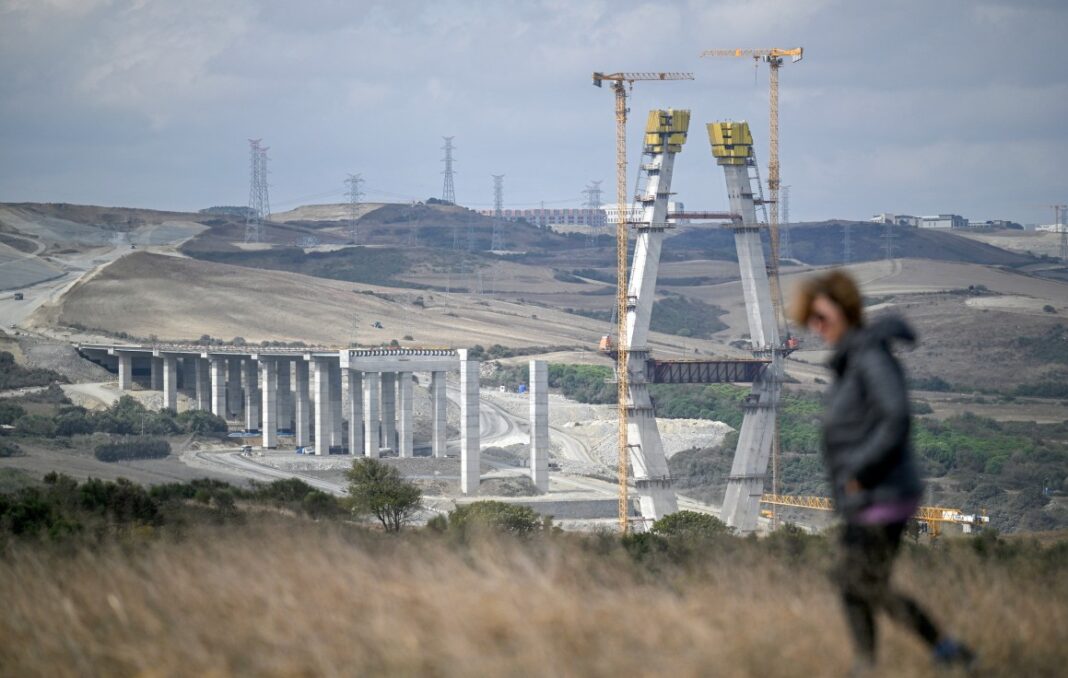

Turkey has lost more land to construction than any other European country over the past six years, according to a new report by the Heinrich Böll Foundation.
The Soil Atlas 2025-Turkey also identifies waste dumping, excessive pesticide use and rapid urbanization as major contributors to widespread soil contamination.
Between 2018 and 2024, construction activities consumed 1,860 square kilometers of land in Turkey, nearly double the figure for second-place Poland. In İstanbul alone 178 square kilometers of previously permeable land became sealed surfaces between 2006 and 2021, equivalent to approximately 36,000 football fields. Impermeable surface expansion has grown at twice the rate of population increase, according to the report.
When soil is covered with concrete or asphalt, it loses its capacity to absorb water, increasing flood risk and allowing pollutants to spread across wider areas through surface runoff, the report says.
The atlas, published in December 2025, identifies uncontrolled domestic waste as the largest contributor to soil pollution, accounting for 26.9 percent of total contamination. Illegal waste dumping follows at 21.8 percent, with industrial residue, debris and liquid waste often disposed of in farmland, riverbeds or abandoned areas.
The report attributes approximately 11.5 percent of soil pollution to excessive fertilizer use. Turkey applies around 2.3 million tons of chemical fertilizers annually. Improper timing, dosage and application lead to soil acidification, increased salinity and heavy metal accumulation. Approximately 32.5 percent of irrigated agricultural land, covering some 1.5 million hectares, now suffers from salinity problems.
Pesticide contamination presents another concern. The country uses approximately 55,000 tons of pesticides each year, with residues persisting in soil, migrating through water systems and accumulating in biological tissues.
The report cites the continued detection of dichlorodiphenyltrichloroethane (DDT) derivatives in some regions despite the substance being banned in Turkey in the 1970s. This finding underscores warnings that currently used pesticides may carry similar risks of persistence and bioaccumulation.
The environmental toll aligns with Turkey’s position in international food safety monitoring. Data from the European Union’s Rapid Alert System for Food and Feed (RASFF), compiled by Greenpeace Turkey, showed that Turkey ranked second among countries flagged for pesticide-related alerts in the EU market in 2025, with 105 notifications. Fresh peppers accounted for more than half of border rejections, with eight alerts involving formetanate, a highly toxic pesticide banned for use on peppers in Turkey and listed by the World Health Organization among the eight most dangerous pesticides.
Greenpeace Turkey director Berkan Özyer has described Turkey’s ranking as alarming and indicative of a systemic failure in pesticide management, calling for public disclosure of inspection results.
Mining waste contributes approximately 9 percent of soil pollution, with heavy metals from mining sites spreading to surrounding agricultural areas. Livestock waste accounts for 3.8 percent, with improperly managed animal waste from intensive farming operations contaminating both soil and water.
The report warns that soil contamination poses direct public health risks. Endocrine-disrupting chemicals and plastics transported through contaminated soil have been linked to attention deficit disorders, early puberty, obesity and developmental issues in children. In adults, associated conditions include thyroid disorders, diabetes, infertility and certain cancers.
Erosion compounds the problem, with Turkey losing approximately 642 million tons of soil annually. Some 59 percent of the country’s surface area faces erosion risk, while 25.5 percent is classified as high desertification risk. Approximately 150 million tons of eroded soil ends up in reservoirs each year, indicating that pollutants from agricultural land are being transported into water systems.
Organic matter content in Turkish soil has fallen below 1 percent, significantly reducing the soil’s natural capacity to filter and neutralize contaminants. When organic matter content increases by 1 percent per hectare, the soil can retain approximately 150,000 additional liters of water, a critical threshold given climate change pressures, according to the atlas.
The report presents agroecological practices as a necessary response rather than an optional alternative. Such approaches reduce chemical inputs, increase organic matter and strengthen the soil’s water retention and filtration capacity. However, the atlas says meaningful transformation requires public policy intervention rather than individual efforts alone.
Environmental advocates have repeatedly called for stricter oversight of agricultural chemical use and greater transparency in soil quality monitoring, warning that pollutants in degraded soil can enter food chains and drinking water supplies.