
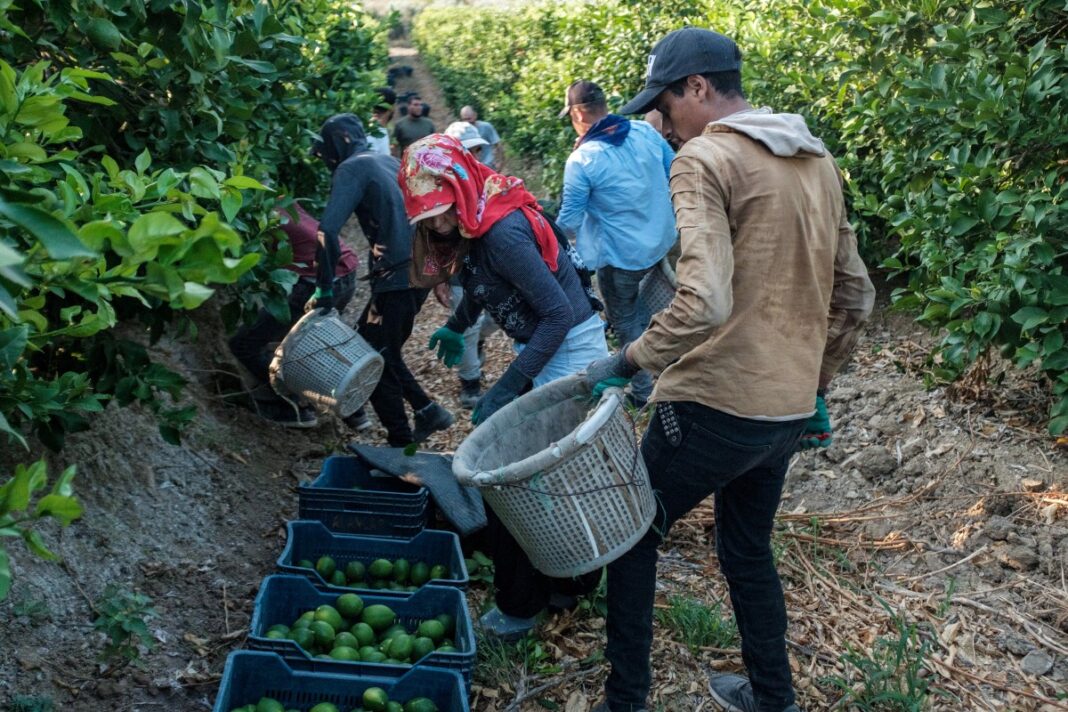
 came to power, according to a report released by main opposition Republican People’s Party (CHP) Deputy Chairman Yalçın Karatepe.)
Turkey has lost 2.6 million agricultural jobs since 2002, when the ruling Justice and Development Party (AKP) came to power, according to a report released by main opposition Republican People’s Party (CHP) Deputy Chairman Yalçın Karatepe.
The findings, first reported by the Cumhuriyet daily, describe a sharp fall in the sector’s share of the economy and in total employment at a time of rising food prices and growing import dependence.
Karatepe said successive AKP governments weakened the country’s farm system and left low-income households exposed to higher food costs.
According to the report agricultural employment dropped from 7.5 million people in 2002 to 4.8 million in 2024. The sector’s share of total employment fell from 34.9 percent to 14.8 percent over the same period. Agriculture’s share of gross domestic product (GDP) declined from about 10.2 percent to 5.6 percent.
The report says mechanization contributed to job losses, but it argues that government policy and market conditions made small-scale farming less viable.
Public investment in agriculture also dropped. It accounted for 3.4 percent of total public investment in 2002 but is projected to fall to 1.5 percent by 2026, according to planning documents cited in the report.
Turkey currently has the highest food inflation among European and Organisation for Economic Co-operation and Development (OECD) countries. Data from the Turkish Statistical Institute show that agricultural input prices rose about 41 percent in 2023, while producer prices increased between 34 percent and 45 percent. Consumer food prices climbed about 33 percent in 2024.
The report cites studies suggesting that many low-income households struggle to regularly buy meat, poultry or fish, though it notes that updated official nutrition data are needed to confirm the scale.
Dependence on imports has grown over the past decade. The share of imported inputs used in farm production rose from 14.5 percent in 2012 to 22.4 percent in 2023. Live animal and food imports increased from $7.9 billion in 2013 to more than $15 billion in 2023. Trade data show that Turkey imported $139 billion worth of food products between 2013 and 2023.
Karatepe said the rise in imports exposes Turkey to currency swings and reflects policy decisions that pushed the sector toward foreign suppliers.
The report also notes that Turkey lost about 6 percent of its farmland between 2002 and 2023, with total agricultural land falling from more than 41 million hectares to under 39 million hectares. Per-capita agricultural land fell from 0.40 hectares in 2001 to 0.28 hectares in 2023.
It also highlights a long-running gap between the government’s subsidy spending and the level required by law. Agriculture Law No. 5488 states that support payments must equal at least 1 percent of GDP, but the share of subsidies fell from 2.7 percent of the national budget in 2006 to a projected 0.9 percent in 2026.
Tax expert Ozan Bingöl estimates that farmers are owed about 3.5 trillion lira in unpaid support for the 2006–2024 period, saying the government has not met the legal threshold in any year. In 2024 the state spent 1.27 trillion lira on interest payments but only 91.5 billion lira on agricultural support.
Karatepe said the CHP would overhaul agricultural policy if it comes to power. He told reporters in the western province of Burdur that the party would create a model shaped by transportation, climate and energy costs to secure affordable food for consumers and stable income for farmers.