
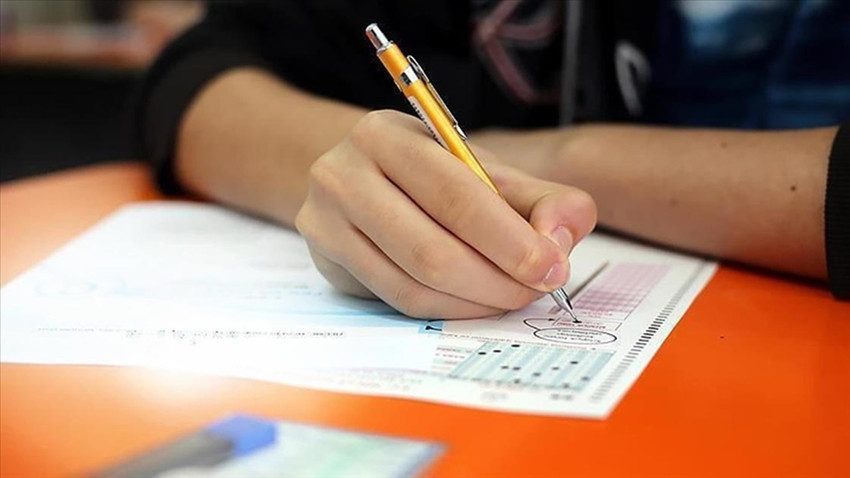

Turkey’s 2025 university entrance exam results, announced Monday by the Student Selection and Placement Center (ÖSYM), showed state universities at nearly full enrollment while private schools saw their lowest in a decade, intensifying concerns about quality of education and rising tuition.
According to data published by the Council of Higher Education (YÖK), state universities filled more than 99 percent of their open seats, while private universities filled about 75 percent. Out of 21,602 available programs, 779 attracted no students.
YÖK data show that as of 2024, Turkey has a total of 209 universities, including 131 state institutions and 78 private (foundation) universities.
Most seats filled, but gaps widen
State universities achieved near-total enrollment , but private universities recorded their weakest placement rate in 10 years.
Only about one-third of those placed had recently graduated from high school. Most seats went to repeat applicants or college graduates who want to undertake studies in a different field, revealing the struggles of new high school graduates to secure spots.
Undergraduate enrollment at private universities dropped to 74.8 percent, compared with 86 percent last year and 95.3 percent the year before. The steep decline has been largely attributed to soaring tuition fees.
For the 2025–26 academic year, private universities including prestigious ones such as Sabancı, Koç, Özyeğin, Bilgi and Medipol announced new tuition rates. The average increase was 53.5 percent, but in some programs hikes exceeded 140 percent. Medical schools saw the steepest rises, with Medipol University’s medical faculty posting a 144.4 percent jump, the highest among all institutions.
An examination of tuition data shows sharp variations across institutions: Sabancı raised its annual fees 45 percent to 1.59 million lira ($38,780), while Koç increased undergraduate tuition nearly 48 percent to 1.59 million lira ($38,780). Bilgi University’s social sciences program jumped 74.5 percent to 480,000 lira ($11,707), while its law program rose 56.7 percent to nearly 700,000 lira ($17,073). At the upper end, Üsküdar University’s medical faculty tuition climbed 79 percent to 1.44 million lira ($35,122) and İstanbul Ticaret increased fees 75 percent to 665,000 lira ($16,220).
Economist İnan Mutlu has associated the low placement rate at private universities with the rising private university fees in the country. He said on X that while university costs in Europe rose just 5.2 percent, private university fees in Turkey increased by an average of 108 percent over the past year. As a result, annual tuition in Turkey now rivals or exceeds the fees in many EU countries, even though average income remains much lower.
Mutlu depicted the problem with a chart he shared on X, showing how fees at Turkey’s private universities have more than doubled in just one year. He criticized the trend, saying it reflected “a merchant mentality that treats students as customers.”
Critics have also warned about the mushrooming of private universities in recent years, many of which lack proper campuses, laboratories or permanent academic staff, operating instead out of rented buildings with limited resources.
Education unions and analysts say this trend reflects the growing commercialization of higher education, where universities are run more like businesses than institutions of learning. They warn that the shift weakens academic quality, burdens families with high tuition and reduces higher education to a profit-driven enterprise.
Score gaps highlight system flaws
Placement results also revealed striking disparities between top and bottom-ranked students entering the same program, with differences reaching 1.71 million places in the national ranking.
According to figures reported by the BirGün newspaper, the gaps were equally stark in exam scores. In medicine, the highest admitted student scored 562, while the lowest scored 445. In psychology, one student entered Koç University with 543 points, while another enrolled at Bahçeşehir Cyprus University with 144, a difference of 399 points. The gap reached 351 points in physics, 254 in English language and literature, and 215 in Arabic translation and interpretation.
Experts said the results reflected both shortcomings in the assessment system and economic pressures on students.

The debate intensified when Professor Behçet Yalın Özkara, a frequent critic of favoritism in academia, claimed he had secured a place in a private university’s psychology program this year by using “AI-assisted guessing” during the exam. His remarks on social media fueled fresh concerns about loopholes in the system that undermine trust in placement results.
Growing shift abroad
Rising costs and barriers at home are pushing more students abroad. Open Doors 2024 reported that the number of Turkish students studying in the United States rose 5.7 percent in 2023–24 to 9,148, the highest increase in 15 years.
Language education also expanded. Market research shows that more than 24,000 Turkish students pursued English training abroad in 2023–24, a roughly 26 percent rebound after the pandemic slump. Industry analysis suggests that between 2019 and 2023, the total number of Turkish students abroad rose by more than 30 percent, which experts interpret as both a search for affordable education and a sign of declining confidence in opportunities at home.
Outlook for next year
Education expert Salim Ünsal noted that state universities reduced their quotas this year, boosting enrollment, while private universities kept quotas steady despite sharp fee hikes. As a result, he said, large gaps emerged.
Ünsal predicted that more than 30,000 state university slots and around 100,000 seats overall could remain empty after the placement process ends.
No official statements have been issued by private university associations or government authorities regarding the low enrollment rates.