
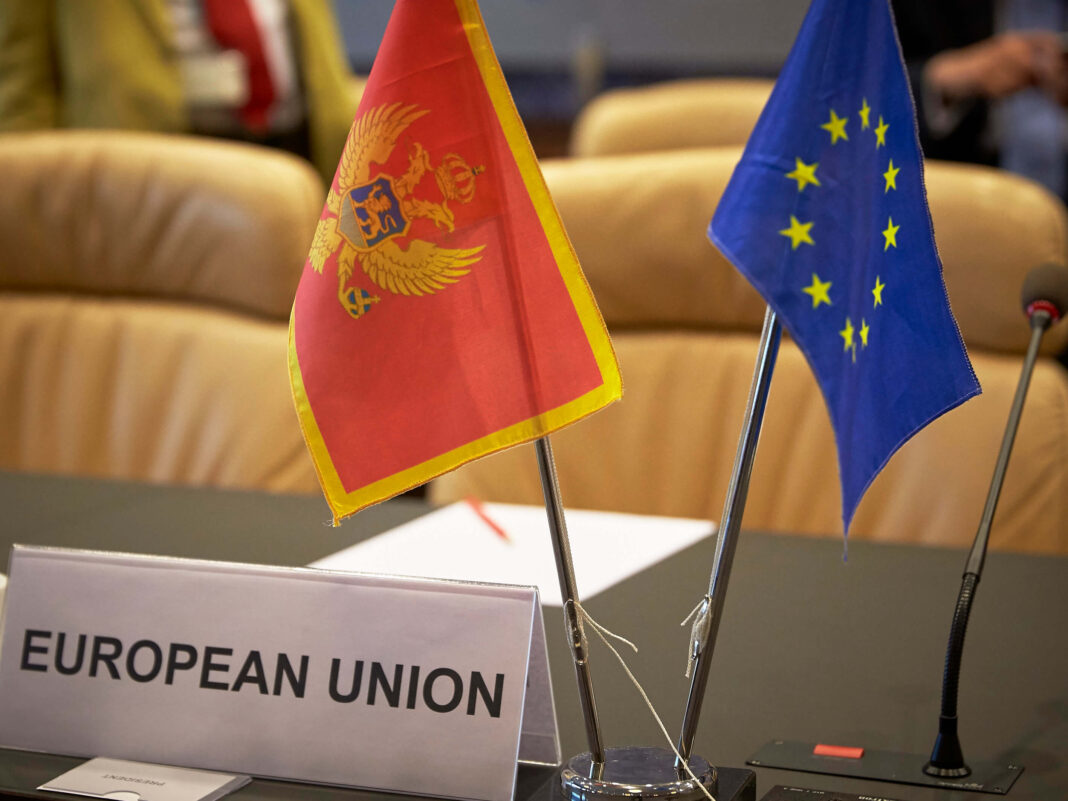

Montenegro will require Turkish citizens to obtain visas beginning November 1 as part of efforts to align its immigration policies with those of the European Union, ending a visa-free arrangement that has made the Adriatic country a popular destination for Turkish tourists and entrepreneurs.
The Montenegrin government said citizens of Turkey, Russia, Belarus, China and Saudi Arabia would remain eligible under the existing rules through October 31 but would need visas for entry beginning November 1, 2026.
The government adopted the amendments on July 23, saying the measure brought Montenegro’s visa policy fully into line with that of the EU and fulfilled one of the final requirements for closing Chapter 24 of its accession negotiations, which covers justice, freedom and security.
Montenegro, a candidate for EU membership since 2010, hopes to complete the accession process and become the bloc’s 28th member in 2028.
The government said compliance with the requirement would also enable Montenegro to receive approximately €4 million ($4.7 million) under the EU’s Growth Plan for the Western Balkans.
The Foreign Ministry said it was taking steps to limit the potential negative impact on tourism and business and make visa applications as accessible as possible.
Under an arrangement with visa-processing company VFS Global, Turkish citizens will be able to submit applications at centers in Turkey instead of applying exclusively through Montenegrin diplomatic missions.
Montenegro is also developing a new visa information system with the eventual goal of allowing online applications through an electronic visa system, according to the government announcement.
The decision marks the second major change affecting Turkish travelers in less than a year.
Montenegro temporarily suspended visa-free entry for Turkish citizens in late October 2025 following a knife attack in the capital of Podgorica. Turkish nationals were initially accused of involvement, prompting protests and attacks targeting members of the Turkish community.
A Montenegrin court later found that two Turkish citizens detained in connection with the incident had no link to the attack and ordered their release.
The government restored visa-free travel on December 23 but reduced the permitted stay for Turkish citizens from 90 to 30 days within a 180-day period. It said the restriction was intended to prevent irregular migration and bring the country closer to EU visa policy, warning that visas could be reintroduced if security risks emerged.
The latest decision makes the visa requirement permanent as part of Montenegro’s EU alignment rather than linking it to a specific security incident.
Montenegro has become an increasingly popular destination for Turkish tourists due to its Adriatic coastline, relatively short flight from Turkey and visa-free entry.
Official statistics show that 134,266 tourists from Turkey visited Montenegro in 2025, accounting for 5.3 percent of all foreign arrivals. They recorded 640,092 overnight stays, or 4.3 percent of overnight stays by foreign tourists, according to Montenegro’s statistics agency, MONSTAT.
The figures differ from earlier reports claiming that approximately 320,000 Turkish citizens visited annually.
Turkish citizens have also established a significant residential and commercial presence in the country. Interior Minister Danilo Šaranović said in late 2025 that around 13,000 of the approximately 100,000 foreigners having temporary or permanent residence permits in Montenegro were Turkish citizens.
A July 2024 report by the Turkish business association TurkCham Montenegro said approximately 9,500 Turkish-owned companies were registered in the country, although the figure included businesses that were not necessarily active.
Turkey was among the first countries to recognize Montenegro after it declared independence in June 2006. The two countries signed a visa exemption agreement in January 2008, which entered into force that May and initially allowed holders of ordinary, diplomatic, special and service passports to stay for up to 90 days in any 180-day period.
Turkey and Montenegro also have agreements covering free trade, economic cooperation and reciprocal investment. Their leaders said in 2021 that they aimed to increase bilateral trade to $250 million.