

Ömer Murat*
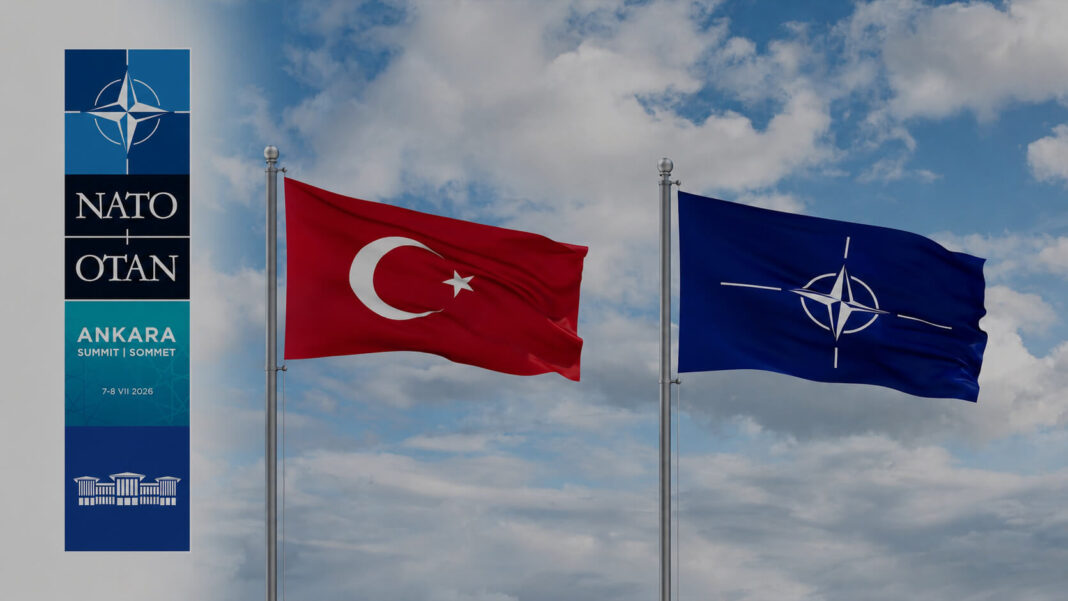
When NATO leaders gather in Ankara next month, they will spend hours discussing democracy, collective security and the values that bind the alliance together. Yet one of the summit’s biggest stories will not be on the official agenda.
Many of Turkey’s best-known independent journalists will not even be allowed inside.
Turkish authorities have denied accreditation to dozens of reporters from independent and opposition media outlets, ensuring that only journalists approved by the government of President Recep Tayyip Erdoğan will be able to cover one of NATO’s most important meetings closely. NATO has acknowledged that access decisions for domestic journalists are based on assessments provided by the host government. As a result, an alliance founded on democracy has effectively outsourced press freedom to one of its most authoritarian members.
This is far more than an accreditation dispute. It is the internationalization of censorship. For years Erdoğan’s government has systematically dismantled media freedom inside Turkey. More than 100 media organizations have been closed or taken over since a coup attempt in 2016. Hundreds of journalists have been prosecuted or imprisoned. Independent television stations have been subjected to crippling fines. Critical websites have been blocked. Social media platforms face constant pressure to remove content or restrict accounts. Now that same system of political filtering is being exported to an international NATO summit. International watchdogs have documented this democratic collapse for years.
Freedom House has classified Turkey as “Not Free” since 2018. In its latest report, the organization gave Turkey only 32 out of 100 points and concluded that President Erdoğan has steadily consolidated power through constitutional changes, imprisonment of political opponents, restrictions on journalists and suppression of civil society. The report highlights the arrest of Istanbul Mayor Ekrem İmamoğlu, the continued censorship of independent media and growing restrictions on online expression.
Reporters Without Borders paints an equally troubling picture, ranking Turkey near the bottom of its global Press Freedom Index and warning that authoritarianism continues to undermine media pluralism while virtually every available tool is used against critical journalism.
None of this happened overnight. Nor did it happen because the international community failed to notice. The warning signs have existed for more than a decade. The imprisonment of journalists. The replacement of elected mayors with government-appointed trustees. The criminalization of dissent.
The imprisonment of former presidential candidate Selahattin Demirtaş despite repeated judgments from the European Court of Human Rights calling for his release. The prosecution and eventual imprisonment of Istanbul Mayor İmamoğlu after he emerged as Erdoğan’s strongest electoral challenger.
The routine refusal to implement binding rulings of both the European Court of Human Rights and, in politically sensitive cases, even Turkey’s own Constitutional Court.
None of these developments surprised European or American policymakers. They simply chose other priorities. For the European Union, migration became the overriding concern.
Since the 2016 migration agreement, Erdoğan has repeatedly reminded European leaders that Turkey hosts millions of refugees and possesses enormous leverage over Europe’s borders. The implicit message has remained remarkably consistent: Criticize my government too strongly, and migrants may once again move toward Europe. Too often, European governments have responded with caution rather than principle.
Statements expressing “concern” have rarely been followed by meaningful political consequences. Membership negotiations effectively froze years ago, yet economic cooperation continued. Customs union discussions periodically resurfaced. European leaders regularly emphasized strategic cooperation, while democratic standards inside Turkey continued to deteriorate.
The result has been predictable.
Every time Europe prioritized short-term migration management over democratic accountability, Ankara learned the same lesson: Repression carried few international costs. Washington followed a remarkably similar logic. Successive US administrations viewed Turkey primarily through a geopolitical lens.
Its role within NATO. Its military capabilities. The Black Sea. Syria. Counterterrorism. Russia. Regional stability. These interests are legitimate and important. But they increasingly overshadowed democratic backsliding.
US officials regularly voiced concern about arrests, media freedom and judicial independence. Yet those criticisms were rarely matched by sustained political pressure proportionate to Turkey’s democratic decline. Strategic cooperation continued even as democratic institutions weakened.
This does not mean the United States caused Turkey’s authoritarian turn. Nor does it mean Europe dismantled Turkish democracy. Responsibility ultimately rests with Erdoğan’s government, which consciously chose to centralize power, weaken independent institutions and suppress political competition.
But international actors helped create an environment in which those choices carried remarkably little external cost. Authoritarian leaders learn from incentives. When democratic erosion produces few diplomatic consequences but continued military cooperation, investment, migration agreements and strategic partnerships, repression becomes politically affordable.
That is precisely what happened in Turkey. The upcoming NATO summit illustrates this contradiction perfectly.
An alliance founded to defend democracy will convene in a capital where peaceful demonstrations face extraordinary restrictions, opposition politicians remain imprisoned and independent journalists are excluded from covering the meeting itself. NATO leaders will undoubtedly speak about shared democratic values, while many of Turkey’s independent reporters watch the summit from outside the security perimeter.
The symbolism is impossible to ignore. If NATO cannot insist on basic media freedom at its own summit, its declarations about democratic values inevitably lose credibility.
Europe and the United States still have an opportunity to change course. That does not require ending cooperation with Turkey.
Turkey remains a vital NATO ally and an indispensable regional partner. But strategic cooperation should no longer come at the expense of democratic accountability. Implementing European Court of Human Rights judgments should not be treated as an optional request.
The release of political prisoners should not be reduced to diplomatic talking points. Press freedom should not disappear from the agenda whenever migration, defense or regional crises dominate international discussions. For years Western governments have argued that stability required accommodating Erdoğan.
The evidence increasingly suggests the opposite. A Turkey where courts lose independence, elections lose fairness and journalism loses freedom is becoming less predictable, less stable and ultimately less reliable as an ally.
Silence did not moderate Erdoğan’s government. It emboldened it. The journalists barred from covering next month’s NATO summit are not merely victims of another accreditation dispute.
They are the latest reminder that authoritarianism advances not only through repression at home, but also through indifference abroad.
* Ömer Murat is a political analyst and a former Turkish diplomat who currently lives in Germany.
Disclaimer: The views expressed in this opinion piece are those of the author and do not necessarily reflect the editorial stance of Turkish Minute.