
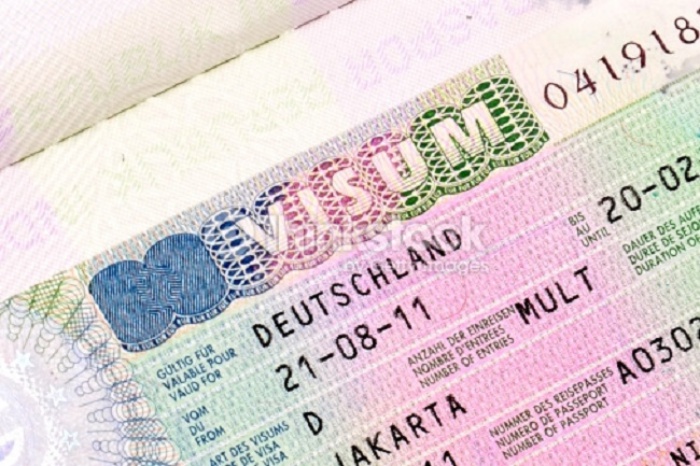

The German Foreign Ministry has acknowledged that demand for German visas in Turkey far exceeds available capacity, while saying a long-term solution depends on Ankara meeting the European Union’s requirements for visa liberalization, the German dts news agency reported.
The comments come amid growing frustration in Turkey over Schengen visa delays and rejections, a recurring source of tension between Ankara and European capitals as Turkish officials press the EU to revive long-stalled visa liberalization talks.
A fundamental change in visa procedures “would be absolutely desirable,” the ministry said in response to a question from dts, but added that this could ultimately be achieved only through visa liberalization.
According to European Commission data released in May, Schengen consulates in Turkey received 1,268,376 visa applications in 2025, of which 1,072,054 resulted in visas while 183,196 were rejected, putting the refusal rate at about 14.6 percent.
The ministry said Germany had already taken steps to ease pressure on the visa system, including increasing local staff and digitalizing parts of the process, adding that Berlin had successfully pushed within the Schengen area for more generous multi-year visas.
Germany has also introduced a “Business Fast Track” for business travelers with ties to Germany, aimed at making short-notice trips easier, the ministry said, adding that those measures must now be allowed to take effect.
The Turkish government has repeatedly urged the EU to ease visa restrictions and revive stalled visa liberalization talks.
Foreign Minister Hakan Fidan has said the current system limits Turkish citizens’ mobility and harms Turkey’s ties with Europe.
EU officials have said they are working to improve transparency and reduce waiting times, while stressing that core procedures and requirements remain in place.
Turkey and the EU agreed on a visa liberalization framework in 2013, but Ankara has yet to fulfill all the required benchmarks, including those related to counterterrorism legislation, data protection, judicial cooperation and fundamental rights.
Turkey and the EU began membership talks in 2005, but the process has been at a standstill for years. Countries seeking to join the bloc must align their laws with EU standards in 35 policy areas, known as negotiating chapters.
EU leaders agreed in 2018 that no new chapters in Turkey’s accession talks should be opened or closed.
Visa-free travel is tied to Turkey’s fulfillment of remaining EU criteria, including changes to its counterterrorism and data protection laws.