
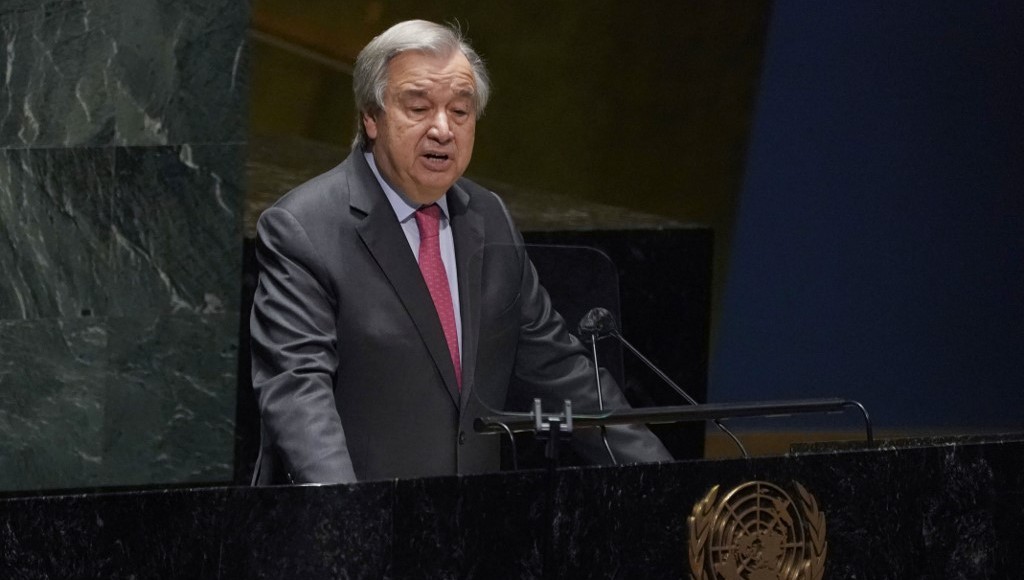

United Nations Secretary-General António Guterres will visit Cyprus July 27-29 for talks with Greek Cypriot leader Nikos Christodoulides and Turkish Cypriot leader Tufan Erhürman and other stakeholders aimed at advancing the island’s stalled peace process, the UN announced Thursday.
The trip will form part of Guterres’ good offices mission and will support stability on the divided island, including the work of the United Nations Peacekeeping Force in Cyprus (UNFICYP), UN spokesperson Stéphane Dujarric said. The UN will release a fuller schedule closer to the visit.
Guterres submitted two reports to the Security Council on July 6, one on his good offices mission and another on the UN operation in Cyprus. In January the council extended UNFICYP’s mandate through January 31, 2027, with 13 members voting in favor, none against and two abstaining.
The visit follows a series of UN efforts to restore contact between the two sides. At an informal meeting in Geneva in March 2025, Greek Cypriot leader Christodoulides and then-Turkish Cypriot leader Ersin Tatar met with representatives of the guarantor powers, comprising Greece, Turkey and the United Kingdom.
After a follow-up meeting in New York in July 2025, Guterres reviewed six confidence-building measures the two sides had agreed four months earlier to improve daily life and rebuild trust while formal peace talks remained stalled. He said they had created a joint youth committee, started cooperation on environmental issues and completed work on restoring cemeteries, while an agreement on demining awaited final technical details. They had yet to agree on opening four additional crossing points through the UN-controlled buffer zone or establishing a shared solar energy project there.
The political climate shifted after Erhürman, a supporter of a federal settlement, won 62.76 percent of the vote in the October 2025 Turkish Cypriot leadership election, defeating Tatar, whose two-state policy had the backing of Ankara. Erhürman’s election led to more regular dialogue with Christodoulides, although the sides have yet to agree on the basis and conditions for restarting formal negotiations.
Guterres’ personal envoy on Cyprus, María Ángela Holguín Cuéllar, has held talks with the two leaders and traveled to Turkey and Greece as part of efforts to prepare the ground for renewed negotiations.
Cyprus has been divided since 1974. It became independent from Britain in 1960 under a constitution designed to share power between the Greek Cypriot and Turkish Cypriot communities, but intercommunal violence erupted in December 1963. The Security Council created UNFICYP in March 1964 to prevent renewed fighting and help restore normal conditions.
In July 1974 Greek officers directed a coup seeking union with Greece. Turkey launched a military operation five days later and established control over the northern part of the island. A UN-patrolled buffer zone now separates the two sides.
The internationally recognized Republic of Cyprus, an EU member, exercises effective control over the south. Turkish Cypriots administer the north, which declared independence in 1983 and is recognized only by Turkey.
The last formal negotiations collapsed in July 2017 at a conference in Crans-Montana, Switzerland, after talks involving the two Cypriot sides, Greece, Turkey, the United Kingdom, the European Union and the UN ended without an agreement. Formal settlement talks have not resumed since.
European Council President António Costa and European Commission President Ursula von der Leyen last week urged Turkish President Recep Tayyip Erdoğan to “seize the renewed momentum” and advance a settlement through the UN-led process.
The European Commission followed by appointing Executive Vice President Raffaele Fitto as its special representative for Cyprus, with a mandate to help prepare the groundwork for renewed negotiations.
Although Turkey and the EU voiced support for Guterres’ efforts in a June 30 joint statement, Cypriot government spokesperson Konstantinos Letymbiotis said Turkey’s stated support must be demonstrated in practice by agreeing to an informal expanded meeting that results in the resumption of negotiations within the UN framework.