


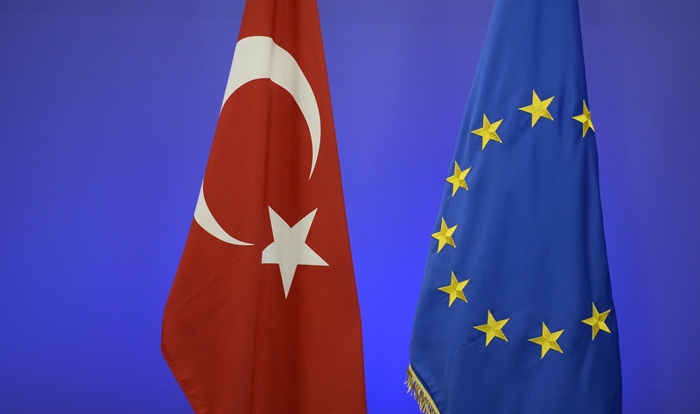
Turkey on Friday accused the EU of ignoring its candidate status and taking a biased approach to the eastern Mediterranean and Cyprus in a new assessment of threats facing the bloc.
The criticism came in a statement from Turkish Ministry of Foreign Affairs spokesperson Öncü Keçeli concerning the “Common Understanding: The Threats and Challenges We Face: Assessment of the EU’s Strategic Environment.”
Keçeli said the document’s references to Turkey were “devoid of a strategic and fair approach” and that its failure to address the country as a membership candidate showed the EU’s “failure to develop a vision for a shared future with Türkiye.”
The ministry identified July 15 as the publication date. The 20-page document is dated July 9, and Council of the European Union records list it as an item approved at a July 13 meeting.
The assessment examines the EU’s security environment, identifying Russia as the most immediate threat to European security and China as a long-term strategic challenge while addressing developments in the Middle East, the Black Sea, the eastern Mediterranean and other regions.
In its section on enlargement, the document says candidate countries are increasingly viewed as contributors to security and describes the Western Balkans, Moldova and Ukraine as part of the EU’s future.
Turkey, which has been an EU candidate since 1999, is not mentioned in that section.
The document instead discusses Turkey in a separate section on the eastern Mediterranean, where it says developing a mutually beneficial relationship with Ankara remains in the EU’s strategic interest.
It calls for relations to advance in a “phased, proportionate and reversible manner” and says Turkey’s engagement would help expand cooperation.
The assessment also links improved EU-Turkey cooperation to progress in UN talks on Cyprus and repeats the bloc’s expectation that Ankara commit to good-neighborly relations, including renouncing threats to use force.
The approach largely follows conclusions adopted by EU leaders in April 2024, which supported a cooperative relationship with Turkey while making further engagement dependent on Ankara’s conduct and progress toward a Cyprus settlement.
Keçeli accused the EU of making “baseless allegations” concerning the eastern Mediterranean, arguing that the language showed the bloc remained under the influence of “a biased and distorted understanding.”
The EU assessment does not identify a specific Turkish action as an allegation. It describes the eastern Mediterranean as a region offering opportunities and challenges and calls for regional cooperation in line with international law and EU rules.
Disputes between Turkey, Greece and the Republic of Cyprus in the region have centered on maritime boundaries, territorial waters, energy exploration and competing claims to offshore resources.
Keçeli also accused the EU of trying to diminish the importance of the NATO summit hosted by Ankara on July 7-8.
The document was drafted in a manner that “seeks to overshadow the reality emerging from the historic NATO Ankara Summit,” where European allies assumed more responsibility and Turkey’s “indispensable role was reaffirmed,” Keçeli said.
The summit declaration said European allies and Canada were taking greater responsibility for their security and had increased investment in core defense requirements by more than $139 billion in 2025.
The six-paragraph declaration did not separately characterize Turkey’s role as indispensable, although NATO leaders thanked Ankara for hosting the summit.
Keçeli also blamed the Greek Cypriot side for the failure to reunify Cyprus, which has been divided between its Greek Cypriot south and Turkish Cypriot north since 1974.
The spokesperson cited the Greek Cypriot rejection of a UN settlement plan in 2004 and accused the Greek Cypriot leadership of causing a 2017 conference in Switzerland to end without an agreement by adopting “an intransigent stance.”
Turkish Cypriot voters approved the UN plan in separate referendums in 2004, while Greek Cypriot voters rejected it, preventing the agreement from taking effect.
The 2017 Conference on Cyprus in Crans-Montana ended without an agreement, but UN Secretary-General António Guterres did not assign sole responsibility to either side in his closing remarks and referred to the commitment shown by all delegations.
Guterres is scheduled to visit Cyprus July 27-29 for meetings with the Greek Cypriot and Turkish Cypriot leaders and other parties as part of efforts to revive the peace process.
Turkey’s EU accession negotiations began in 2005 but have been at a standstill since 2018 due to concerns about democratic backsliding, fundamental rights and judicial independence, as well as Ankara’s failure to apply its EU customs commitments to the Republic of Cyprus.