


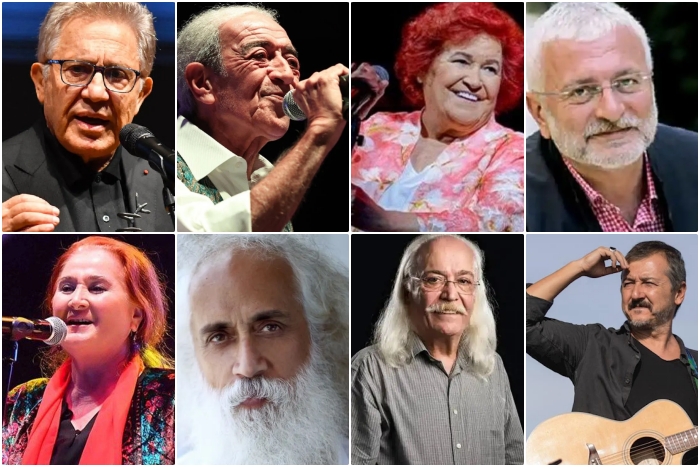
A growing number of Turkish musicians have said they will not allow the court-reinstated leadership of the main opposition Republican People’s Party (CHP) to use their songs at party events, adding a cultural backlash to the party’s deepening legitimacy crisis, according to Turkish media reports.
The objections have come from prominent figures associated with Turkey’s leftist and protest music traditions, whose songs have long been used at CHP rallies and opposition gatherings.
The musicians’ move comes amid a growing backlash against court-restored CHP leader Kemal Kılıçdaroğlu and the former party administration, who were restored to office by a May 21 ruling that annulled the CHP’s 38th Ordinary Congress in one of the most dramatic judicial interventions in Turkey’s main opposition party in recent years.
Ousted CHP leader Özgürl Özel defeated Kılıçdaroğlu at that congress in November 2023 to become party chairman.
Musicians and performers who have objected to the use of their works by the court-restored leadership include prominent composer and author Zülfü Livaneli and renowned musician and founding member of the Moğollar band, Cahit Berkay, along with the daughter of the late musician Edip Akbayram as well as Selda Bağcan, Onur Akın, Sabahat Akkiraz, Suavi, Erdal Güney, Ali Altay, Gülten Benli and Grup Yorum.
Berkay, who became the latest artist to join the protest, said he had never previously objected to his songs being used at demonstrations or rallies but would not allow them to be used by the leadership that returned to office following the court decision.
“I would like to state clearly and underline that I do not allow those who came to power through a court ruling to use my works in any way,” Berkay said in a statement on X.
Türkü Akbayram, the daughter of Edip Akbayram, who died last year, issued a written statement on X after Kılıçdaroğlu’s group played his song “Meydan Türküsü” (Song of the Square) at a meeting held at CHP headquarters earlier this week.
She said her father had remained committed throughout his life to democracy, freedom, the will of the people and social justice, adding that the political process behind Kılıçdaroğlu’s return was incompatible with the democratic values he defended.
Akbayram said her father’s works should not be used at political events by individuals, groups or organizations seen as representatives or supporters of that process.
Livaneli also said on social media that the current CHP leadership, which he said had come to power through a court decision, did not have permission to use his compositions.
Bağcan said in a written statement on X that she did not allow the current CHP leadership to use her voice, compositions or recordings at any event, broadcast or political activity.
Suavi said works belonging to him or performed by him should not be used by “those who came to office through a court decision and those on their side,” adding that he would monitor any unauthorized use.
The first reaction after the annulment ruling came from Grup Yorum after Kılıçdaroğlu used the group’s song “Haklıyız Kazanacağız” (We Are Right, We Will Win) before addressing an Eid gathering at CHP headquarters in late May.
“We have never allowed, and will never allow, our folk songs to serve as background music for the dirty power struggles of establishment politics,” the group said in a written statement on Facebook.
The case that led to the reinstatement of Kılıçdaroğlu concerned allegations of irregularities in the 2023 leadership vote, including claims of vote buying and manipulation.
The CHP has denied wrongdoing and says the lawsuits are part of a broader judicial campaign to weaken the party after its gains in the March 2024 local elections.
The ruling has plunged Turkey’s oldest political party into a leadership crisis, sparked protests and intensified criticism that the judiciary is being used to reshape the opposition.
The CHP has been under growing legal and political pressure since its major gains in the March 2024 local elections, when it defeated President Recep Tayyip Erdoğan’s ruling Justice and Development Party (AKP) in key cities and became Turkey’s leading party nationwide.
Since then, CHP-run municipalities have faced a series of investigations and arrests, while İstanbul Mayor Ekrem İmamoğlu, Erdoğan’s most prominent political rival and the CHP’s presidential candidate, has been jailed on corruption and terrorism-related charges that he denies.
Özel and the CHP leadership have repeatedly accused Erdoğan’s government of using the courts to pressure the opposition and weaken the party ahead of the next presidential election, scheduled for 2028.
The government denies targeting the opposition and says the judiciary acts independently.