


Abdülhamit Bilici*
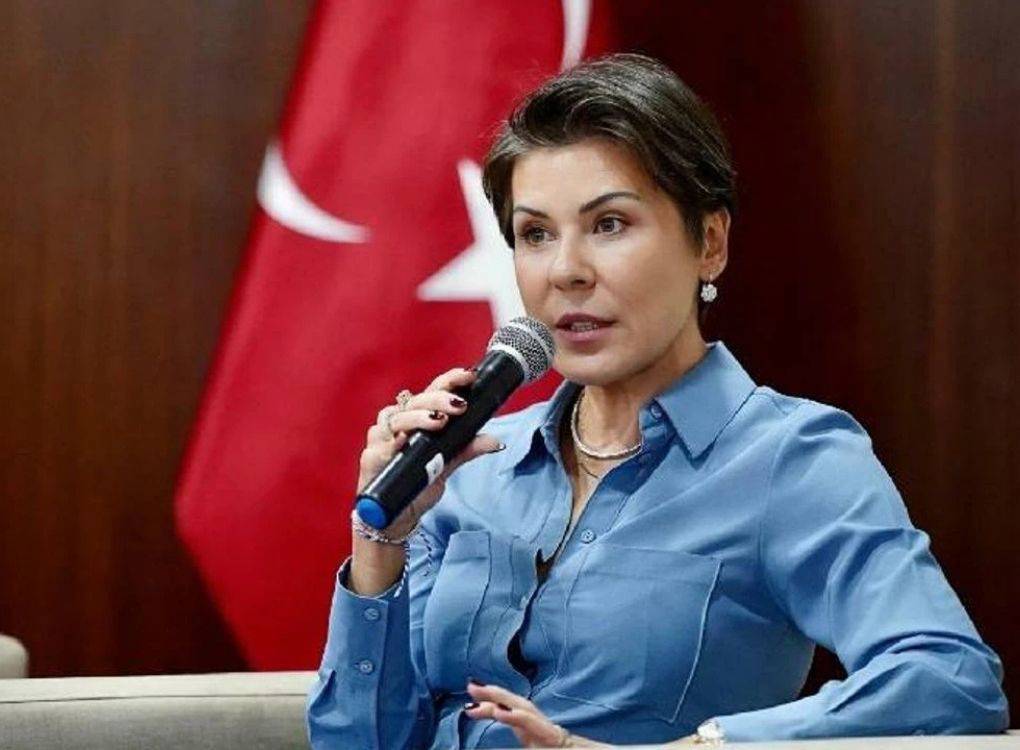
As Turkey prepares to host next month’s NATO summit and welcome leaders of the alliance’s democracies, they should spend three minutes reading the testimony of Fatoş Pınar Türker, a mother of two and general manager of Medya AŞ, a subsidiary of the İstanbul Metropolitan Municipality, who was arrested last year in the investigation that also led to the imprisonment of popular opposition İstanbul mayor, Ekrem İmamoğlu.
Her account is difficult to read. It should be.
Türker’s testimony at the 46th hearing of the İstanbul Metropolitan Municipality trial on Tuesday includes allegations of a strip-search, pressure to become an informant and threats involving the custody of her children. These are not minor procedural complaints. They are allegations that go to the heart of what remains of the rule of law in Turkey.
Nor is her case isolated. For more than a decade, detainees, lawyers and rights groups have reported allegations of abuse, intimidation and degrading treatment in politically sensitive investigations. What should shock the conscience has too often become routine.
That is why NATO leaders should read her words before they shake President Recep Tayyip Erdoğan’s hand in Ankara. The summit will be full of speeches about security, democracy and shared values. But those words mean little if leaders remain silent about what is done to people inside the prisons and courtrooms of an allied country.
A strip-search and a threat involving her children
Imagine a legal case in which you are detained and imprisoned, yet only after 15 months are you finally able to stand before a judge and present your defense.
When she was taken into custody, Türker had to leave behind her two daughters, whom she was raising alone. At the police station, she said, she was subjected to a strip-search. After her imprisonment, she said a prosecutor attempted to pressure her into becoming an informant, even threatening her with her children, saying: “Well, Social Services will take your children now.”
Türker’s defense before the court in Marmara Prison in Silivri on the outskirts of İstanbul deserves to be heard by everyone who wants to understand what has become of the justice system in Turkey.
She described a dawn raid on her home at around 5:30 or 6 a.m. Police arrived while she was alone with her two daughters. Before they entered, she managed to call her lawyer. Once inside, officers immediately confiscated her phone and ordered everyone not to touch anything.
Her daughters were crying. She asked if she could give one of them a glass of water before school. The answer, she said, was no. According to her account, officers repeatedly warned them not to move or “destroy evidence.” The family stood in their pajamas in the middle of the living room while the children sobbed and tried to embrace their mother.
When she asked whether the officers had come for a financial crimes investigation, one officer reportedly replied, “We’re from homicide.”
At that point, her daughters began crying uncontrollably.
Türker recalled that she was not even allowed to hand her child a glass of water. One female officer, she said, was visibly affected by the situation and later helped reassure her family by calling her mother and letting her briefly speak with her.
After being taken to police headquarters, Türker said, she lost all sense of time in the basement detention facilities. Then came what she described as a strip-search.
A female officer allegedly took her into a small archive-like room and ordered her to remove her clothing. After she complied, she was told to remove her underwear as well, squat, expose her genital area, turn around and bend over.
Türker said she later learned that other detainees had undergone different procedures, but this was her own experience. She recalled that at the time they did not even fully understand what was happening.
Following her transfer to Marmara Prison, she said, she and several other women were initially told they would share a six-person cell. Instead, she claimed, a last-minute instruction from the Ministry of Justice resulted in each woman being put in solitary confinement.
The most disturbing part of her testimony concerns an encounter she said took place via video link after her imprisonment.
According to Türker, the prosecutor who had taken her statement appeared on screen and reproached her for not “cooperating.” She said he told her that if she had spoken earlier, she could have gone home. He allegedly offered to have her brought back to his office to provide another statement.
When she replied that she would first like to consult her lawyer, she said the prosecutor became angry.
“You’re still talking about a lawyer?” he said.
Then came the threat she said she will never forget: “You’ll never see your children again with that attitude. You’re unmarried, aren’t you? The children are in your custody? They’re not adults yet, right? Well, Social Services will take them now.”
She further claimed that she was threatened with the seizure of her assets unless she cooperated before a specified deadline.
At the conclusion of her testimony, Türker asked a question that reaches far beyond her own case: “How can someone hate a person they do not even know? Don’t these people have mothers, too? Weren’t we all once children?”
And then she added: “I don’t forgive any of them.”
World leaders do not have to solve Turkey’s justice crisis in a single summit. But they do have a choice: They can treat these stories as an inconvenience to be ignored, or they can acknowledge that an alliance built on democratic values cannot remain indifferent to the suffering of people like Fatoş Pınar Türker.
Before they shake Erdoğan’s hand, they should at least know whose voices are being silenced behind prison walls.
*Abdülhamit Bilici is the former editor-in-chief of the now-defunct Zaman daily who currently lives in exile in Washington, D.C.
Disclaimer: The views expressed in this opinion piece are those of the author and do not necessarily reflect the editorial stance of Turkish Minute.