


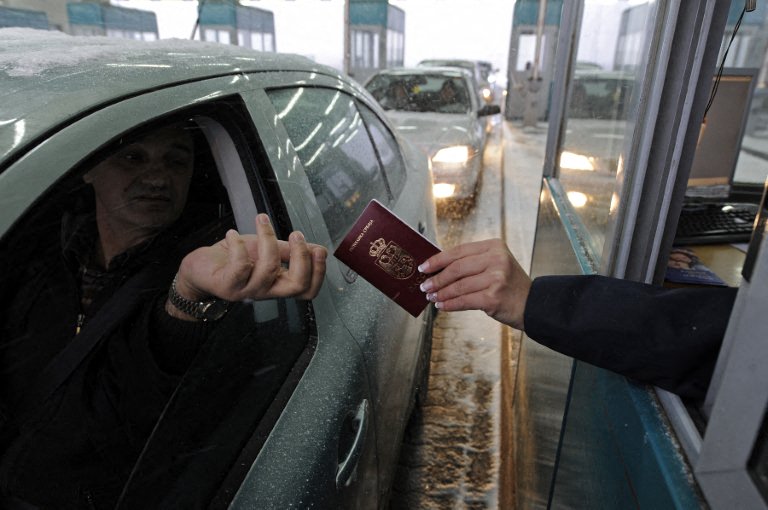
Germany has said its new waiting-list system prevents companies from reserving visa appointments in bulk, while four other countries in Europe’s Schengen passport-free travel area described security measures or reviews after allegations that bots and unofficial brokers are capturing appointment slots in Turkey and reselling them.
The German, Dutch, French, Belgian and Austrian embassies outlined their responses to the allegations in statements to the Nefes newspaper published Saturday.
The German Embassy said it had introduced a waiting-list system that prevents service providers from making bulk reservations and warned applicants not to pay unofficial intermediaries.
Under the system, applicants first register on a waiting list and later receive a date to submit their documents to iDATA, Germany’s only authorized visa service provider in Turkey.
Appointments are assigned in the order in which applicants join the list, removing the need to search repeatedly for newly released slots.
Germany introduced the system for short-stay Schengen visa applications on March 18, 2024, meaning the measure predates the latest reports about Turkey’s visa appointment black market.
The German Embassy told Nefes that the system prevents different service providers from reserving large numbers of appointments.
Belgian Ambassador to Turkey Hendrik Van de Velde said Belgium’s system does not allow bots to obtain appointments and urged applicants to use only VFS Global, the government’s authorized service provider.
Van de Velde said unofficial agencies could not provide earlier access or improve an applicant’s chances of receiving a visa.
“This is wasted money,” he said, referring to payments made to unauthorized intermediaries.
Applicants for a Belgian visa complete an online application through the government’s Visa on Web portal before being directed to VFS Global to arrange an appointment.
Austria’s ambassador, Gabriele Juen, said technical security measures were in place at the Austrian Consulate General in İstanbul to ensure that real applicants could obtain appointments through VFS Global.
Juen also warned applicants against paying visa agencies or other intermediaries.
The Austrian Embassy did not disclose the technical measures or say whether it had identified bots operating in its appointment system.
The Dutch Embassy said it was taking reports of possible wrongdoing seriously and would consult other Schengen governments that use the same external service provider.
The embassy also said it welcomed an inquiry by the European Commission and would include any findings in talks with companies handling visa applications.
The French Embassy said it was examining the allegations and would review its relationship with visa service providers in light of the findings.
Neither France nor the Netherlands announced a new appointment system.
The European Commission has not publicly released details of a formal investigation into visa appointments in Turkey.
Lighthouse Reports, which coordinated an investigation into VFS Global with 14 media organizations in 12 countries, said the commission planned a study of outsourced visa services to identify ways to prevent abuse.
The investigation found that bots operated by outside actors had targeted appointment systems in several countries and that some VFS employees in other markets had been accused of selling appointments.
European government inspection reports obtained by the reporting consortium also documented concerns about corruption, data protection and pressure on applicants to buy services presented as optional.
VFS Global denies giving agents privileged access to appointments.
The company says it uses one-time passwords, CAPTCHA verification, controls on suspicious internet addresses and restrictions on repeated bookings to fight automated access.
It also says embassies and consulates, rather than VFS Global, control the number of available appointments.
The responses from the five embassies came as Turkey’s Trade Ministry said the Advertising Board was examining seven visa intermediary companies.
The companies are accused of using automated software to capture Schengen appointment slots and resell them for hundreds of euros.
The ministry has not named the companies.
The Association of Turkish Travel Agencies says appointments released late at night, on weekends or during public holidays are quickly taken by bots and later offered for 300 to 1,000 euros.