
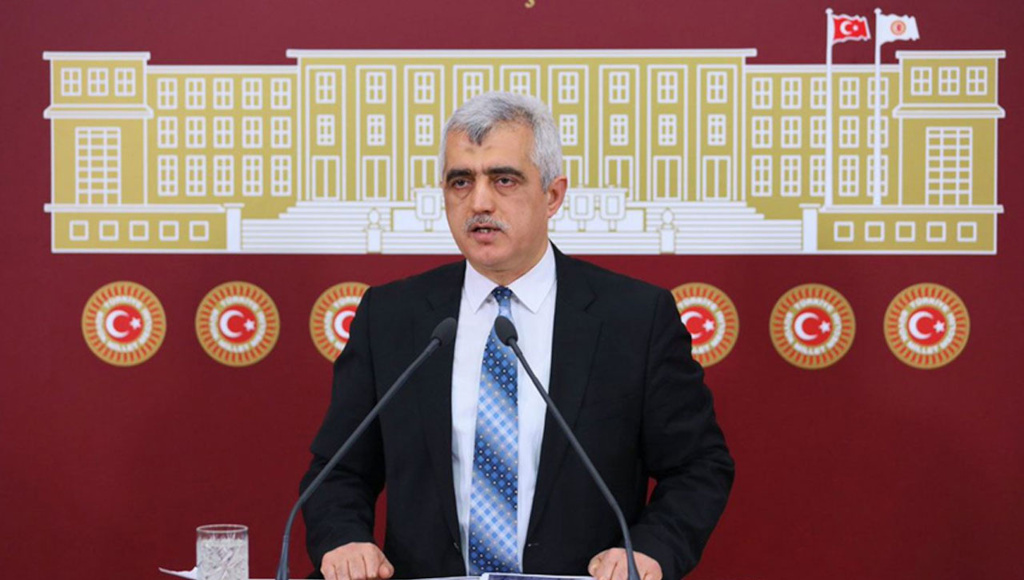

A lawmaker from Turkey’s main pro-Kurdish party has asked Parliament Speaker Numan Kurtulmuş to explain why a parliamentary report on a failed coup in Turkey in 2016 has never been made public, nearly 10 years after the event became the basis for mass prosecutions and purges.
Ömer Faruk Gergerlioğlu, a lawmaker from the Peoples’ Equality and Democracy Party (DEM Party), submitted a 24-question inquiry to Kurtulmuş on Thursday about the fate of the report prepared by a parliamentary commission established after the July 15, 2016, coup attempt.
The commission was tasked with investigating the coup attempt, its political, military, bureaucratic and intelligence dimensions and the activities of the Gülen movement, which Ankara accuses of masterminding the failed putsch.
The movement, inspired by the late Turkish Islamic scholar Fethullah Gülen, denies involvement in the coup attempt or any terrorist activity.
Gergerlioğlu asked whether the report is currently in parliament’s records, when it was submitted to the speaker’s office and what legal or administrative grounds were used to keep it from the public.
He also asked whether parliament would release the report along with its annexes, dissenting opinions, rejected motions, meeting records and correspondence.
“The public expected to learn the truth,” Gergerlioğlu said in his inquiry, adding that the commission’s method of operation was questionable, with some requests by members rejected and the final report withheld from the public.
Among the rejected requests, he cited calls for the commission’s first meeting to be open to the press, for flight records of senior politicians on the night of the coup attempt to be obtained and for phone traffic records of politicians and critical public officials to be reviewed.
He also said requests to summon President Recep Tayyip Erdoğan, then-prime minister Binali Yıldırım, then-chief of general staff Hulusi Akar and then-National Intelligence Organization (MİT) chief Hakan Fidan were rejected.
Those requests have been central to criticism of the inquiry because the four men held the highest political, military and intelligence positions during the coup attempt.
Gergerlioğlu asked whether the failure to hear them left the investigation incomplete and whether the refusal to extend the commission’s working period limited its ability to clarify the events of the night.
He also asked whether the report was being withheld on grounds of a “state secret” or another confidentiality rule and, if so, which authority made that decision and when.
“It is unacceptable for the Turkish Parliament’s speaker’s office to abandon to uncertainty the reports of parliamentary commissions that exercise oversight and inquiry authority on behalf of the nation,” Gergerlioğlu said.
The report has long been one of the most disputed missing records in Turkey’s official account of the coup attempt.
Former commission chairman Reşat Petek, a former ruling Justice and Development Party (AKP) lawmaker, previously said the report had been completed and submitted to then-parliament speaker İsmail Kahraman.
Gergerlioğlu said parliament’s own records later appeared to treat the commission as if no report had been submitted.
The failed coup left more than 250 people dead and was followed by a crackdown that targeted the military, judiciary, civil service, media and education sector.
Erdoğan’s government had already begun targeting the Gülen movement after corruption investigations in December 2013 implicated Erdoğan, his family members and people in his inner circle.
The government designated the movement as a terrorist organization in May 2016, two months before the coup attempt, a designation not recognized by other governments or major international bodies.
After the failed coup, authorities intensified the crackdown, investigating hundreds of thousands of people and jailing tens of thousands on terrorism-related charges.
Rights groups and critics say the prosecutions were used to punish perceived opponents, seize institutions and restructure the state under Erdoğan’s control.
The unpublished parliamentary report remains a major gap in the official record, along with unanswered questions about intelligence warnings, military orders, forensic evidence and the conduct of senior officials on the night of the coup attempt.