
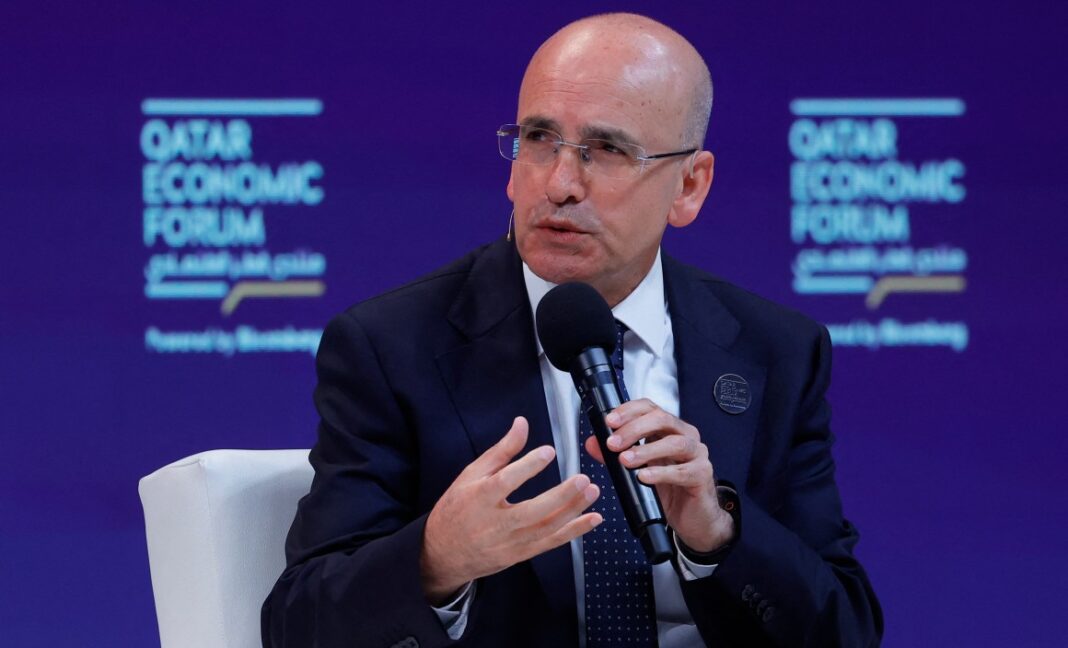

Turkish Treasury and Finance Minister Mehmet Şimşek has said Turkey wants to become one of the world’s top five countries in terms of Islamic financial assets, arguing that the sector can help direct money toward development instead of short-term financial flows.
Şimşek spoke Wednesday at the Global Islamic Economy Summit in İstanbul, a meeting of policymakers, investors and financial institutions focused on Islamic economics and finance.
Islamic finance, also known in Turkey as participation finance, refers to banking and investment products structured to comply with Islamic rules barring interest and requiring transactions to be tied to assets or risk sharing.
Şimşek said that global finance has become detached from the real economy, with much of the rise in foreign direct investment linked to transfers between financial centers rather than investment in factories, infrastructure, jobs and production.
He claimed that Islamic finance offers a better model because it is based on assets and on sharing risks and returns.
“The vision here should be to reconnect capital with development priorities,” Şimşek asserted.
He said the share of emerging and developing economies in global foreign direct investment has fallen from 67 percent to about 54 percent over the past three years.
Şimşek attributed the decline to geopolitical and economic fragmentation, the return of production to home countries, industrial policy measures and changes in supply chains.
Islamic finance assets have increased nearly 49 times in nominal dollar terms since 2000 but still account for a small share of global financial assets, Şimşek noted
Turkey currently ranks ninth in the world for Islamic financial assets and wants to enter the top five, he said.
According to the Turkish minister, the sector needs more financial products, stronger liquidity and innovation to compete with conventional finance.
Şimşek also said the İstanbul Financial Center should play a larger role in global Islamic finance.
Turning to Turkey’s economic program, Şimşek said that the government remains focused on lowering inflation, maintaining fiscal discipline and keeping the external balance under control.
Inflation is falling but at a slower pace than first expected, the minister said, attributing it to domestic and external shocks.
Şimşek underlined that Turkey now expects inflation to end the year in the mid-20s or possibly the high-20s if oil prices remain around $90 per barrel.