


Turkey’s economy grew 2.5 percent in the first quarter of 2026, slowing from the previous quarter and falling below expectations as exports fell and industry contracted, official data showed Monday.
Gross domestic product, measured by the chain-linked volume index, rose 2.5 percent in the January to March period compared to the same quarter last year, according to the Turkish Statistical Institute (TurkStat).
The figure was below economists’ forecast of 2.7 percent in a survey conducted by the state-run Anadolu news agency before the release. Forecasts in the survey of 13 economists had ranged from 1.95 percent to 3.4 percent.
Growth also slowed from 3.4 percent in the final quarter of 2025, when Turkey’s economy ended the year with annual growth of 3.6 percent.
The first-quarter data showed that domestic demand continued to support the economy while foreign trade weighed on growth. Household consumption rose 4.8 percent from a year earlier, government consumption increased 2.1 percent and gross fixed capital formation, a measure of investment, rose 3 percent.
Exports of goods and services fell 12.7 percent, while imports declined 2 percent.
The figures come as Turkey continues to try to reduce inflation while keeping growth from slowing too sharply. The country has faced high borrowing costs, pressure on the Turkish lira and weaker demand from key export markets. Higher energy prices linked to the war in the Middle East have also added pressure on Turkey, which relies on imported energy.
At current prices, GDP rose 35.7 percent from a year earlier to 17 trillion Turkish lira ($389.6 billion) in the first quarter.
By sector, information and communication recorded the fastest growth, with value added rising 9.5 percent from a year earlier. Other service activities grew 5.2 percent, agriculture, forestry and fishing expanded 4.6 percent, trade, transportation, accommodation and food services rose 3.7 percent, financial and insurance activities increased 3.5 percent and construction grew 3.2 percent.
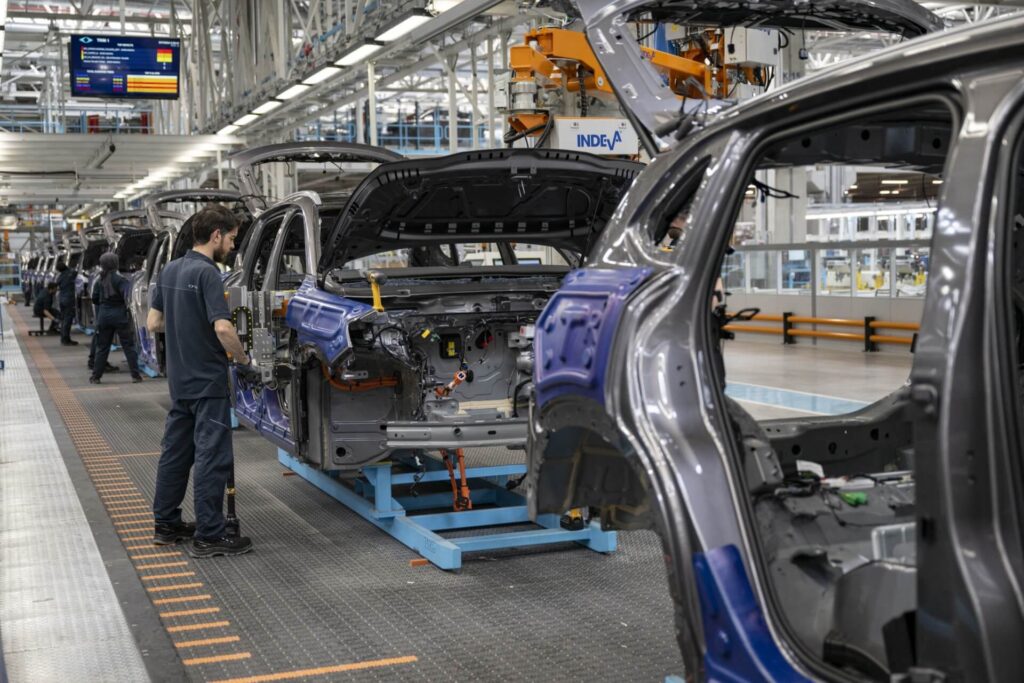
The industrial sector contracted 0.8 percent.
The seasonally and calendar-adjusted GDP index rose 0.1 percent from the previous quarter, pointing to a loss of momentum at the start of the year. The calendar-adjusted index rose 2.6 percent from the same period of 2025.
Treasury and Finance Minister Mehmet Şimşek said the economy had continued to grow despite global uncertainty and regional tensions.
“Our economy continued to grow uninterrupted for 23 quarters despite the challenges it has faced. Annualized national income exceeded $1.6 trillion,” Şimşek said in a written statement.
Şimşek said weak external demand and uncertainty among Turkey’s trading partners weighed on activity, while the industrial contraction was linked to global conditions and calendar effects. He said agriculture recovered after last year’s decline, which had been caused by frost and drought.
The International Monetary Fund in April cut its 2026 growth forecast for Turkey to 3.4 percent from 4.2 percent, citing weaker momentum and higher oil and gas prices. The IMF also lowered its 2027 forecast to 3.5 percent from 4.1 percent.
Turkey’s central bank has kept monetary policy tight to fight inflation, which remains high despite a decline from previous peaks. The tension between disinflation and growth has become one of the main challenges for policymakers as households face high prices and businesses deal with financing costs.