
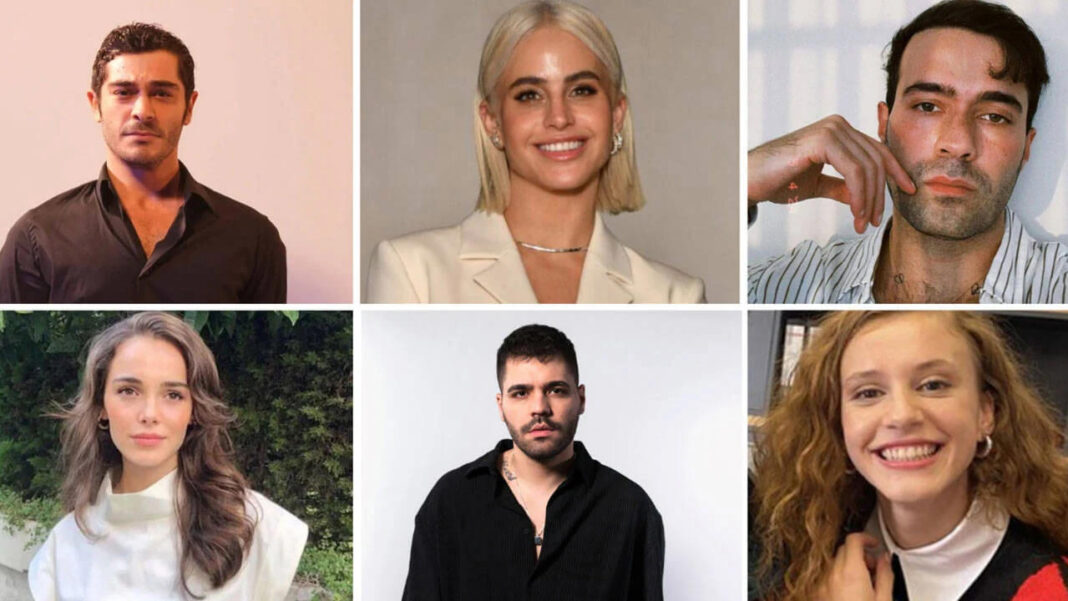

İstanbul’s chief public prosecutor has signaled a new wave of operations targeting celebrities and business figures as part of a growing drug investigation, amid criticism that the highly publicized cases risk amounting to character assassination of public figures.
İstanbul Chief Public Prosecutor Fatih Dönmez said “new operations will follow,” adding that as new evidence emerges, individuals including “celebrities and businesspeople” will be called in for questioning as part of the investigation.
Dönmez said a total of 255 suspects had been processed so far, with forensic examinations conducted on 219 of them at Turkey’s Council of Forensic Medicine. He said narcotics were detected in 169 suspects and that 32 people had been arrested in connection with the case.
He also said 400 street dealers had been detained over the past two months in broader narcotics operations, adding that the investigation was aimed at reaching higher-level figures. “Our main goal is to reach those at the top,” he said, noting that authorities had established cooperation with INTERPOL and other international partners.
The remarks came after prosecutors on Thursday ordered the detention of 14 public figures, including actors, musicians and a celebrity chef, in the latest phase of the investigation. Some of those questioned, including actor Burak Deniz and singer Emir Can İğrek, were later released under judicial supervision measures including travel bans.
The case is part of a broader series of drug operations in İstanbul in recent months that has increasingly swept up figures from the entertainment industry. Earlier phases of the investigation saw dozens detained or arrested, with some later released after giving statements and providing biological samples.
Critics say the repeated targeting of well-known figures and the public nature of the investigations raise concerns about reputational harm, especially in cases where suspects are released without formal charges after initial questioning.
Prosecutor comments on organized crime leader’s extradition process
Dönmez also addressed the case of alleged crime boss Barış Boyun, who is currently detained in Italy, saying efforts to secure his extradition were continuing.
He said the investigation into the organized crime group allegedly led by Boyun had developed into a consolidated umbrella case, beginning with 392 defendants and later expanding to 763 suspects as new evidence emerged.
Turkish authorities and European law enforcement agencies have stepped up cooperation in recent months, including Boyun’s arrest in May 2024 in Italy’s Viterbo region during a joint operation involving Italian police and INTERPOL. Italian authorities detained him along with 18 others, while Turkey said he was wanted on an INTERPOL Red Notice.
Turkish officials describe him as the leader of an organized crime network accused of ordering shootings and other attacks in Turkey and abroad. Authorities say investigations into the network have uncovered links to multiple criminal activities and continue to increase as new information comes to light.
Turkey’s youth crime problem has also attracted growing attention in recent months, with authorities saying organized crime groups recruit minors, particularly in low-income neighborhoods, by offering money and a sense of belonging. Numerous minors have been named as suspects in investigations involving gangs such as the Daltonlar and Casperlar.
Dönmez also said investigations into illegal betting and match-fixing in sports were continuing, with 129 suspects examined and 56 facing charges. He added that broader probes into illegal betting networks were expected to grow in the near future.
Critics say high-profile drug investigations often receive broad publicity while law enforcement does not do enough to target large-scale trafficking networks.
According to a 2025 report by the Turkish police, Turkey has moved beyond its traditional role as a transit route for illegal drugs and has increasingly become both a consumer market and a production hub, particularly for synthetic substances. The report documented a sharp rise in drug-related operations, with dozens of facilities uncovered in İstanbul alone.
Some critics also see political undertones in cases involving celebrities, saying they may reflect broader cultural tensions in Turkey under the Justice and Development Party (AKP), which has been in power since 2002.