
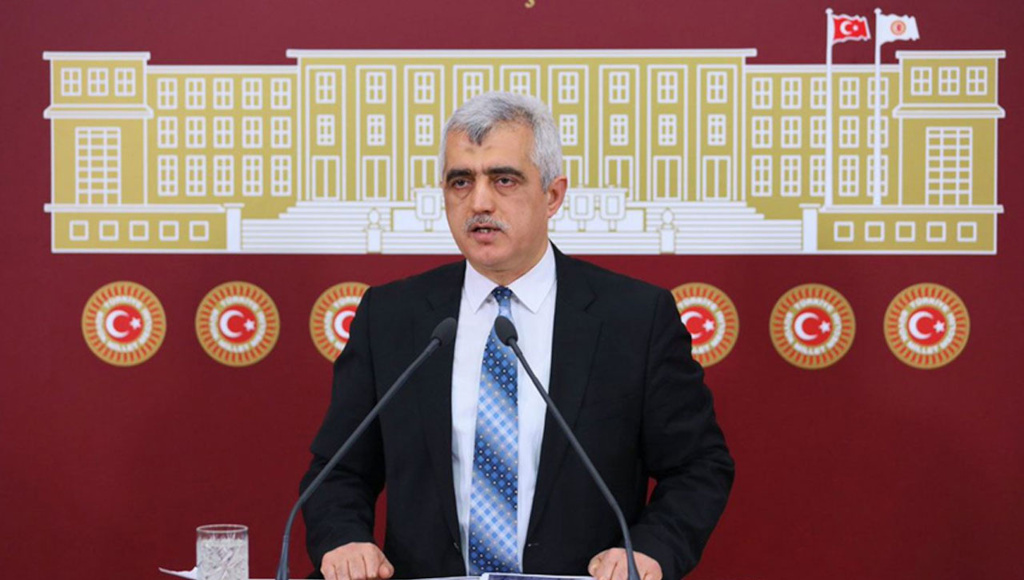

A lawmaker from Turkey’s pro-Kurdish opposition filed a parliamentary inquiry on Wednesday asking Foreign Minister Hakan Fidan whether Ankara considers US and Israeli strikes on Iran lawful, after Turkey signed a joint statement in Riyadh that condemned Iranian attacks on regional states but did not mention Washington or Israel’s role in the broader escalation.
Ömer Faruk Gergerlioğlu, a member of parliament from the Peoples’ Equality and Democracy Party (DEM Party), submitted 24 written questions to Fidan, arguing that the Riyadh text sharply denounced Iran’s missile and drone attacks on civilian targets and infrastructure while staying silent on what he described as the main actors that started the war.
In the text of his inquiry, Gergerlioğlu asked why the statement explicitly condemned Iran but did not explicitly condemn US and Israeli attacks, and whether Turkey regarded those military strikes as consistent with international law.
He also asked whether the omission of the US and Israel from the statement reflected diplomatic caution toward powerful states, and whether political pressure from Washington or Gulf countries played any role in Turkey’s adoption of that language.
Other questions challenged the statement’s use of Article 51 of the United Nations Charter, which protects the right to self-defense. Gergerlioğlu asked why that principle appeared to apply only to states targeted by Iran and not to Iran itself after it came under attack.
The Riyadh statement was issued after a March 18 consultative meeting of foreign ministers from Qatar, Azerbaijan, Bahrain, Egypt, Jordan, Kuwait, Lebanon, Pakistan, Saudi Arabia, Syria, Turkey and the United Arab Emirates.
The text condemned what it called deliberate Iranian attacks on Gulf Cooperation Council member states, Jordan, Azerbaijan and Turkey, saying ballistic missiles and drones struck residential areas and civilian infrastructure, including oil facilities, desalination plants, airports, residential compounds and diplomatic premises.
It said those attacks could not be justified “under any pretext or in any form” and reaffirmed the right of states to defend themselves under Article 51.
The statement called on Iran to halt its attacks immediately, comply with international law and stop supporting and arming allied militias in Arab states. It also warned against threats to shipping through the Strait of Hormuz and the Bab al Mandab.
Israel was mentioned only in a separate passage on Lebanon, where the ministers condemned Israeli attacks on Lebanon and what they called Israel’s expansionist policies in the region. The document did not mention Israeli strikes on Iran or the US role in the conflict.
Ali Babacan, a former member of the ruling party and the current leader of the opposition Democracy and Progress Party (DEVA), also criticized the text signed by Fidan in Riyadh, saying that it unfairly put the blame on Iran while reducing Israel’s role to a brief reference to its attacks on Lebanon.
Babacan said the approach did not befit the Turkish state, arguing that the US and Israeli strikes on Iran were unlawful and that Ankara should have pursued a clearer, more principled position.
He also warned against sectarian framing of the conflict and said countries that allowed their military facilities to be used in support of the attacks were also in the wrong.