


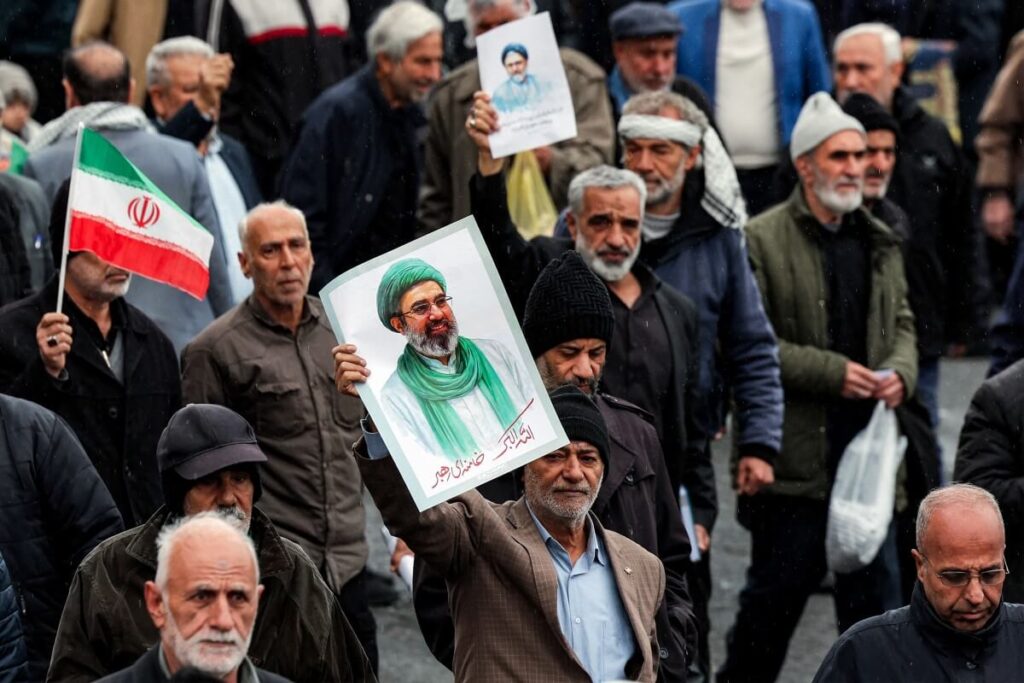
Iran’s supreme leader Ayatollah Mojtaba Khamenei said Friday that Iran and its regional allies were “in no way” responsible for attacks on Oman and Turkey, accusing Israel of staging incidents to create divisions with neighboring countries.
In a written message marking Nevruz, the Persian New Year, Khamenei said the alleged attacks were the result of “deception by the Zionist enemy,” claiming Israel was using false-flag tactics to undermine Iran’s relations in the region.
On March 13 Turkey confirmed a third ballistic missile from Iran was shot down in Turkish airspace by NATO forces, the third such incident since the Middle East war started.
It was not clear whether the missiles had targeted Turkey or were meant for another country, but NATO condemned them as an attack on Turkey.
He warned that similar incidents could occur in other countries, as tensions continue to escalate in the ongoing conflict involving Iran, the United States and Israel.
Khamenei’s remarks came as part of a broader message in which he claimed Iran was gaining the upper hand in the war and had dealt a “dizzying blow” to its adversaries.
The statement, published on his Telegram channel and carried by Iranian state media, is one of several written messages issued since he assumed leadership following the death of his father, Ali Khamenei, in an airstrike at the start of the conflict on February 28.
Despite nearly two weeks in power, Mojtaba Khamenei has yet to deliver a video or audio address, with Iranian officials suggesting he may have been wounded in the same strike that killed his predecessor.
In his message, Khamenei said national unity had enabled Iran to withstand external pressure, describing the current conflict as the third major challenge facing the country in the past year, following a brief war with Israel in 2025 and nationwide protests earlier this year that Tehran blamed on foreign actors.
He also rejected the idea that the killing of senior Iranian leaders, including his father, would weaken the country, saying such actions had failed to create “fear and despair” among the population.
Ali Khamenei and more than a dozen senior military and security officials have been killed since the start of the war.
Khamenei described Israel’s actions as a “serious miscalculation” and predicted that Iran would emerge stronger, saying the country’s unity would deepen while its adversaries would grow weaker.
© Agence France-Presse