


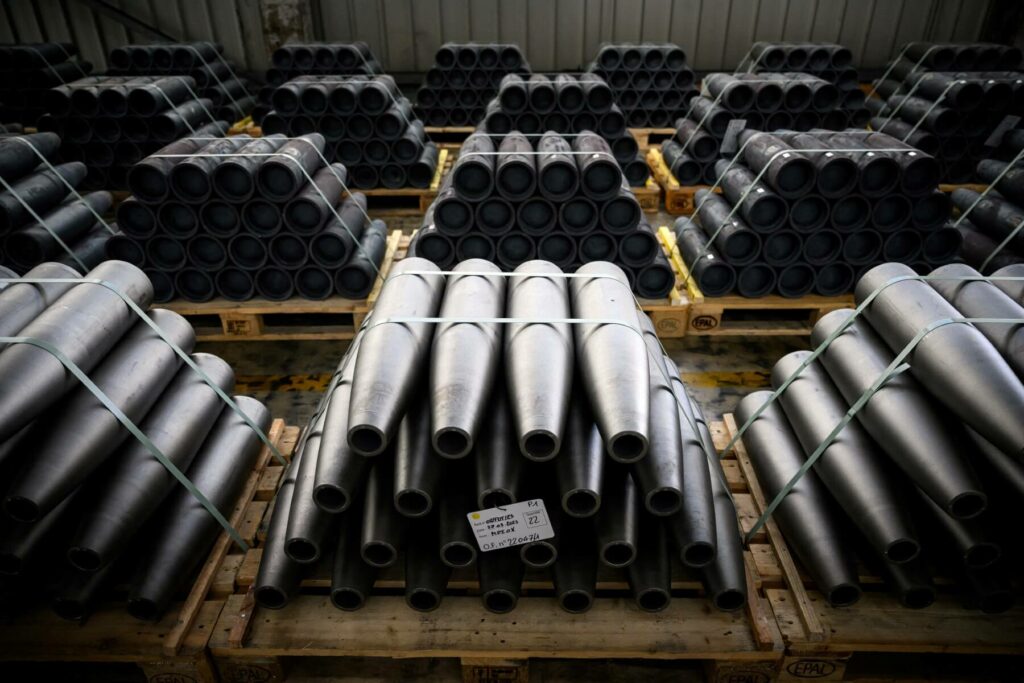
Turkey has imposed new controls on foreign military cargo passing through its territory, requiring shipments of arms, ammunition and related military goods moving from one country to another through Turkey to obtain prior clearance from the Trade Ministry.
The measure, imposed by a presidential decree, comes as Ankara tries to avoid being drawn deeper into the Iran war, which has already sent missiles into Turkish airspace and disrupted regional shipping.
The decree, published in the Official Gazette as Presidential Decision No. 11068, covers the transit and re-export under transit trade rules of war equipment, weapons, ammunition, military explosives, spare parts and related technologies through Turkey’s customs territory. Under the new rules, such shipments will require a “letter of conformity” from the Trade Ministry, which will decide whether to approve them after consulting other state institutions. Customs authorities will be required to check for that approval.
The new framework also goes beyond clearly listed military goods. Even if an item is not formally included on Turkey’s controlled military list, it can still be subjected to the same review if there is suspicion it could be used for military purposes, if it could threaten national or international security, if it could contribute to human rights violations or if it could harm Turkey’s bilateral or multilateral relations, the text says. The decree took effect upon publication and gives the Trade Ministry authority to set procedures, take additional measures and cancel approvals it has already issued.
Formally, the decree is written as a standing regulatory framework under Turkey’s Customs Law rather than an emergency wartime order. But the timing is likely to attract attention since it comes during a regional conflict that has increased scrutiny of arms transfers, transport routes and politically sensitive cargo movements across the Middle East.
Turkey has sought to stay out of the fighting while warning that the conflict risks pulling in the wider region. President Recep Tayyip Erdoğan said on March 13 that keeping Turkey out of the “fire pit” was Ankara’s top priority, while Foreign Minister Hakan Fidan has also stressed that Turkey wants to avoid entanglement in the war.
The war has already touched Turkey directly. NATO air defenses intercepted a third ballistic missile from Iran in Turkish airspace on March 13, according to the Turkish Defense Ministry, after similar incidents earlier in the month. Iran denied responsibility.
The conflict has also disrupted transport and trade routes important to Turkey. A Turkish-owned vessel was allowed to pass through the Strait of Hormuz only after receiving Iranian permission, while Turkish authorities said 14 other Turkish-owned ships remained in the area. Turkish airlines have also canceled flights to several Middle Eastern destinations because of the fighting.