


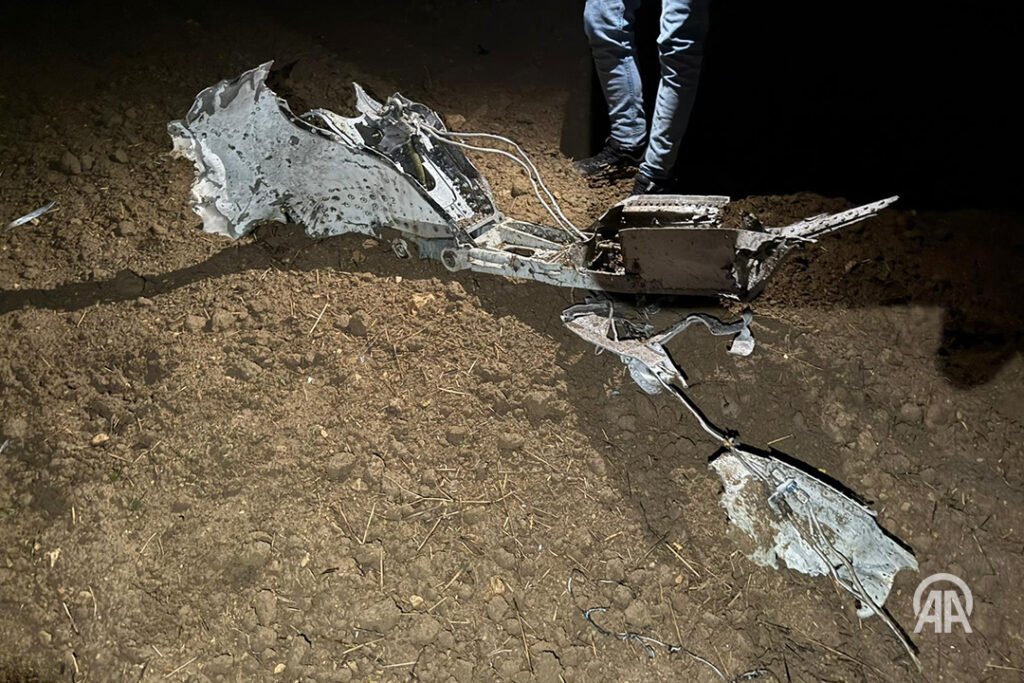
Voice recordings recovered from the black box of a plane that crashed in Ankara, killing Libya’s top military commander and members of his delegation, indicate that multiple onboard generators failed shortly after takeoff, the state-run Anadolu news agency reported on Wednesday, citing a Turkish minister.
The Falcon 50 jet, carrying Libya’s armed forces chief Lt. Gen. Mohammed al-Haddad, crashed on December 23 near the Haymana district south of Ankara while returning home from an official visit to Turkey. Haddad and seven others on board were killed, including members of the Libyan military delegation and foreign crew members.
Transport and Infrastructure Minister Abdulkadir Uraloğlu said the cockpit voice recorder (CVR), analyzed in the United Kingdom, showed pilots repeatedly reporting electrical failures during continuous contact with air traffic control.
Libya announced in early January that Britain had agreed to analyze the flight recorder from the plane crash.
According to Uraloğlu, the pilots reported that the aircraft’s second generator failed within two minutes of takeoff, followed seconds later by the third generator. The recordings later indicated that all generators went offline before some systems briefly came back online.
The pilots first issued a “PAN-PAN” call, the second-highest emergency signal in aviation, requesting to return to Esenboğa Airport. As the situation worsened and onboard systems failed, manual guidance was attempted. The crew eventually activated the highest-level emergency alert, “MAYDAY,” but the aircraft crashed before reaching the airport.
The jet took off at 20:17 local time and remained airborne for about 37 minutes before crashing, Uraloğlu said. Contact with the aircraft was lost roughly 42 minutes after takeoff, and an emergency landing notification was sent near the site of the crash, Turkish authorities said.
The Dassault Falcon 50, a French-made long-range business jet, was chartered from Harmony Jets, a Malta-based private aviation company that says its maintenance facility is located in Lyon, France.
Turkey recovered both the cockpit voice recorder and the flight data recorder from farmland near the crash site. While the cockpit voice recorder has been successfully decoded, officials said the flight data recorder was very old and heavily damaged and that no usable data has so far been recovered.
According to Libyan Transport Minister Mohamed al-Chahoubi, Libya initially asked Germany to carry out the analysis of the aircraft’s flight recorder, but the request did not proceed after Germany indicated that France would need to be involved.
Citing neutrality requirements under the Chicago Convention and France’s role as the aircraft’s manufacturer, Libya and Turkey agreed that Britain would conduct the examination.
Haddad had traveled to Ankara for talks with his Turkish counterpart before returning to Tripoli.
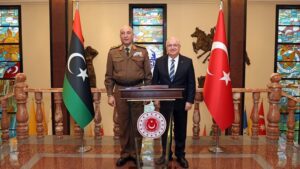

Haddad served as chief of staff of the internationally recognized Government of National Unity, which controls parts of western Libya. The country has remained divided since a 2011 uprising backed by NATO overthrew longtime leader Muammar Gaddafi. Eastern Libya is dominated by forces loyal to rival military commander Khalifa Haftar.
Turkey has close ties with the UN-backed government in Tripoli, to which it provides economic and military support, and there have been frequent visits between the two sides.
But Ankara has recently also reached out to the rival administration in the east, with the head of Turkey’s intelligence agency, İbrahim Kalın, meeting with Haftar in Benghazi in August.