

Ömer Murat*
Global politics is currently experiencing more than a standard cyclical crisis: It is undergoing a profound structural rupture. The liberal international order that defined the post-Cold War era has suffered dual erosion: of legitimacy and functionality. This decay is evident in the paralysis of multilateral institutions and the fading relevance of the norms and values that once anchored them.
In this turbulent environment, former US Secretary of State Henry Kissinger’s insights about President Donald Trump provide a useful lens through which to interpret our times. Kissinger suggested that Trump might be one of those rare historical figures who periodically emerge to signify the close of an epoch, compelling it to abandon its outdated assumptions. This role does not imply that such a leader is aware of their function or is devising a substantial substitute; it may simply occur by chance.
What makes Trump distinctive is not only that he challenged these assumptions but also that he did so without offering a structured counter-ideology. As Kissinger implied, Trump’s role has largely been negative rather than programmatic. He did not replace globalism with a coherent isolationism nor articulate a realist grand strategy to succeed liberal internationalism. Instead, Trump operated as a disruptive force, compelling the existing order to abandon its rhetorical claims to universality and inevitability. The result has been the collapse of old certainties without the emergence of new ones.
In this sense, Trump’s historical importance lies less in his intentions than in what his presidency revealed. The liberal order did not falter because Trump devised an alternative but because it could no longer convincingly defend itself once its contradictions were exposed. Trump did not usher in a new era; he hastened the dissolution of the old one, largely by accident and partly by instinct.
He stands out as the first American leader to openly abandon the nation’s longstanding commitment to shaping the global order since World War II. He views open markets not as mutually beneficial arrangements but as exploitative schemes. He reframes alliances as transactional burdens rather than shared commitments. Trump consistently undermines the notions that unrestricted commerce generates widespread wealth, that international organizations foster security and that democratic governance will inevitably expand worldwide.
As the US explicitly retreats from the role of global order-builder it has held since 1945, a dangerous vacuum has emerged. While China continues its ascent, it has yet to offer a comprehensive ideological framework for new global governance. The European Union remains a vocal defender of rules-based cooperation, yet it lacks the hard power to enforce such a vision globally. Meanwhile, the Russian Federation, mired in a prolonged war in Ukraine, has been exposed as lacking the economic and military depth required to establish an alternative hegemony.
These global dynamics have profound implications for Turkey.
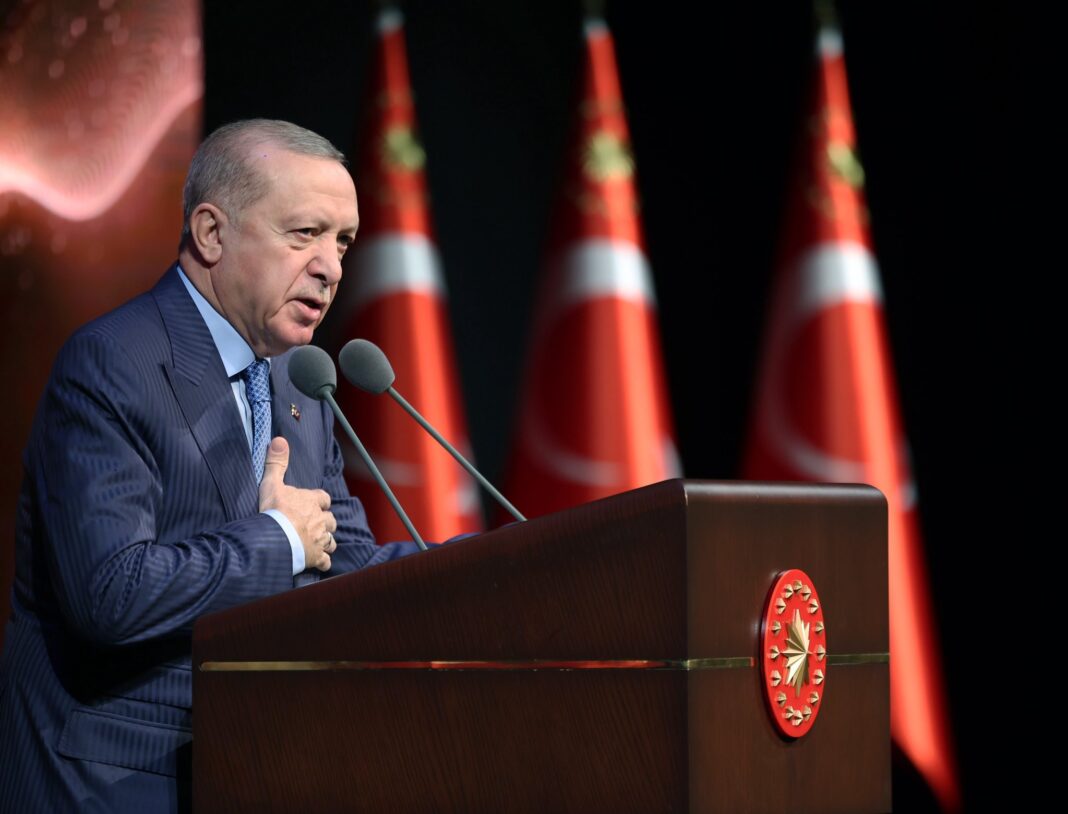
The longevity of the administration led by President Recep Tayyip Erdoğan in Turkey is inextricably linked to this international paralysis. National transitions typically accelerate when the world moves toward a new hegemonic balance. However, in the absence of an international context, transitional regimes at the national level effectively freeze.
Erdoğan came to power in the early 2000s by recognizing that the old Turkish establishment, characterized by military tutelage, a rigid bureaucratic oligarchy and a centralist Kemalist state ideology, was no longer viable. By dismantling this “guardianship regime” through the rhetoric of European Union accession and democratic reform, Erdoğan had the potential to become the “founding father” of a new era.
However, that potential was never realized. While the old guard dissolved, a predictable, institutionalized system did not replace it. Today, Turkey remains in political limbo; it is not a traditional parliamentary democracy, a coherent presidential system or a strictly defined authoritarian state. Instead, it is a transitional regime tailored to personal power and managed through a permanent state of emergency.
This structural ambiguity is how President Erdoğan maintains his grip on power despite his fluctuating popularity. A transitional leader’s hallmark is the weaponization of uncertainty. For the Turkish public, the central political question has shifted from “Who should rule?” to “What comes next?” By ensuring that the “post-Erdoğan” era remains an ominous void, the incumbent positions himself as the “known risk.” For his conservative base, the fear of what will follow a collapse of the current order outweighs the frustrations caused by his long tenure.
In Turkey, as in other nations with similar leadership, politics is conducted through apprehension rather than policy. The question, “What happens if he leaves?” has paralyzed the political elite and broader society. Historically, such periods of stagnation end in one of three ways: a peaceful transition via social consensus; chaotic fragmentation; or the rise of a “founding” figure who resorts to illiberal measures to force an end to the uncertainty.
A peaceful, pluralistic transition is the rarest outcome. It requires a leader to accept that they cannot dictate the future. It also necessitates a level of social cohesion currently absent in Turkey, where polarization is a primary tool of governance. Because President Erdoğan thrives on this division, the transition has stalled, the system has become entirely personalized and the eventual exit has become increasingly costly.
We are in an intermediate phase of history, where the old liberal order is receding but the new one has yet to emerge. This “interregnum” allows transitional leaders to become permanent fixtures. However, history teaches us that uncertainty is never eternal. A new order will eventually emerge, likely through significant conflict or large-scale diplomatic negotiations.
The parallels between populist shifts in the United States and Turkey’s systemic freeze reveal the defining tension of our age. Transitional leaders rise because they excel at tearing down outdated structures. Yet they are destined to falter for the same reason: an inability to build.
The pivotal question is whether these shifts will result in inclusive, cooperative structures or rigid, suppressive regimes. Unfortunately, the latter seems more probable for Turkey. However, improbability does not equate to impossibility. Politics is the art of expanding the possible, and Turkey’s future depends on leaders who can do precisely that.
* Ömer Murat is a political analyst and a former Turkish diplomat who currently lives in Germany.
Disclaimer: The views expressed in this opinion piece are those of the author and do not necessarily reflect the editorial stance of Turkish Minute.