


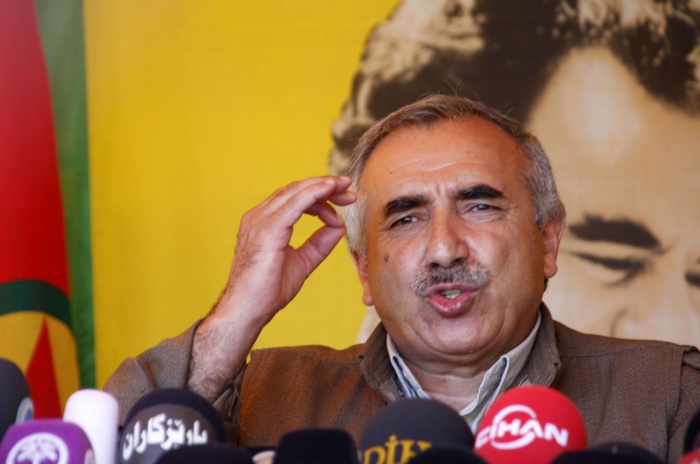
Outlawed Kurdish militants in Turkey will “never abandon” Kurds in Syria in the wake of an offensive by Damascus, a leader of the outlawed Kurdistan Workers’ Party (PKK) said Tuesday, according to the Fırat news agency.
Syrian forces began an offensive nearly two weeks ago which pushed Kurdish-led Syrian Democratic Forces (SDF) out of the northern city of Aleppo, and expanded over the weekend to push deep into territory that has been held by Kurdish forces for over a decade.
“You should know that we will not leave you alone. Whatever the cost, we will never leave you alone. We as the entire Kurdish people and as the movement, will do whatever is necessary,” Murat Karayılan of the PKK was quoted as saying by Fırat.
A close ally of Syria’s new leadership that overthrew Bashar al-Assad in December 2024, the Turkish government is simultaneously leading a drive to reach a settlement with the PKK — listed as a terror group by Turkey and its Western allies.
Karayılan said the Damascus-led offensive was an “attempt to nullify” the peace process in Turkey.
“This decision by international powers to enable these attacks, will be a black mark for the US, the UK, Germany, France and other international coalition states,” he said.
On Monday, at least 500 people rallied in Turkey’s Kurdish-majority city of Diyarbakır against the Syrian offensive. Clashes erupted when police tried to break up the protest.
The pro-Kurdish Peoples’ Equality and Democracy Party (DEM Party), the third largest force in the Turkish parliament, called for a rally on Tuesday in the town of Nusaybin, located on the border with Syia.
© Agence France-Presse