

UN special rapporteurs have warned that Turkey is jailing university students as “terrorists” under a terrorism label for the faith-based Gülen movement that they say does not meet basic legal standards.
In a 21 page letter dated October 8 and now made public, eight UN special rapporteurs and two UN working groups say Turkey’s designation of the Gülen movement as a terrorist organization fails due process and does not fit the model definition of terrorism used by the UN expert on counterterrorism. They say that label is then used to justify raids, arrests and long pretrial detention for people whose conduct is limited to schooling, family life and peaceful religious activity.
The Gülen movement, inspired by the late Muslim scholar Fethullah Gülen, is known worldwide for its contributions to education, social welfare and interfaith dialogue.
The Turkish government labeled the group as a “terrorist organization” in May 2016, before a failed coup took place for which Ankara blames the movement, a designation not recognized by other governments or major international bodies.
Followers of the movement, also known as Hizmet, or Service, supporters, say they have been unfairly targeted in a campaign of political persecution aimed at silencing dissent and consolidating power. The post coup purge has seen hundreds of thousands investigated and tens of thousands imprisoned on terrorism-related charges widely viewed as politically motivated.
The communication, sent to Foreign Minister Hakan Fidan, focuses on two police operations on May 7, 2024 and May 6, 2025. The experts say those raids led to the detention of 55 and 208 people, respectively, mostly women, students and minors, and are part of a wider pattern of arbitrary detention of anyone with alleged ties to the Gülen movement.
The letter comes from UN special rapporteurs with mandates on counterterrorism, arbitrary detention, education, free expression, peaceful assembly and association, privacy, freedom of religion and discrimination against women and girls, along with the Working Group on Arbitrary Detention. They act as independent investigators for the UN Human Rights Council and send formal communications when they see serious or repeated violations.
Dawn raids on girls in İstanbul
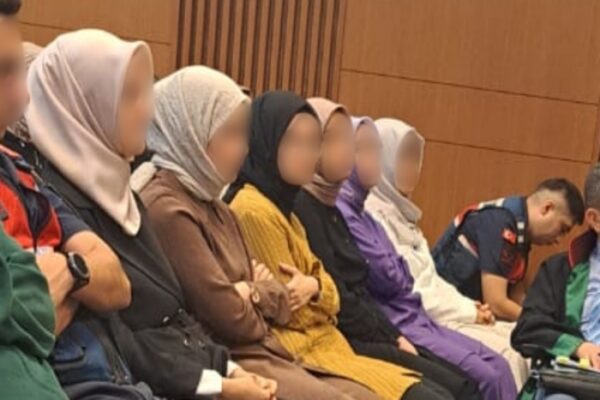
The first case centers on what has become known in Turkey as the “Girls’ Trial,” a terrorism case against 41 defendants that grew out of a May 7, 2024 raid on student apartments in İstanbul.
According to the letter, police opened a terrorism investigation on December 19, 2023, into 17 people, mainly female university students, based on secret “reliable sources.” Judges then approved wiretaps and physical surveillance of students, their homes and even children as young as 12 and 16, on suspicion of “membership in an armed terrorist organization.”
On May 7, 2024, on orders from the İstanbul chief public prosecutor, police carried out coordinated dawn raids. Officers detained 40 adults, mostly women and university students. The child protection branch at the same time “apprehended” 15 minors aged 13 to 17, many of them the children of those detainees.
Authorities described the operation on minors as “information gathering.” The UN experts say the girls were taken from their homes in handcuffs, driven to police stations, sent for forensic medical exams and treated throughout as criminal suspects. They say the youngsters were questioned based on secret surveillance, denied access to lawyers and family members and threatened and left without food for long periods while social workers failed to intervene.
Adult detainees spent four days in custody and faced similar pressure, including deprivation of food, psychological abuse and restrictions on contact with the outside world and with other detainees, according to the letter.
On May 10, 2024, prosecutors sent 33 detainees to a criminal court of peace and requested their arrest. The court jailed 28 people on terrorism charges, including “membership in an armed terrorist organization,” based on activities such as volunteer English and religious tutoring and social events with other students.
Ten of those jailed were university students between 19 and 25 years of age who were in the middle of exam season. Some mothers and sisters of the detained minors were also arrested, along with people who had serious health problems.
Prosecutors later filed a 529-page indictment that, according to the letter, did not contain material evidence of violence. It treated voluntary tutoring, study circles and lawful work by lawyers as criminal support for the Gülen movement.
On September 18, 2025, the İstanbul 24th High Criminal Court convicted 19 defendants and acquitted 19 of terrorism charges based on their religious and social activities.
The UN experts say the convictions rest on “lawful association, family background, and religious observance,” not proof of violent intent or support for terrorist attacks.
Nationwide student sweep in 47 provinces
The second operation described in the letter took place on May 6, 2025, and was directed by the Gaziantep Chief Public Prosecutor’s Office. Police counterterrorism and intelligence units carried out raids in 47 provinces and took 208 people into custody. Many were female university students with no previous criminal record, the experts say.
Interior ministry statements presented the operation as a major blow against the Gülen movement’s alleged “current structure.” Official social media posts carried photos of handcuffed detainees and declared that the “structure of the organization was deciphered” before any court ruling.
Most detainees face accusations under Article 314 of the Turkish Penal Code, which punishes membership in an armed terrorist organization.
The letter says people were questioned over travel for tourism or study, including Erasmus student exchanges, over shared rental payments among roommates, over the use of secure messaging apps such as Signal and over family ties to people who had been fired or convicted after 2016.
The investigation relies heavily on the word of one anonymous witness and on the content of a USB stick said to contain audio and text about travel, housing and student life abroad. The experts say there is no evidence that the data on the device directly implicates those detained and no clear information on how the authorities obtained or preserved the device.
During the first phase of detention, many suspects were denied access to lawyers for 24 hours, the letter says. Families did not know where their relatives were held or received misleading information. Lawyers were pushed out of police stations or prevented from seeing clients. Some defense lawyers were pressured to sign pre-written notes, while detainees were asked to sign statements without legal representation.
The case files were placed under secrecy orders under Article 153 of the Criminal Procedure Code, which blocked defense teams from seeing the evidence behind the arrests. Courts in Gaziantep ordered pretrial detention in decisions that used standard wording about the seriousness of the offense and risk of flight, without individual assessment, according to the letter.
UN says raids show arbitrary detention, abuse of terrorism laws
The experts say both operations violate Turkey’s obligations under the International Covenant on Civil and Political Rights, the Convention against Torture, the European Convention on Human Rights, the Convention on the Rights of the Child and the Convention on the Elimination of All Forms of Discrimination against Women, all treaties that Turkey has ratified.
They argue that many arrests are arbitrary because they are based on “formulaic” reasons and do not link individual suspects to genuine criminal or terrorist activity. Police and courts treat family ties, shared housing, ordinary financial transfers, union membership and school choices as proof of guilt, which the experts call “guilt by association” that contravenes the principle of individual responsibility.
The letter singles out Article 314 of the penal code and Turkey’s Counterterrorism Law as overly broad and vague. It says these laws allow authorities to punish people without proof of violent intent, incitement or operational support for attacks, which violates the rule that crimes must be clearly defined and foreseeable in advance.
The experts say the denial of timely access to lawyers, the use of anonymous witnesses, secret case files and preliminary interviews without legal safeguards breach fair trial rights. They note that these problems are even more serious when minors are involved because international law says children may be deprived of liberty only as a last resort and for the shortest period of time.
On treatment in custody, the rapporteurs describe threats, humiliation, long periods without food, strip-searches and lack of medical care as possible cruel, inhuman or degrading treatment. When used against children and people with known health problems, they say, such conduct may reach the threshold of torture.
Part of a wider pattern since 2016 coup attempt
The letter places the two raids in the wider context of Turkey’s crackdown on the Gülen movement since the failed coup in July 2016.
It notes that previous interior ministry figures show more than 330,000 people detained for alleged Gülen links between 2016 and 2022 and more than 702,000 investigated under Article 314 by mid-2024.
Between 2017 and 2024 the UN Working Group on Arbitrary Detention issued at least 24 opinions finding that detentions of alleged Gülen supporters in Turkey were arbitrary. In some of those decisions the group warned that the pattern of arbitrary detention, if widespread or systematic, could amount to crimes against humanity under international law.
The European Court of Human Rights has also ruled against Turkey in group cases concerning alleged Gülen members.
In a landmark judgment in September 2023, the court held in the case of Yüksel Yalçınkaya that conviction for membership in a terrorist organization based mainly on the use of the ByLock encrypted messaging app and certain bank and union ties violated the right to a fair trial, the ban on punishment without law and freedom of association.
Despite these findings, the UN experts say Turkey continues to use counterterrorism laws in an “over-expansive” way against people linked to the Gülen movement through peaceful activity. They say the two recent operations mark an “unprecedented” targeting of minors and young women, including pregnant women and mothers of young children, and that many charges seem politically motivated.