


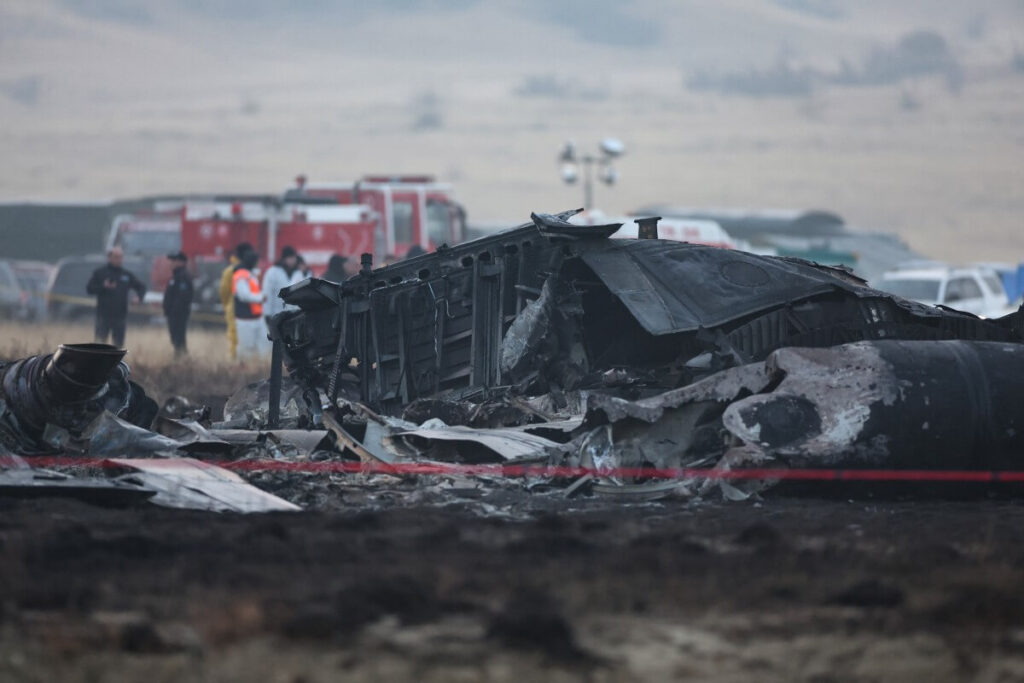
Most of the wreckage of a Turkish Air Force C-130 transport plane that broke apart over eastern Georgia has been brought to Turkey for inspection as investigators continue work at the crash site and begin analyzing the aircraft’s black box, Turkey’s state-run Anadolu news agency reported.
The crash on November 11 killed all 20 people on board and scattered debris near the Georgia-Azerbaijan border. The plane had taken off from Ganja Airport in western Azerbaijan and was flying to Turkey after a military event in Baku.
Turkey’s defense ministry said the aircraft disappeared from radar without sending a distress signal and crashed near the Georgian town of Sighnaghi. Nineteen bodies were recovered in the first hours, and the final remains were found later.
A team of 46 investigators reached the area soon after the crash and documented pieces of the aircraft across a wide field. Most of the wreckage has since been moved by truck to the Second Air Maintenance Factory Directorate in Kayseri, a major military aviation site in central Turkey.
Georgia’s interior ministry said its air traffic control systems lost contact with the plane without receiving any emergency call and that first responders located the site after reports from the area.
Work on the aircraft’s flight recorders has begun. Defense Minister Yaşar Güler said decoding the data and identifying early findings will take at least two months. He said initial observations suggest the tail section broke away but stressed that the conclusion is not final. Officials said Turkish Aerospace Industries is examining the device.
Footage published by Azerbaijani media showed the aircraft descending while pieces separated from the fuselage. The images have driven public debate over the cause of the breakup, with speculation online about an internal explosion or an external projectile.
No government or independent source has reported evidence of a missile strike, explosive residue or hostile action.
Aviation specialists have urged caution in reviewing the footage. Analysts note that rare C-130 breakups have occurred in other countries when propeller blades or wing structures failed due to fatigue. A US Marine Corps KC-130T broke up in flight in Mississippi in 2017 after a blade fractured and cut through the fuselage.