

Adem Yavuz Arslan*
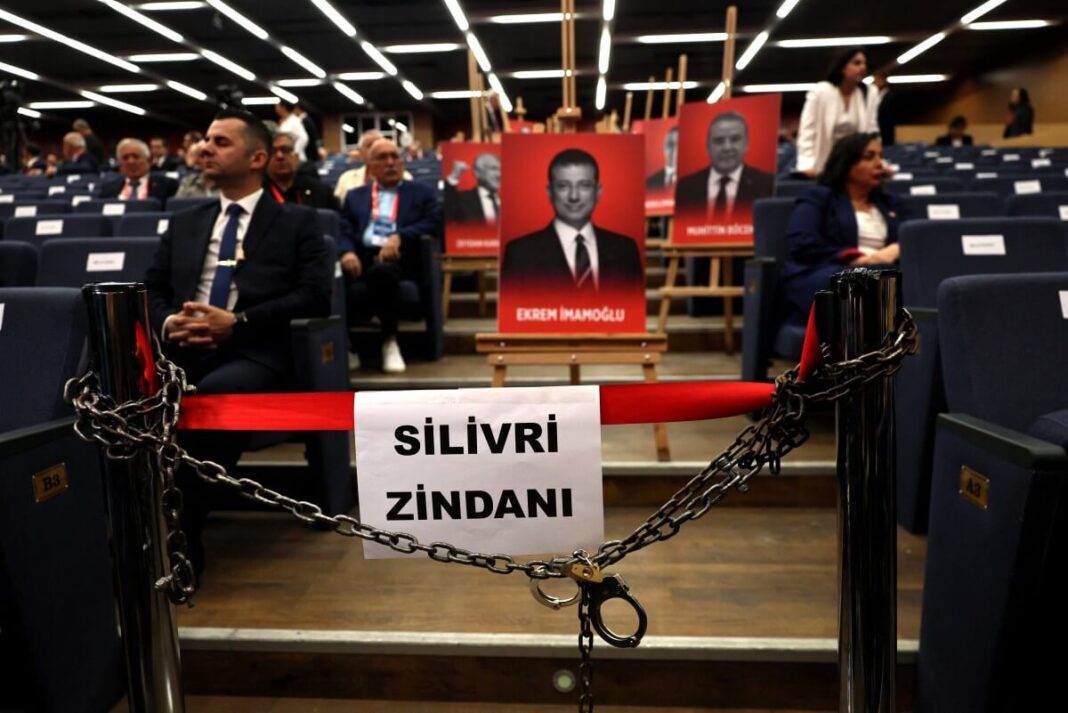
The new indictment of İstanbul Mayor Ekrem İmamoğlu, along with a series of coordinated administrative and political moves, may appear on the surface to be a legal process. In reality, it stands at the heart of the government’s broader strategy to redesign Turkey’s political opposition. The reason İmamoğlu has become a prime target is not merely his prominence in local government, but the fact that he represents the most serious electoral threat President Recep Tayyip Erdoğan has faced in more than two decades. His back-to-back victories in the 2019 İstanbul elections — by a larger margin when it was repeated due to alleged irregularities — marked not just the loss of a city but the vulnerability of Erdoğan’s political architecture.
A calculated political elimination effort
What is unfolding is not a personal dispute but a strategic attempt at political elimination, with the judiciary the most visible component of this campaign. The appointment of Akın Gürlek, notorious for his launch of investigations targeting government opponents, as the chief İstanbul public prosecutor, was seen as a direct signal of how the investigation into İmamoğlu would proceed. Gürlek’s record of targeting opposition politicians and critical journalists has reinforced the view that his assignment to İstanbul was not routine but mission-oriented. The rapid expansion of the İmamoğlu investigations after his appointment strengthened this perception.
The pressure has not been limited to the courtroom. A controversial review of İmamoğlu’s university diploma was launched, with officials retroactively examining academic records and circulating allegations of irregularities. His university diploma was eventually revoked. Legal and academic experts have described the move as baseless and overtly political. The goal appeared clear: to cast doubt on İmamoğlu’s eligibility for public office and pave the way for a political ban.
The pressure extended to his family as well. The İmamoğlu family’s companies have faced tax audits going back years, arbitrary inspections, administrative obstacles and smear campaigns by the pro-government media. Economic pressure has become one of the ruling party’s most effective tools of political intimidation, sending a message not only to İmamoğlu but to all potential challengers: Entering politics could put you — and your family — at risk.
The diploma controversy: engineering grounds for a political ban
İmamoğlu’s indictment serves as the legal façade of this broader operation. The multi-thousand-page document criminalizes routine municipal procedures, from procurement decisions to staffing changes and even political statements. The demand for a staggering 2,430 years in prison, structured in a way that could impose a political ban, makes the government’s intentions unmistakable: to neutralize İmamoğlu before the 2028 elections.
The timing of these moves is also telling. Turkey is facing a deep economic crisis; internal power blocs within the ruling party are shifting; succession battles for the post-Erdoğan era are intensifying; and the opposition is at one of its weakest points. In such an environment İmamoğlu’s potential of political success becomes an even greater threat, making his removal a key step in securing the government’s future.
A warning beyond İmamoğlu: silencing all viable rivals
The most crucial dimension, however, is often overlooked: The pressure on İmamoğlu is not just about him. It is a warning to anyone who could potentially challenge Erdoğan at the ballot box. In a political landscape where opposition politicians such as Selahattin Demirtaş, Canan Kaftancıoğlu, Ahmet Davutoğlu and Ali Babacan have already been marginalized or sidelined, the İmamoğlu operation represents the sharpest iteration of a strategy built not on competition but on eliminating viable rivals.
Viewed internationally, the picture raises serious concerns. Turkey is steadily drifting away from democratic norms, with judicial independence eroding and the fairness of elections increasingly questioned. If İmamoğlu is banned from politics, the 2028 elections risk becoming a contest stripped of democratic legitimacy.
A defining moment for Turkey’s democratic future
In essence, the İmamoğlu case marks a decisive threshold. It is not merely about the future of a single politician, but the future of Turkey’s claim to democratic governance. The core message of this operation is unmistakable: Anyone capable of defeating Erdoğan must be prepared to be forcibly removed from the political arena. This process will serve as a key indicator of whether Turkey will continue to hold genuinely free elections.
*Adem Yavuz Arslan is a journalist with over two decades of experience in political reporting, investigative journalism and international conflict coverage. His work has focused on Turkey’s political landscape, including detailed reporting on the 2016 coup attempt and its aftermath, as well as broader issues related to media freedom and human rights. He has reported from conflict zones such as Bosnia, Kosovo and Iraq, and has conducted in-depth research on high-profile cases, including the assassination of Turkish-Armenian journalist Hrant Dink. Arslan is the author of four books and has received journalism awards for his investigative work. Currently living in exile in Washington, D.C., he continues his journalism through digital media platforms, including his YouTube channel, Turkish Minute, TR724 and X.
Disclaimer: The views expressed in this opinion piece are those of the author and do not necessarily reflect the editorial stance of Turkish Minute.