

Adem Yavuz Arslan*
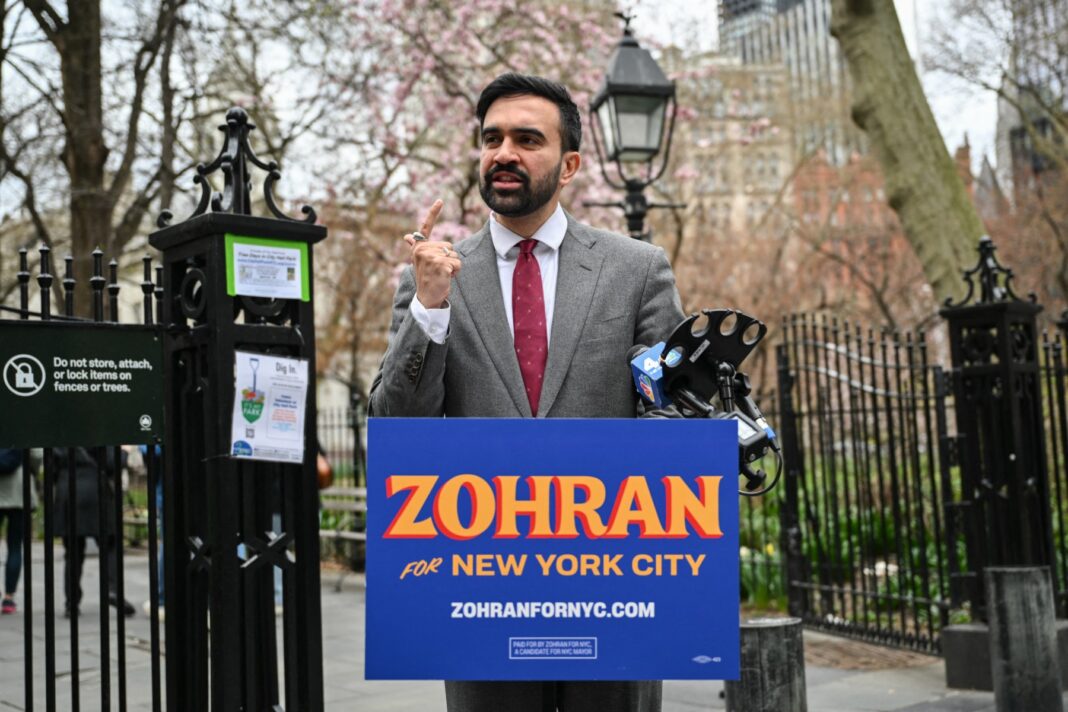
In a political world shaped by money, media influence and entrenched elites, few victories have felt as improbable — or as instructive — as Zohran Mamdani’s.
The 34-year-old, Ugandan-born, Muslim democratic-socialist’s electoral win in New York City marked not only a historic moment but also a blueprint. His success demonstrated how a message rooted in economic justice, everyday struggles and grassroots organizing can triumph over establishment power — even in one of the world’s most capital-driven cities.
A lesson in grounded politics
Mamdani’s campaign did not rely on expensive consultants, celebrity endorsements or vague slogans about “experience.” Instead, it focused relentlessly on tangible issues: rent regulation, free public transport, fair wages and taxing the wealthy. His message was simple — politics should serve those who ride the subway, not those who own it. In a city where campaign donations from real estate developers and corporate interests often determine outcomes, this authenticity resonated.
Why this matters beyond New York
Mamdani’s victory has global resonance. It shows that ideological authenticity can defeat institutional machinery — but only when paired with strong grassroots infrastructure and moral clarity. For countries like Turkey, where opposition parties often oscillate between cautious centrism and reactive populism, Mamdani’s playbook offers critical lessons.
Turkish opposition campaigns frequently focus on corruption and authoritarianism — both legitimate concerns — yet often fail to connect with people’s daily struggles. Mamdani’s success proves that framing politics around rent, wages and transportation can mobilize citizens who might otherwise stay disengaged. His rise began in neighborhood assemblies, tenants’ unions and volunteer circles — not in television studios. In Turkey, where independent media is stifled, grassroots mobilization and digital community-building can serve as essential substitutes.
Many Turkish opposition leaders shy away from bold redistributive rhetoric, fearing the “socialist” label. Mamdani embraced it — and won. Authenticity can disarm propaganda far more effectively than cautious ambiguity. As a Muslim immigrant, he transformed identity politics into an inclusive moral narrative, showing how pluralism can be framed not as weakness but as a democratic strength against authoritarian nationalism.
Beyond inspiration: a blueprint for renewal
Mamdani’s triumph is not merely a local story — it is a reminder that even within systems dominated by elites and media monopolies, people respond to authenticity, consistency and courage. For Turkey’s fractured opposition, this means less obsession with tactical alliances and more focus on moral and material clarity. The lesson from New York is clear: When politics touches people’s wallets and hearts at the same time, even the mightiest machines can crumble.
*Adem Yavuz Arslan is a journalist with over two decades of experience in political reporting, investigative journalism and international conflict coverage. His work has focused on Turkey’s political landscape, including detailed reporting on the 2016 coup attempt and its aftermath, as well as broader issues related to media freedom and human rights. He has reported from conflict zones such as Bosnia, Kosovo and Iraq, and has conducted in-depth research on high-profile cases, including the assassination of Turkish-Armenian journalist Hrant Dink. Arslan is the author of four books and has received journalism awards for his investigative work. Currently living in exile in Washington, D.C., he continues his journalism through digital media platforms, including his YouTube channel, Turkish Minute, TR724 and X.
Disclaimer: The views expressed in this opinion piece are those of the author and do not necessarily reflect the editorial stance of Turkish Minute.