


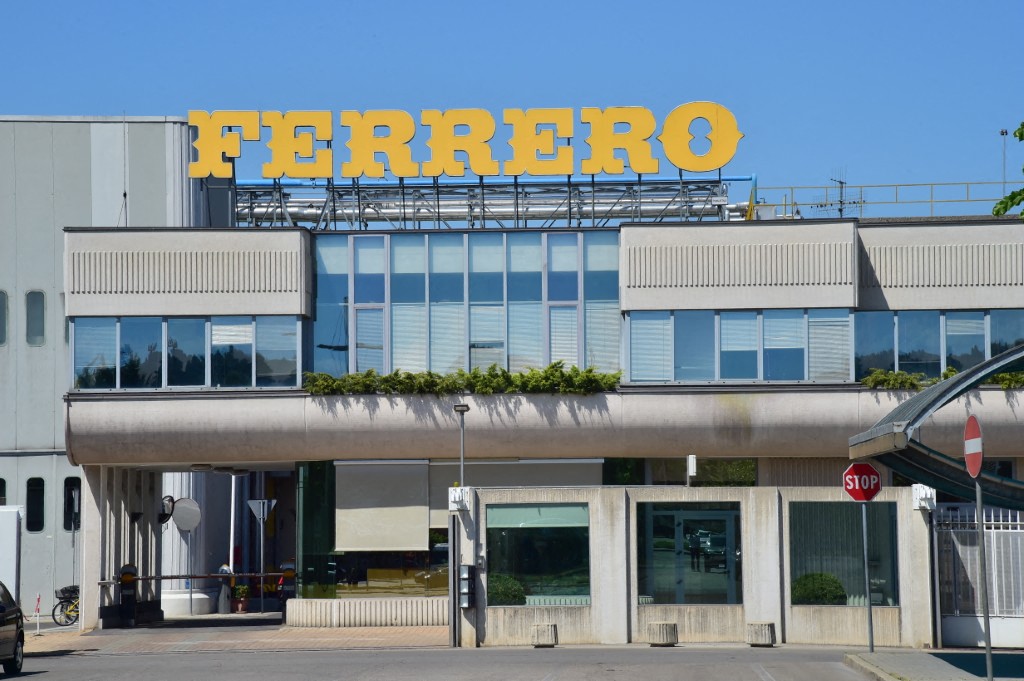
Turkey’s competition regulator accused Italian confectioner Ferrero, the maker of Nutella, of unfairly blaming Turkish traders for a surge in hazelnut prices after company executives complained that traders had stockpiled hazelnuts from producers and were waiting to resell them at higher prices following a poor harvest and pest damage.
Speaking in an interview with Turkey’s state-run Anadolu news agency published on Monday, Birol Küle, the head of Turkey’s Competition Authority, said Ferrero must honor its previous commitments in the Turkish hazelnut market and could not shift responsibility for its own buying strategy onto local actors.
“This issue is about protecting the labor of producers and preserving a fair market order,” Küle told Anadolu. He said comments in the foreign media that cited Ferrero had put blame on Turkish growers and dealers and had presented Turkey as a “speculative” market, which he called an injustice toward domestic producers.
The Financial Times reported on October 31 that Ferrero, which uses about a quarter of the world’s hazelnut supply, had pulled back from buying in Turkey after a spring frost and an infestation of the brown marmorated stink bug cut this year’s crop and pushed prices higher. In that report London-based trader Giles Hacking said Turkish intermediaries had bought “everything they can get their hands on” in an expectation that Ferrero would later return to the market, and he described a standoff between the company and traders who stockpiled hazelnuts.
The Financial Times also quoted a Ferrero hazelnut executive who likened the company to “the new Godot of Turkey hazelnut kings” and said “everybody plays games,” a line that reinforced the idea that Turkish traders were trying to squeeze the company.
Küle rejected this framing and said there was no coordinated “game” against Ferrero in Turkey. He said farmers had suffered yield losses because of weather and pests but had continued to produce. According to his account, producers who sell their crop in stages during a year of low supply follow a basic rule of market behavior rather than a scheme against a single buyer.
“In a season when supply has fallen, it is natural for producers to sell their product step by step,” he told Anadolu, adding that this pattern was not unique to Turkey and could be seen in any market with tight supply.
Küle said Ferrero’s choice to delay purchases from Turkey was a business decision by the company itself. He noted that rival buyers had entered the market earlier and had already bought hazelnuts, and he argued that any planning error by what he called a company of global scale could not be turned into a charge against Turkey, its farmers or its institutions.
“The consequences of its preference cannot be loaded onto Turkish farmers, traders and Turkish institutions,” he said. He added that Ferrero should not try to gain “prestige” by blaming Turkey and said attempts to present the country as a speculative arena were an open injustice toward producers along the Black Sea coast.
The Financial Times report said Ferrero has reduced its exposure to Turkey over the past two decades by building hazelnut production and processing in countries such as Chile and the United States, as well as in Italy and Serbia. That diversification and the company’s own inventories allow it to keep its factories supplied even when Turkish supply is tight.
Turkey normally produces between 600,000 and 700,000 metric tonnes of hazelnuts per year, close to two-thirds of global supply.
Hazelnut orchards line the steep hills above the Black Sea, where many small family farmers depend on the crop and where seasonal workers, including migrants, pick the nuts by hand.
Hazelnuts are a key export for Turkey and a core ingredient for chocolate spreads, pralines and snack products sold worldwide.