
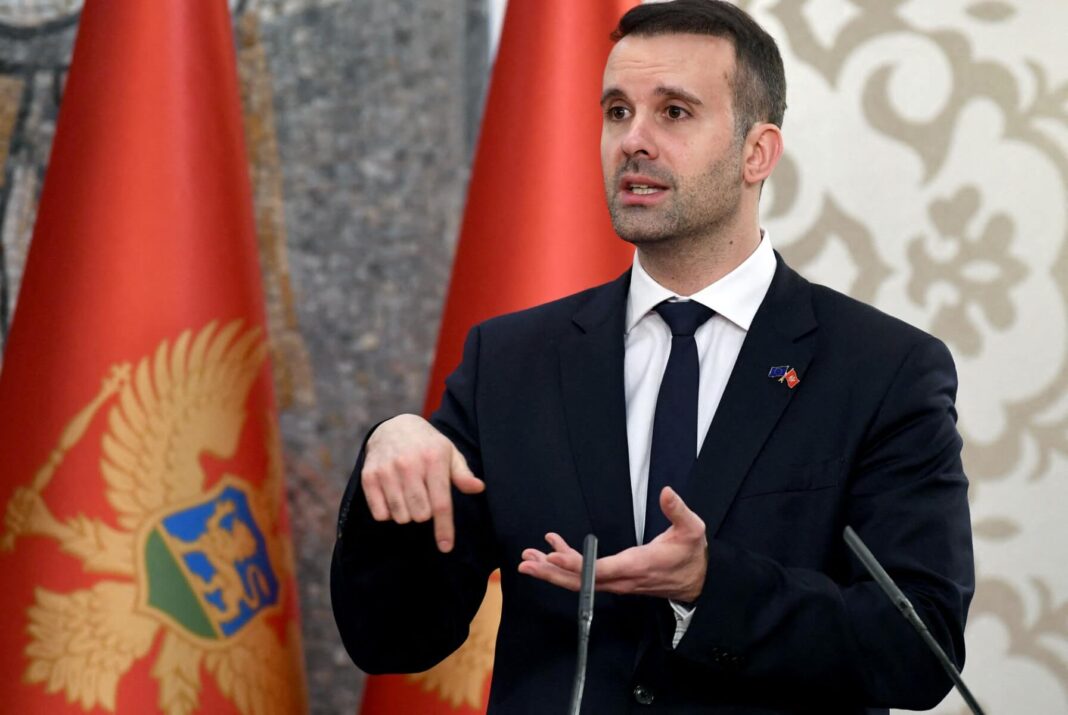

Montenegro will temporarily suspend its visa-free program for Turkish citizens following a violent incident in capital city of Podgorica that has fueled public unrest, Prime Minister Milojko Spajić announced Sunday evening.
“Tomorrow, through an urgent procedure, we will make a decision on the temporary suspension of visa-free entry for Turkish citizens,” Spajić wrote on X. He said the government would begin discussions with Turkey to “find the best model in our mutual interest, in the spirit of good cooperation and alliance,” stressing the need to protect both economic activity and bilateral relations.
Sjutra po hitnoj proceduri donosimo odluku o privremenom ukidanju bezviznog režima za državljane Turske. U cilju očuvanja ekonomske aktivnosti i dobrih bilateralnih odnosa, u narednom periodu iniciraćemo intenzivne razgovore sa Republikom Turskom kako bi u duhu dobre saradnje i…
— Milojko Spajić (@MickeySpajic) October 26, 2025
The announcement came as tensions escalated in Podgorica’s Zabjelo neighborhood, where police launched a major operation after a 25-year-old local resident, identified as M.J., was beaten and stabbed on Saturday night following a verbal altercation with several Turkish nationals. His injuries were described as non-life-threatening.
In response, groups of local residents took to the streets on Sunday, damaging vehicles with Turkish license plates and prompting some Turkish citizens to seek refuge inside a casino, where they briefly barricaded themselves, Reuters reported on Monday.
Montenegrin police said they had detained two suspects believed to be linked to the stabbing, one Turkish citizen and another from Azerbaijan, along with 45 other Turkish and Azerbaijani nationals who were allegedly without valid residence documents. Police said seven people were fined, and eight were ordered to be deported.
An investigation into the incident is ongoing.
Montenegrin Interior Minister Danilo Šaranović said that out of approximately 100,000 foreigners registered in Montenegro, around 13,000 are Turkish citizens. He noted a recent rise in the number of Turks coming to the small Adriatic nation to open businesses or seek employment as Montenegro prepares for eventual European Union membership.
Turkey’s foreign ministry reacted to the development in a statement on Monday, saying that it was closely monitoring developments following the incidents in Montenegro.
“Certain regrettable events took place in Montenegro last weekend, which also affected some of our citizens. Immediately after the incidents began, contact was established with Montenegrin authorities and necessary measures were taken to ensure the safety of our citizens,” the ministry said.
It added that the situation was being “closely followed” and that “contact and coordination with Montenegrin authorities continue uninterrupted.”
Montenegro, which allows Turkish citizens to stay visa-free for up to 90 days within a 180-day period, is among the most popular tourism destinations for Turkish travelers.
Under the 2008 visa exemption agreement between Turkey and Montenegro, citizens of both countries holding diplomatic, special, service or ordinary passports are allowed to enter the other’s territory without a visa for up to 90 days within any 180-day period or for transit purposes.
The agreement, signed in Ankara on January 18, 2008, entered into force on May 19, 2008.
The Kursiv news outlet reported that Montenegro had earlier suspended its temporary visa-free regime for citizens of Uzbekistan, Armenia and Egypt.