


Ömer Murat*
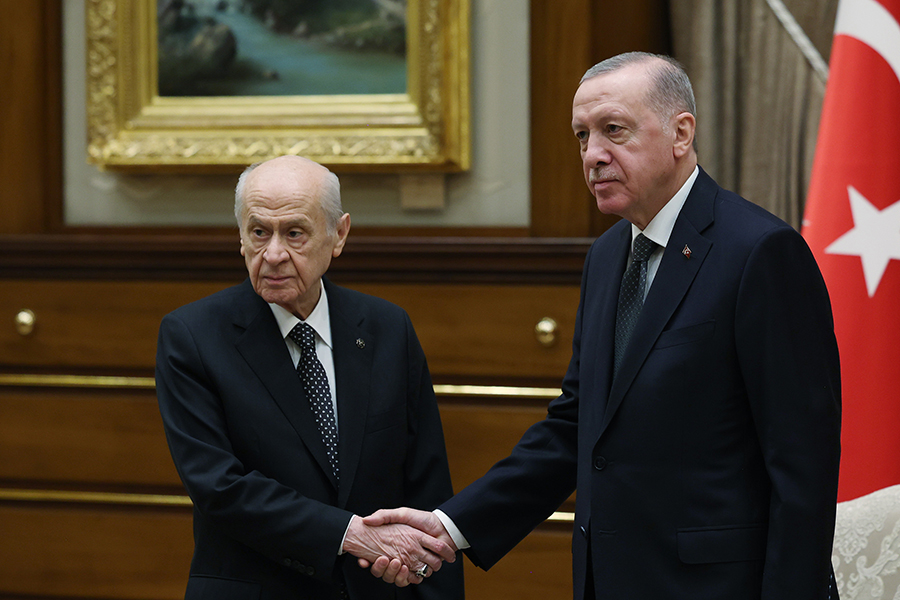
The recent arrest of Selahattin Yılmaz, an alleged organized crime leader with ties to Devlet Bahçeli, head of the far-right Nationalist Movement Party (MHP) and a key ally of President Recep Tayyip Erdoğan, has intensified speculation about cracks emerging within Turkey’s ruling alliance and highlighted the shifting power dynamics at play in Ankara.
According to the pro-government Sabah newspaper, Yılmaz’s arrest stems from a complaint filed by Aziz İhsan Aktaş, a businessman and a cooperating suspect in an ongoing corruption investigation targeting İstanbul’s imprisoned mayor, Ekrem İmamoğlu, who is the opposition Republican People’s Party (CHP) candidate for the next presidential election and is widely seen as the strongest challenger to Erdoğan. Aktaş alleges that Yılmaz, who was arrested along with nine others on charges including making threats, forming a criminal organization to commit crimes and abusing authority for personal gain, threatened to assassinate him.

Bahçeli’s response was both swift and defiant. He issued a statement defending Yılmaz as an ideological comrade and dismissing the allegations against him as baseless smears aimed at undermining the MHP. Amid rumors of internal discord, Bahçeli’s defense reveals the tension between him and Erdoğan, the leaders of Turkey’s ruling People’s Alliance.
The alliance was pivotal in securing Erdoğan’s re-election in 2023, while giving the MHP outsized influence over government appointments and policy decisions. Yet the partnership has repeatedly shown signs of strain, particularly on issues such as relations with the Kurds and control of key state institutions.
Yılmaz emerges as a controversial figure in this narrative. Known in the Turkish media as a mafia boss, he has long been associated with the MHP’s nationalist circles. His alleged criminal activities include leading a syndicate involved in extortion, threats and other organized crime, accusations he has denied in the past. His proximity to Bahçeli is no secret: He has been photographed at party events and is said to have provided informal support to MHP-affiliated causes.
Bahçeli’s public embrace of Yılmaz, despite his arrest, sent shockwaves through Turkey’s political establishment. It was widely seen as a red line, a warning that any move against his allies would be treated as an attack on the MHP itself.
Tensions between Erdoğan and Bahçeli are hardly new. Erdoğan, a pragmatic strongman, has at times clashed with Bahçeli’s rigid nationalism. In 2024 rumors of discord surfaced over judicial reforms. The arrest of Yılmaz now amplifies those undercurrents. By pursuing a Bahçeli associate in a case tied to his chief rival, Ekrem İmamoğlu, Erdoğan appears to be flexing his authority, either as a warning to the MHP about its junior role in the alliance or as an attempt to tighten his grip on the security apparatus.
Beneath the surface lies a broader power struggle. Erdoğan, 71, is maneuvering to secure both his legacy and a smooth succession, while Bahçeli, 77, is intent on preserving the MHP’s influence. Their alliance, though electorally advantageous, rests on mutual dependence: The AKP needs the MHP’s nationalist base and its sway within the judiciary and security services, while the MHP benefits from the patronage and reach of Erdoğan’s government. Yet moments like this expose the vulnerabilities of that arrangement. Erdoğan has remained publicly silent, a posture that may signal deliberate detachment, leaving the judiciary, firmly under his influence, to manage the fallout.
One plausible explanation is that the episode reflects simmering tensions within the ruling alliance, rooted in competing visions of how to consolidate power and manage Turkey’s so-called “deep state.” The term, which Turkey contributed to the global political lexicon and which later gained traction in US politics during the Trump era, refers to entrenched networks of bureaucrats, nationalists and shadowy figures from the pre-Erdoğan era who exert influence through informal channels. Bahçeli and the MHP are often seen as part of this ecosystem. Their priority may be preserving their ideological network and hedging against future setbacks rather than fully embracing Erdoğan’s aggressive strategy to neutralize political rivals such as İmamoğlu. This suggests Bahçeli is more focused on securing the MHP’s long-term autonomy than on short-term gains for Erdoğan.
Bahçeli has long cast the MHP as a kingmaker. In 2015, for example, he refused coalition talks, triggering snap elections that ultimately strengthened Erdoğan. In return, the MHP has secured influence, particularly over the judiciary and security forces. But with Erdoğan confronting health issues and sinking popularity amid a deepening economic crisis, Bahçeli appears to be hedging his bets. Polls suggest that two-thirds of Turks doubt İmamoğlu’s guilt, a sentiment that strengthens the opposition figure’s resilience while exposing cracks in the ruling alliance.
If Sabah’s report is deemed inaccurate, the arrest could be construed as a sinister maneuver by Erdoğan to subvert the MHP’s influence. Assuming the report’s assertions are true, the episode could be interpreted as a strategy by the MHP to advance its interests in the post-Erdoğan era.
In the grand theater of Turkish politics, where loyalty and betrayal often blur, the Yılmaz affair may prove a litmus test for the durability of the People’s Alliance. It is more than a criminal case; it reflects the uneasy balance between two dominant figures. Whether it triggers a rupture or a renewed pact remains uncertain, but for now it exposes the fragile equilibrium underpinning Turkey’s authoritarian trajectory. The strain may not amount to outright betrayal, but it does reveal the alliance’s inherent fragility, a partnership marked as much by mutual suspicion as by mutual dependence, especially as two aging leaders weigh questions of succession and legacy.
As Turkey struggles with economic stagnation and mounting geopolitical pressures, such moments can either cement the alliance through fresh compromises or hasten its collapse, reshaping the country’s political future in profound ways.
* Ömer Murat is a political analyst and a former Turkish diplomat who currently lives in Germany.
Disclaimer: The views expressed in this opinion piece are those of the author and do not necessarily reflect the editorial stance of Turkish Minute.