


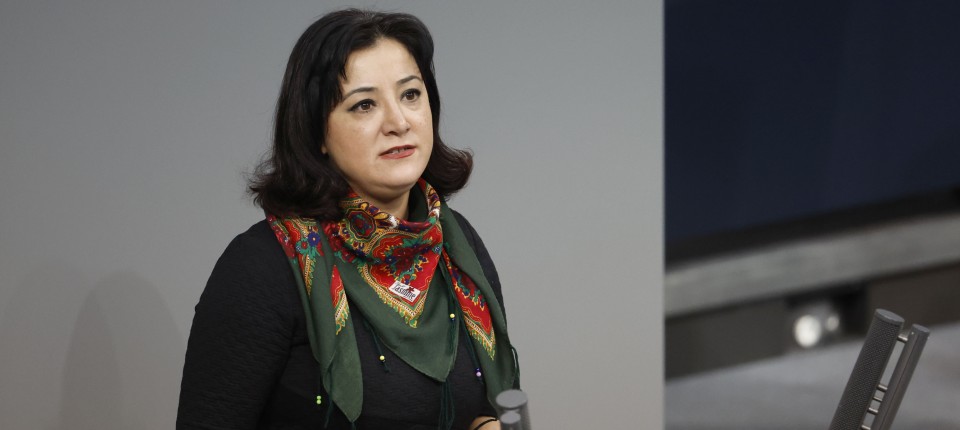
A total of 144 German citizens are currently either imprisoned in Turkey or prohibited from leaving the country, according to a German government response to a parliamentary question from Left Party lawmaker Gökay Akbulut, obtained by the German Tagesspiegel newspaper.
The figure includes 75 Germans held in Turkish prisons, most facing charges related to violent, drug or sexual offenses, the German Foreign Ministry said. Nine are accused of violating Turkey’s counterterrorism laws, which criminalize certain forms of expression permitted in Germany and the European Union.
An additional 69 Germans are under court-imposed travel bans, while Turkish authorities have refused entry to 33 others since January. Akbulut said the total, which she described as a “new, alarming record,” represents an almost 28 percent increase from 2022, when 104 Germans were either imprisoned in Turkey or barred from leaving the country.
The lawmaker accused the government of Chancellor Friedrich Merz of “bowing to” Turkish President Recep Tayyip Erdoğan instead of standing firmly for democracy and the rule of law. “Rather than taking a consistent stance, the German government is kowtowing to Erdogan’s authoritarian course,” she said.
The German Foreign Ministry warned that German citizens, including those who previously traveled without incident, face “arbitrary” arrests in Turkey. It cited broad counterterrorism provisions and a law against disinformation that allows prosecutors to criminalize statements deemed false and a threat to national security, public order or public health.
Participation in demonstrations in Germany or membership in Kurdish cultural associations legal in the EU could also lead to arrest, travel bans or entry refusals, officials said.
Akbulut said she knows of Germans threatened with arrest warrants solely for promoting Kurdish language and culture or criticizing Erdoğan.
People linked to the Gülen movement also face detention or arrest in Turkey on accusations that they are members of a “terrorist” organization.
The Turkish government accuses the Gülen movement of masterminding a failed coup on July 15, 2016 and labels it a “terrorist organization,” although the movement strongly denies involvement in the coup attempt or any terrorist activity.
A special parliamentary committee in Ankara is discussing legal reforms following the end of fighting between the state and the outlawed Kurdistan Workers’ Party (PKK), which began laying down arms in July. The pro-Kurdish Peoples’ Equality and Democracy Party (DEM Party) is pushing for the repeal or EU-aligned revision of Turkey’s counterterrorism laws to secure the peace process.
“The laying down of arms could be an important step toward resolving the Kurdish conflict,” Akbulut said. “But reforms on the Kurdish question would not eliminate the risk of arrests in Turkey,” she added, “because political persecution goes far beyond PKK-related allegations.”
Criticism of the government and of Erdoğan, as well as support for the opposition, could still be punished with imprisonment.
Over the past years, a series of arrests of German citizens for “political reasons” such as journalists Deniz Yücel and Meşale Tolu led to serious crises between Berlin and Ankara and prompted the German Foreign Ministry to issue travel warnings to German citizens planning to vacation in Turkey, saying they could be arbitrarily imprisoned on terrorism charges or links to terrorist groups.