
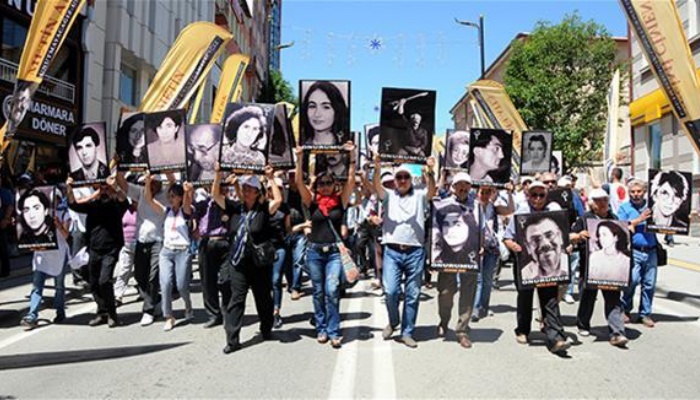

Turkish President Recep Tayyip Erdoğan has commuted the sentences of nine inmates, including a man convicted over the 1993 Sivas massacre, in which 35 people were killed when a hotel was set ablaze by a mob targeting a group of mostly Alevi intellectuals, the Anka news agency reported.
Adem Kozu, who was serving an aggravated life sentence for his role in the arson attack on the Madımak Hotel in the central province of Sivas, was released due to a chronic illness, according to a presidential decree published Friday in the Official Gazette.
The decision was made under Article 104 of the Turkish Constitution, which allows the president to pardon or commute sentences on the basis of permanent illness, disability or old age.
On July 2, 1993 an angry mob torched the Madımak Hotel, killing 35 people, mostly artists and scholars of the Alevi sect, who were there to attend a conference hosted by the Pir Sultan Abdal Culture Foundation (PSAKD), an Alevi organization.
A group of radical Islamists, having been provoked by several local political leaders, gathered in front of the hotel following Friday prayer and accused conference participants of being infidels.
Thirty-three conference attendees, two hotel staff members and two protesters died in the fire.
Kozu, who was 22 years old when he was arrested several days after the attack on charges that he was among the arsonists, had been behind bars since then.
Over the past years, Erdoğan has also commuted the sentences of other inmates convicted for their roles in the Sivas massacre due to old age or health problems, sparking outrage among the families of the victims and rights advocates, who still call for justice for the victims of the massacre.
Among those also released was 87-year-old Mehmet Tunç, a former civil defense secretary at the İstanbul Metropolitan Municipality, who was convicted of attempting to overthrow the constitutional order during a failed coup in 2016.
He had been sentenced to aggravated life but was freed due to advanced age, based on a medical report submitted by the Council of Forensic Medicine. Tunç had been accused of links to the faith-based Gülen movement, accused by the Turkish government of masterminding the attempted coup, which was suppressed overnight and resulted in the death of some 250 people.
The movement, which has been facing a heavy crackdown for about a decade, has strongly denied any role in the failed coup, yet its real or perceived supporters continue to face mass arrests in what many say politically motivated prosecutions.
The other inmates whose sentences were commuted had been convicted of a range of serious crimes, including murder, drug and human trafficking, leading a criminal organization, promoting prostitution and financial fraud.
The official justifications for their release varied, citing chronic illness, disability or advanced age as grounds for the commutations.