
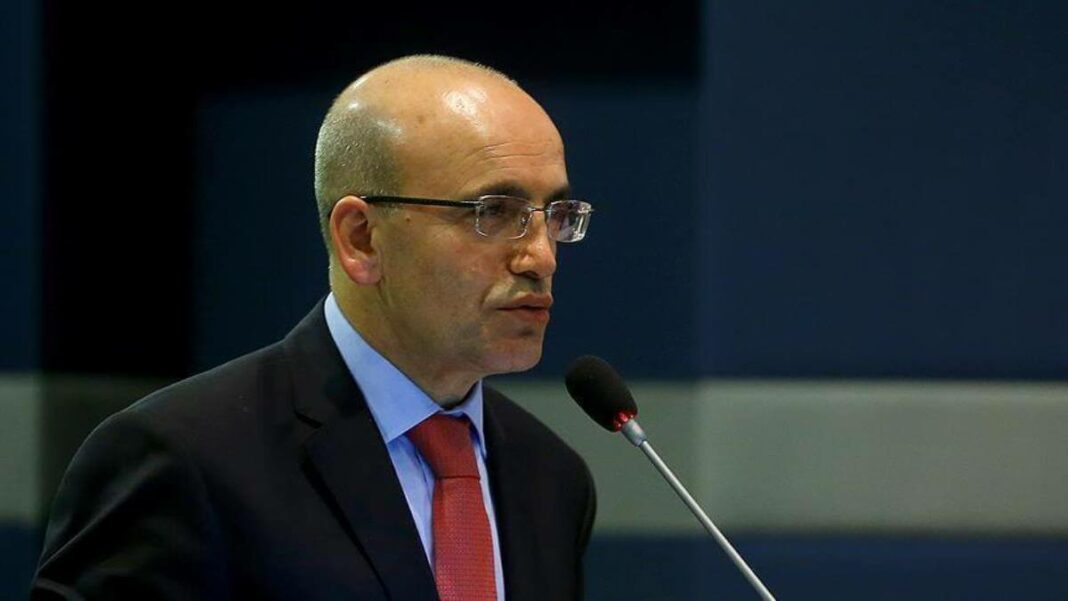

Confidence in Turkey’s economic management has plummeted to new lows, according to a recent public opinion survey, amid growing speculation over the possible resignation of Treasury and Finance Minister Mehmet Şimşek.
A July poll by GENAR, a research company with close ties to the ruling Justice and Development Party (AKP), revealed that public trust in the government’s handling of the economy remains critically low. Just 4.1 percent of respondents said they had “strong confidence” in the current economic leadership, while more than half declared no confidence at all.
The survey found that 26 percent of participants said they “do not trust at all” the government’s economic management, and 29.2 percent said they “do not trust” it. Another 20.8 percent reported limited trust, while 19.9 percent were neutral. The data is considered especially significant because it comes from a polling agency typically viewed as sympathetic to the government.
The results come at a time of intensifying speculation over Şimşek’s political future. A report by veteran journalist Nuray Babacan, published Friday in the Nefes newspaper, claimed that Şimşek may step down in the fall and be replaced by Vice President Cevdet Yılmaz. Citing AKP insiders, Babacan said Şimşek has grown increasingly frustrated by internal criticism and pressure from pro-government interest groups seeking preferential treatment, particularly regarding loans and regulatory oversight.
According to Babacan’s sources, Şimşek recently conveyed his concerns to President Recep Tayyip Erdoğan, reportedly saying, “I can understand the opposition’s criticism, but I can’t make sense of the behavior of our own colleagues in such a difficult time.”
The report triggered an official denial from Turkey’s Disinformation Monitoring Center (DMM), a government unit under the Directorate of Communications. In a statement released later on Friday, the DMM said allegations of internal cabinet tensions and an impending reshuffle were “entirely baseless, speculative and misleading.” The agency claimed such reports aimed to destabilize investor confidence and disrupt the government’s medium-term economic plan.
“The minister is continuing in his position,” the DMM said. “Economic policies outlined in the Medium-Term Program and the 12th Development Plan are being implemented with determination.”
However, the controversy highlights persistent fractures within the ruling bloc over economic policy and rising public dissatisfaction with the government’s performance amid a cost-of-living crisis.
Inflation, job security top public concerns
According to the GENAR survey, inflation remains the primary concern for Turkish citizens, with 46.3 percent identifying it as the most important economic issue. Unemployment followed at 20.4 percent, while 17.1 percent cited interest rates and 10.6 percent pointed to exchange rate volatility.
The poll also indicated that women and younger participants expressed slightly more optimism about the economy than men, though overall trust levels remained low across all demographics.
Official inflation figures under fire
Public frustration has intensified following the Turkish Statistical Institute’s (TurkStat) announcement earlier this month of a 35.05 percent annual inflation rate for June — far below the 68.68 percent estimate provided by ENAG, an independent group of economists. The discrepancy has direct consequences for millions of retirees and public workers whose salary and pension adjustments are tied to official inflation data.
Under TurkStat’s figures, public sector wages are set to rise by 15.57 percent and pensions by 16.67 percent. Had ENAG’s inflation estimate been used, pensioners would have seen a nearly 27 percent increase.
Critics, including opposition lawmakers, argue the official data grossly understates the real cost of living, particularly for essentials like food, rent and utilities.
Şimşek under pressure amid political fault lines
Appointed in June 2023 to restore market confidence and rein in inflation, former Merryl Lynch economist Şimşek initially enjoyed broad support from international investors. He pledged to implement orthodox monetary policy and rebuild trust in Turkish institutions, which had suffered under years of unorthodox rate cuts and political interference in the central bank.
Since then, the central bank has hiked interest rates to a peak 50 percent, which is now scaled back to 43 percent, and Şimşek has said he expects inflation to drop to 29 percent by the end of the year. He also forecast a decline in interest rates to around 30 percent. The Treasury has phased out the costly “currency-protected deposit” scheme, seen by critics as an artificial support mechanism for the lira.
Despite these policy shifts, internal political tensions and resistance from entrenched economic actors have reportedly hampered his efforts. Şimşek’s reform program has been challenged by pro-government business groups demanding special treatment and by media outlets aligned with the ruling party that have increasingly turned against him.
While Şimşek continues to state publicly that he intends to remain in office until the next election, insiders suggest that political infighting may make his position untenable.