


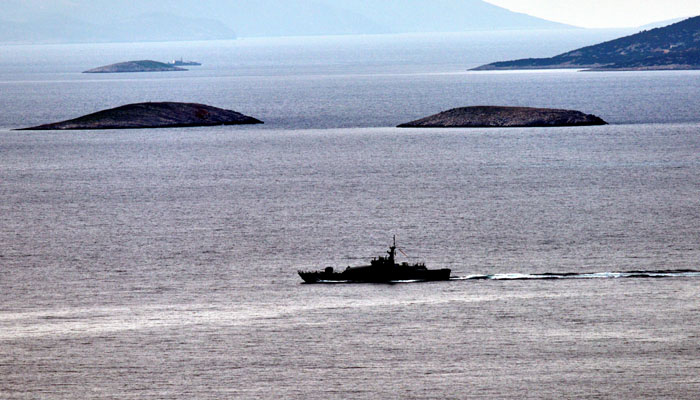
Greece plans to enhance its naval capabilities with the purchase of new submarines capable of launching long-range cruise missiles, aiming to establish an underwater advantage in the Aegean and Mediterranean seas as Turkey continues to expand its naval fleet, Greek Ekathimerini media outlet reported on Monday.
Citing Defense Minister Nikos Dendias’s remarks during Maritime Week in June, the report said the new submarines are expected to be procured within the next decade.
At least two of the four submarines under consideration will reportedly be capable of deploying land-attack cruise missiles with a range exceeding 1,000 kilometers. The vessels will likely be based on the German-engineered Type 214 class, already in service with the Hellenic Navy. This class features air-independent propulsion, allowing extended submerged operations and lower detectability. The existing fleet of Type 214 submarines is also set to undergo upgrades over the next five years.
The new acquisition is part of a €25 billion defense procurement plan, called “Achilles Shield,” which forms a central component of Greece’s broader “Agenda 2030” defense strategy. The plan aims to shift the country’s military doctrine from conventional territorial defense to a model emphasizing strategic deterrence and the integration of advanced systems. “This proposal is a matter of existence for our country,” Dendias said.
Modernization of the current fleet will take place at the Skaramagas shipyards and is expected to cost more than €1 billion. The upgrades will include new heavyweight torpedoes, modern sensors and updated combat systems to align with the anticipated capabilities of the future submarine class.
Greece’s renewed focus on undersea warfare comes as Turkey advances its naval programs. Under its “Blue Homeland” maritime doctrine, Turkey is expanding its submarine fleet and asserting control over contested maritime zones. The Turkish Navy is in the process of introducing six new Reis-class submarines, also based on German Type 214 technology.
Turkey is also pursuing an indigenous submarine through the MILDEN project, aimed at building a platform with automated systems and advanced missile-launching capabilities. While still in early development, the project includes discussions around possible nuclear propulsion.
In early 2025 the Turkish Navy conducted a test of the Sub-Atmaca missile, a submarine-launched variant of its domestically produced anti-ship missile. The missile was launched using the Turkish-developed MÜREN combat management system and is expected to have a range of over 200 kilometers.
The Sub-Atmaca is designed to replace US-made Harpoon missiles and represents a key step in modernizing Turkey’s naval strike capacity. The test has also fueled speculation about the future deployment of the Gezgin cruise missile, a land-attack system under development with reported long-range capabilities.
Greek defense planners have taken note of these developments. Given that Greece’s current submarines cannot be retrofitted with the vertical launch systems needed for advanced cruise missiles, officials are considering integrating such capabilities into new vessels. One option being evaluated is the French MdCN naval cruise missile, which can strike strategic land targets from standoff distances.
Greek officials maintain that the procurement program is intended to preserve regional balance. However, analysts say the moves on both sides reflect a wider arms competition in the eastern Mediterranean. With NATO allies Greece and Turkey frequently in dispute over maritime boundaries and energy exploration, the introduction of long-range, stealth platforms has raised concerns about potential escalation.
Dendias has emphasized the importance of modern technology in shaping Greece’s defense posture, stating that the country must invest in adaptable platforms to meet future security challenges. The new submarine program is seen as a central part of that effort.